
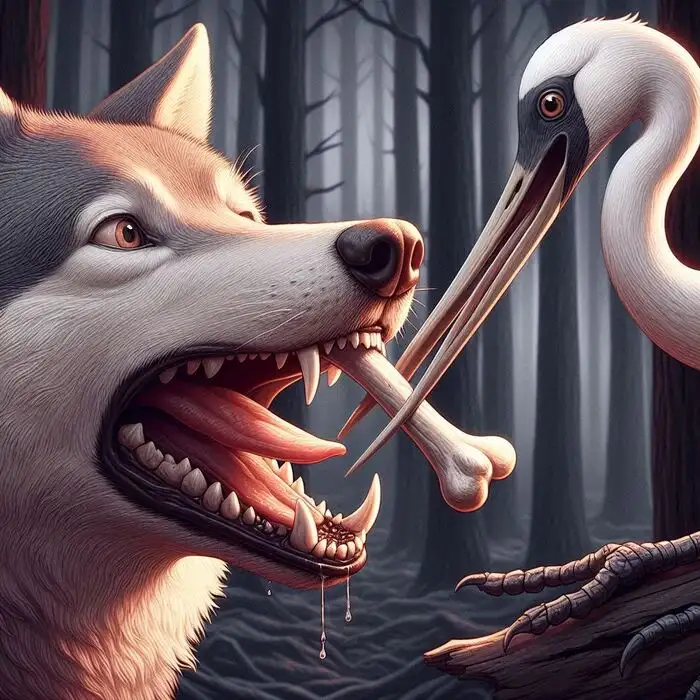
The Wolf and the Crane by Aesop for ESL students with a video, vocabulary practice in real context, discussion questions to test your comprehension and moral of the short story Video of the Wolf and the Crane https://www.youtube.com/watch?v=cBgma6Liqkc The Wolf and the Crane After a reckless feast, a wolf found himself in distress—an unfortunate bone had lodged itself deep in his throat. Unable to dislodge it, he prowled the forest in agony, seeking help. Eventually, he stumbled upon a crane, her slender frame and elongated beak promising a solution. "Dear crane," the wolf rasped, his voice strained, "if you can ...
The Wolf and the Crane by Aesop for ESL Students
About the Author

Related Posts
1. No, the crane should not have trusted the wolf’s promise because of his tricker nature. So, we should notice that whom we want to help and support. First, pay attention to the circumstances and how we can help while it may make a problem.
2. When we help others, we should not expect anything in return for it. If we expect a reward, we may feel disappointed or resentful when the other person is ungrateful.
3. If I were the crane, I would definitely do things differently. I would not put my head inside the wolf’s mouth because it takes me a great risk without any guarantee. So, in real life before doing something that requires significant time, money, or effort, both sides should understand what has been agreed upon.
Thanks for your comment on the short story of the wolf and the crane. Here is my feedback:
1. tricker nature = tricky nature
2. we should notice that whom we want to help = we should be careful about whom we want to help