English for Kids – Lesson 34: There Is / There Are with Video
English for Kids - Lesson 34: There Is / There Are with Video

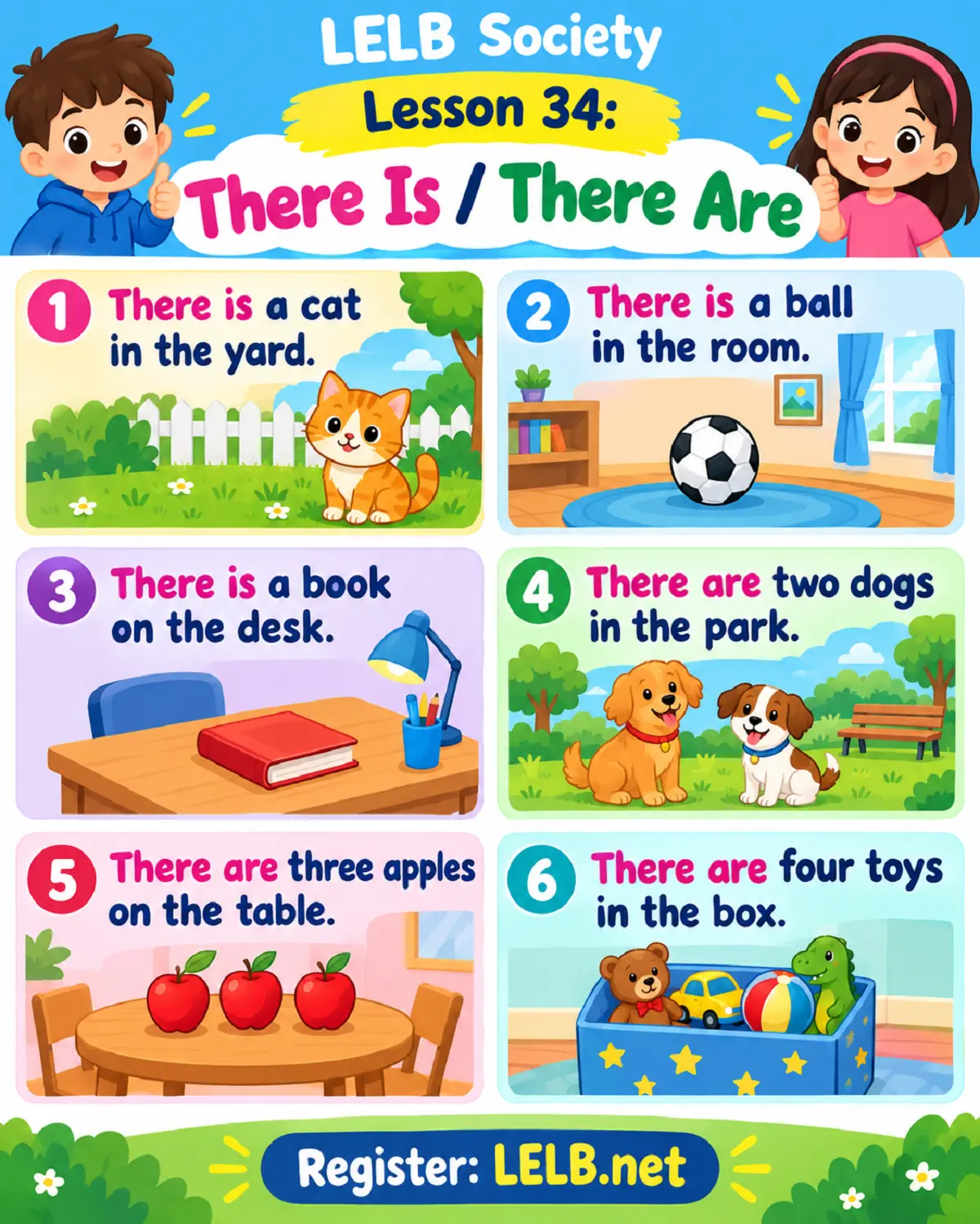
Learn how to use There is and There are with simple English sentences for kids. In this lesson, children learn to talk about one or more people, animals, and things in different places. They will practice sentences about a cat in the yard, a ball in the room, dogs in the park, apples on a …
English for Kids – Lesson 33: Prepositions of Place with Video

English for Kids - Lesson 33: Prepositions of Place with Video

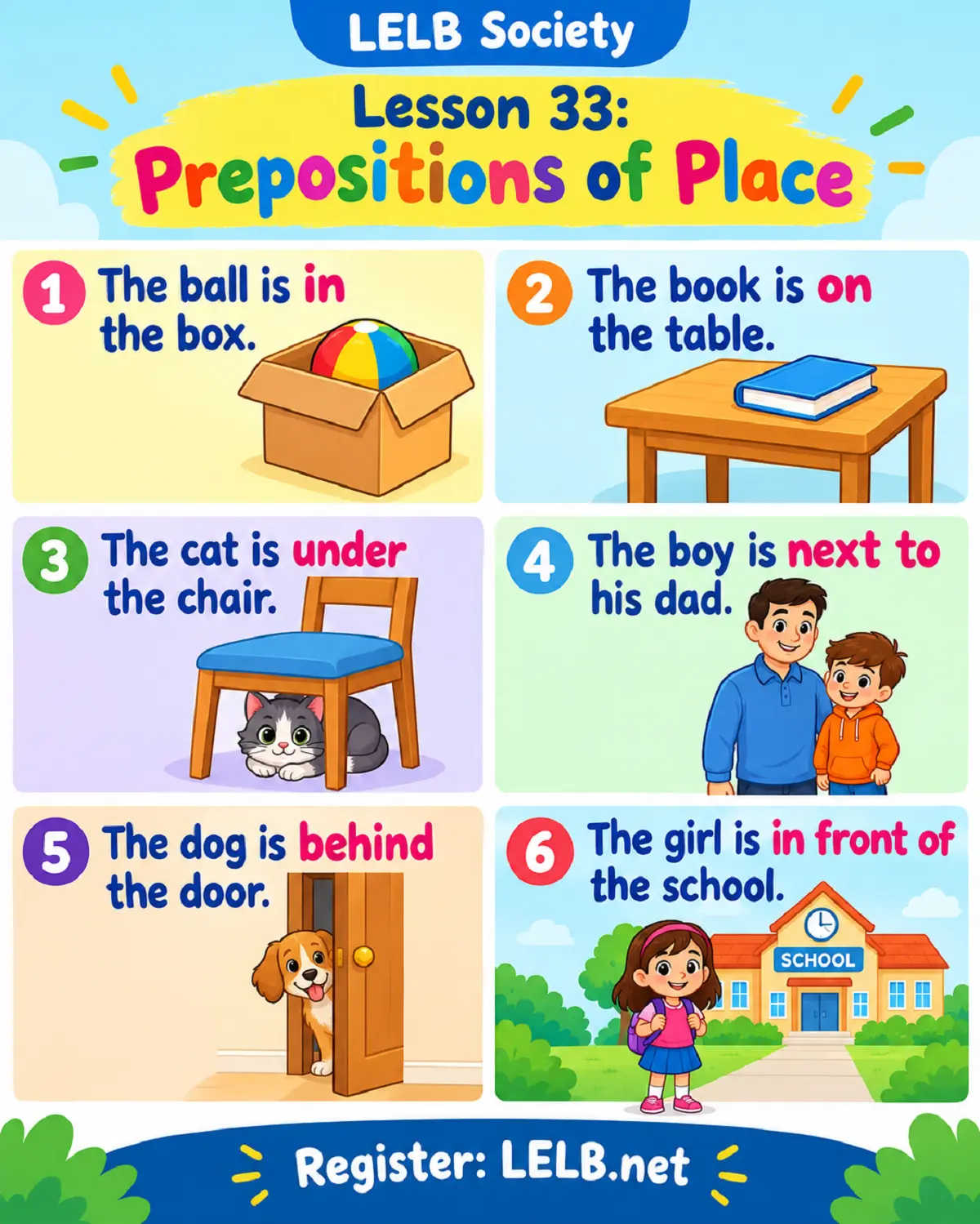
Learn six common prepositions of place with simple English sentences for kids. In this lesson, children learn how to use in, on, under, next to, behind, and in front of to describe where people and things are. Colorful examples and simple reading practice help young English learners understand and use these useful prepositions in everyday …

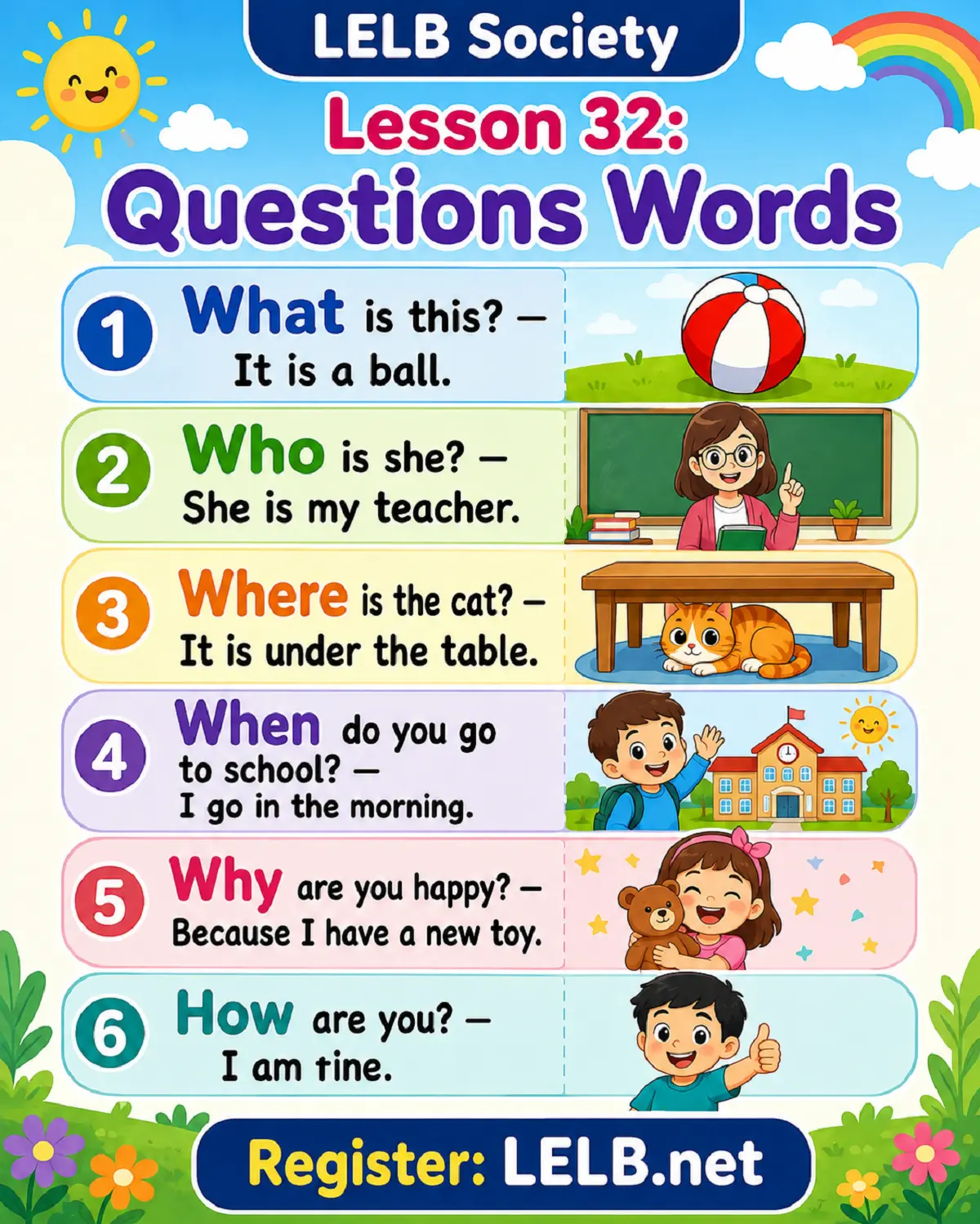
English for Kids – Lesson 32: Question Words with What, Who, Where, etc.

English for Kids - Lesson 32: Question Words with What, Who, Where, etc.

Learn six useful question words in English with this fun lesson for kids. Children will practice What, Who, Where, When, Why, and How through simple questions, answers, pictures, and everyday examples. This lesson helps young learners understand how to ask about things, people, places, time, reasons, and feelings. Kids can also practice reading and answering …

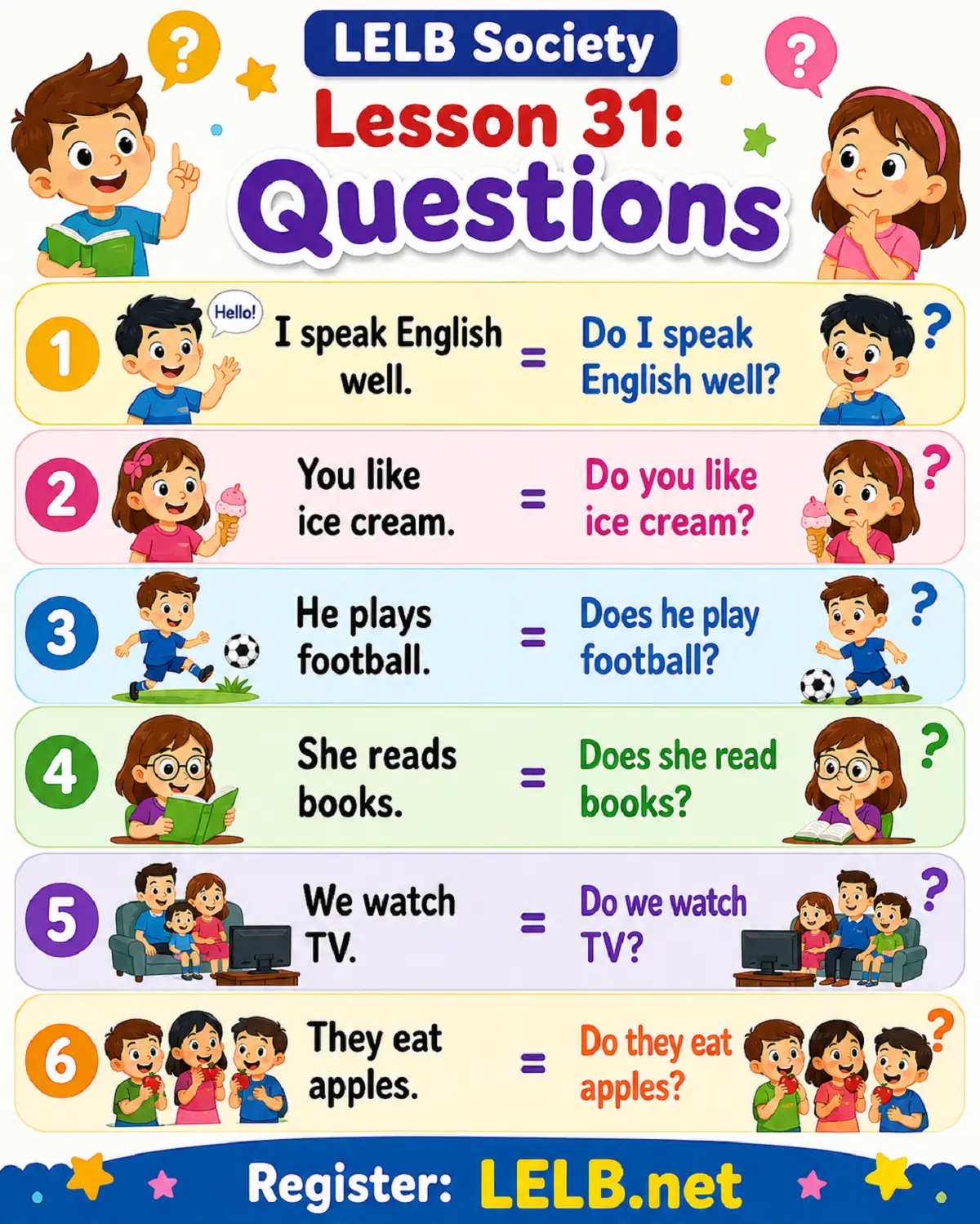
English for Kids – Lesson 31: Questions with Do and Does

English for Kids - Lesson 31: Questions with Do and Does

Learn how to make simple English questions with Do and Does in this fun English lesson for kids. Children will practice question forms with I, you, he, she, we, and they. Through six easy examples about speaking English, ice cream, football, books, TV, and apples, kids can learn when to use Do and Does and …

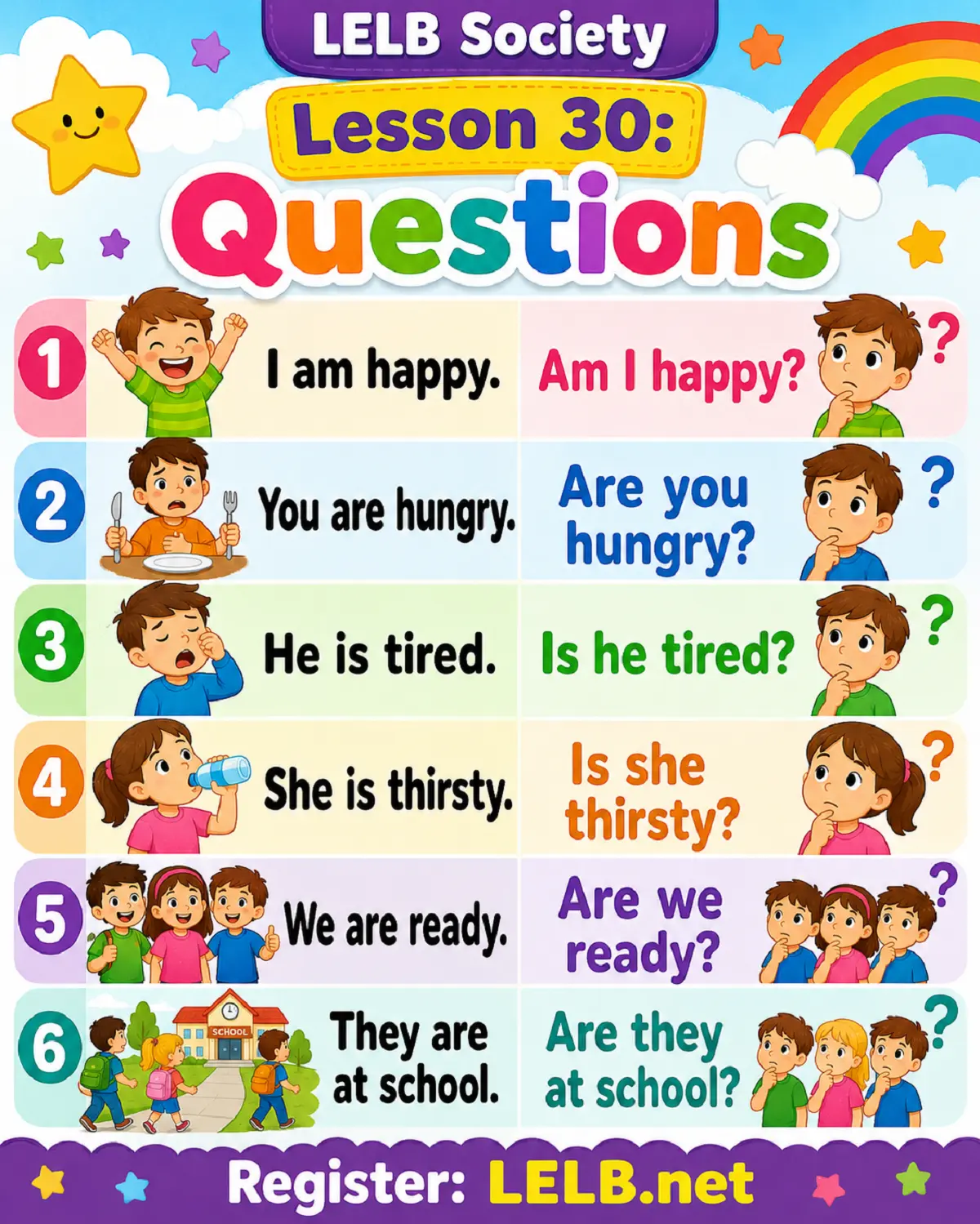
English for Kids – Lesson 30: Questions with Am, Is, and Are

English for Kids - Lesson 30: Questions with Am, Is, and Are

Learn how to make simple questions in English with am, is, and are. In this lesson, kids practice changing statements such as “I am happy” into questions like “Am I happy?” They will also practice questions with you, he, she, we, and they. Colorful examples, simple vocabulary, reading practice, and fun questions help young English …

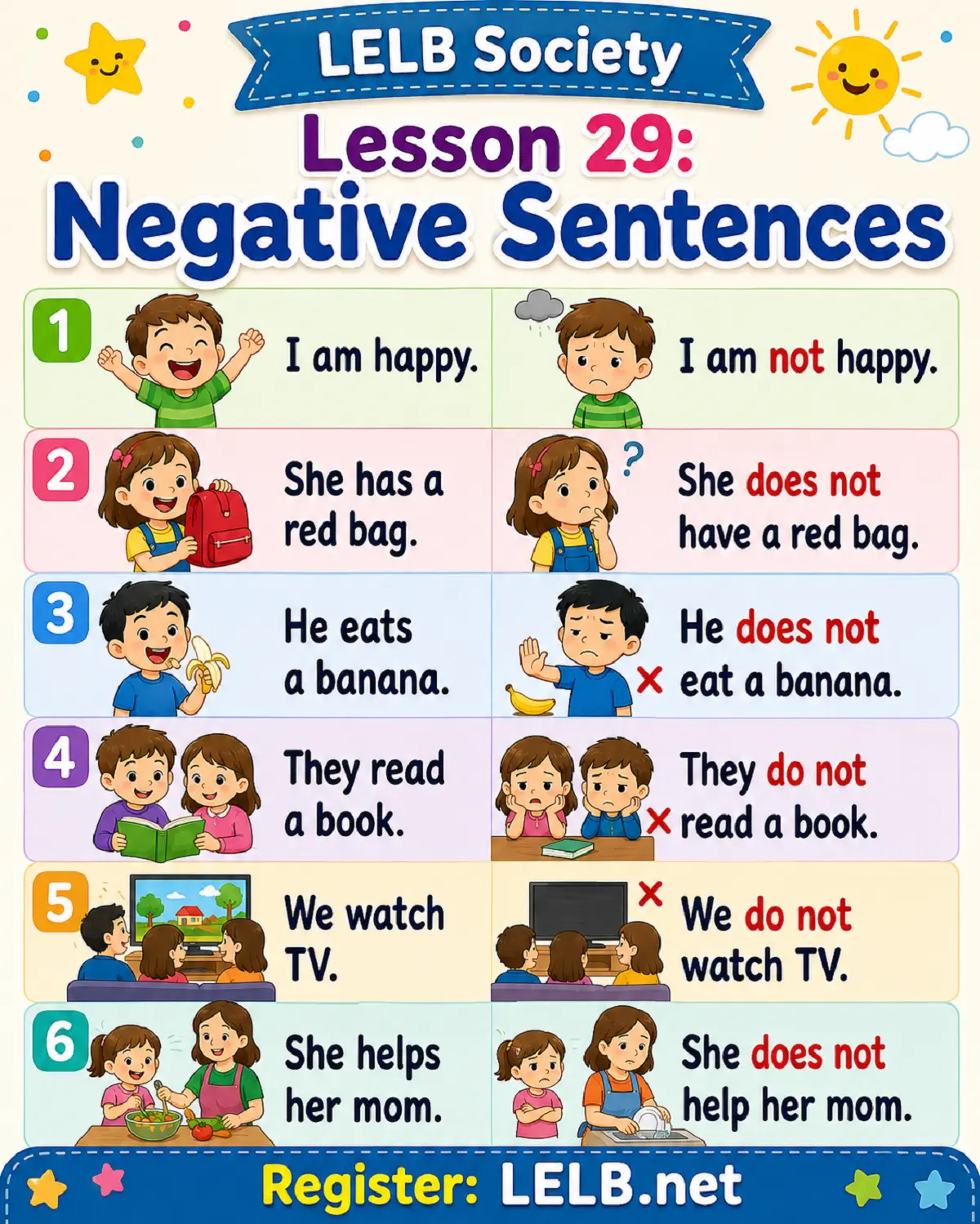
English for Kids – Lesson 29: Negative Sentences with Video

English for Kids - Lesson 29: Negative Sentences with Video

Learn how to make negative sentences in English with this fun lesson for kids. Children will practice simple sentences with “not” and “does not” using familiar words and everyday activities. They will learn how to say what people do and do not do, while improving their vocabulary, reading, and basic grammar skills through short and …

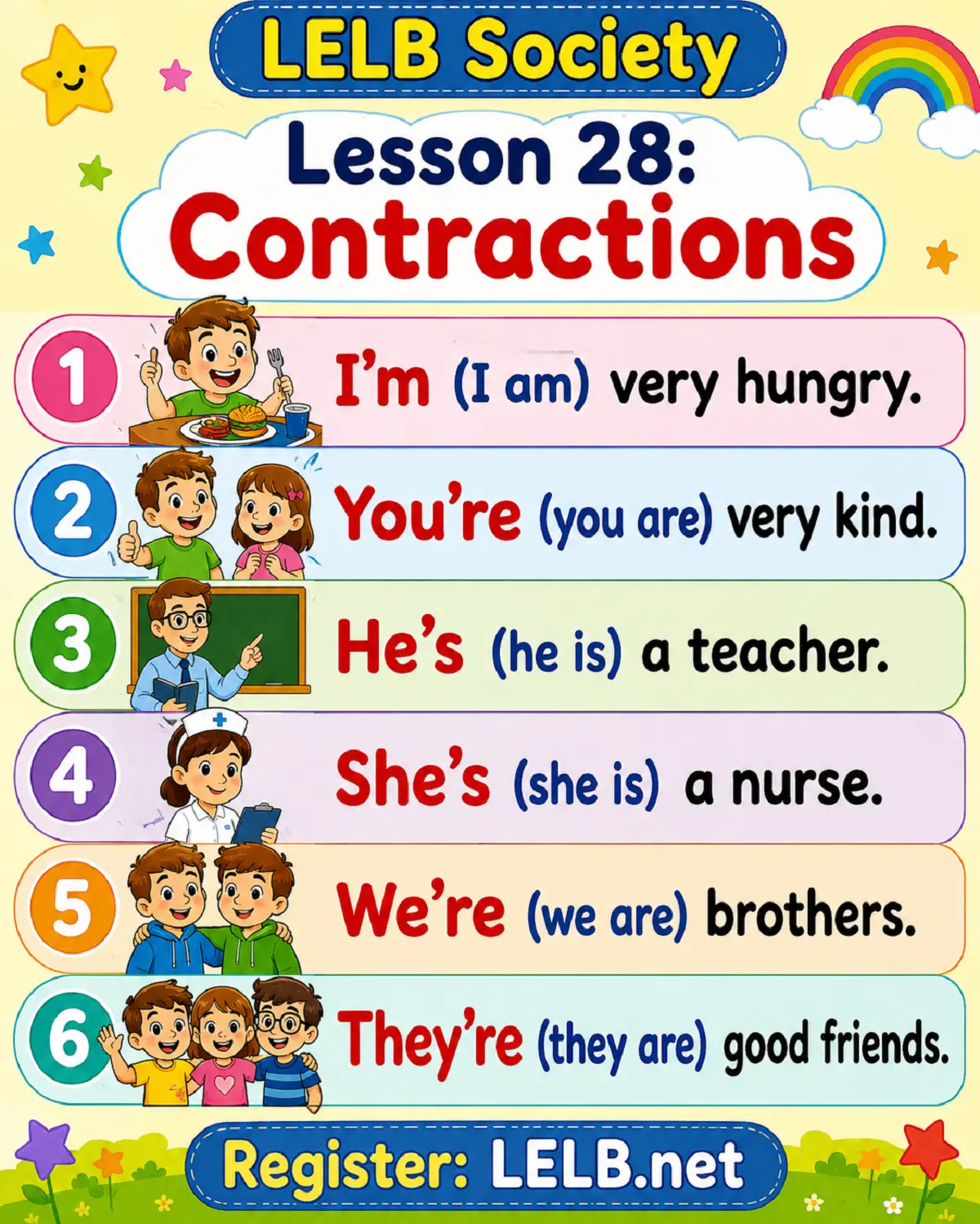
English for Kids (Lesson 28): Contractions – I’m, You’re, He’s, & She’s

English for Kids (Lesson 28): Contractions – I'm, You're, He's, & She's

Learn common English contractions with this fun and simple lesson for kids. Children will practice short forms such as I’m, you’re, he’s, she’s, we’re, and they’re. Through easy sentences and familiar vocabulary, young learners can understand how contractions are used in everyday English. This lesson also helps children improve their reading, speaking, and sentence-building skills …

English for Kids – Pronouns in Simple Sentences with Video

English for Kids - Pronouns in Simple Sentences with Video

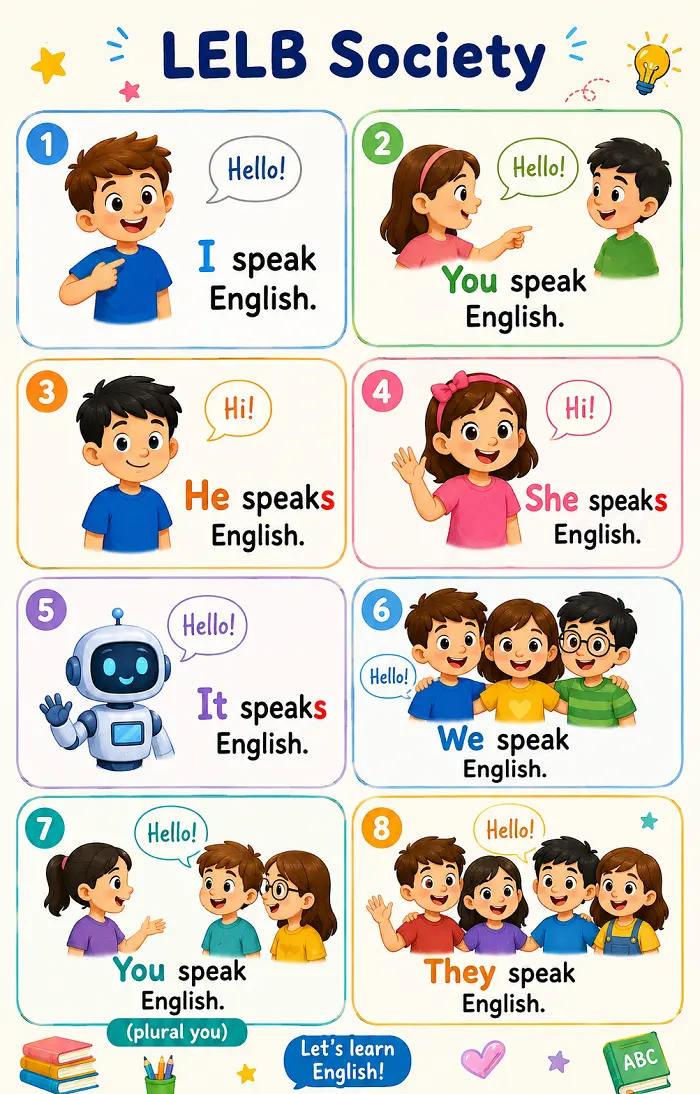
Help your child learn English pronouns with simple present tense sentences. This beginner-friendly lesson introduces I, You, He, She, It, We, and They through easy examples and colorful illustrations. Perfect for young English learners to practice speaking, reading, and building confidence in everyday conversations. Video of English for Kids on Pronouns Watch the video lesson …

Invert Definition in Context with Images & Visuals

Invert Definition in Context with Images & Visuals

Invert definition in real context with images and visuals for advanced ESL students /ɪnˈvɜːt/ (verb) Invert definition to turn something upside down, reverse the arrangement of something, change something to its opposite, upset, capsize, overturn, turn over, flip-flop Video of invert Invert in context In many languages, the conventional word order in a sentence is …

Farsi vs. Arabic: What Persian Learners Need to Know

Farsi vs. Arabic: What Persian Learners Need to Know between the two Languages

For curious minds drawn to the rich tapestry of Middle Eastern languages, Farsi (also known as Persian) and Arabic often spark debate. Both boast beautiful calligraphy, vibrant cultures, and long histories. But for those taking the plunge into language learning, a crucial question arises: Farsi or Arabic? While they share some similarities due to geographical …