Data Analysis in Qualitative Research on Online Social Presence

Data Analysis in Qualitative Research on Online Social Presence
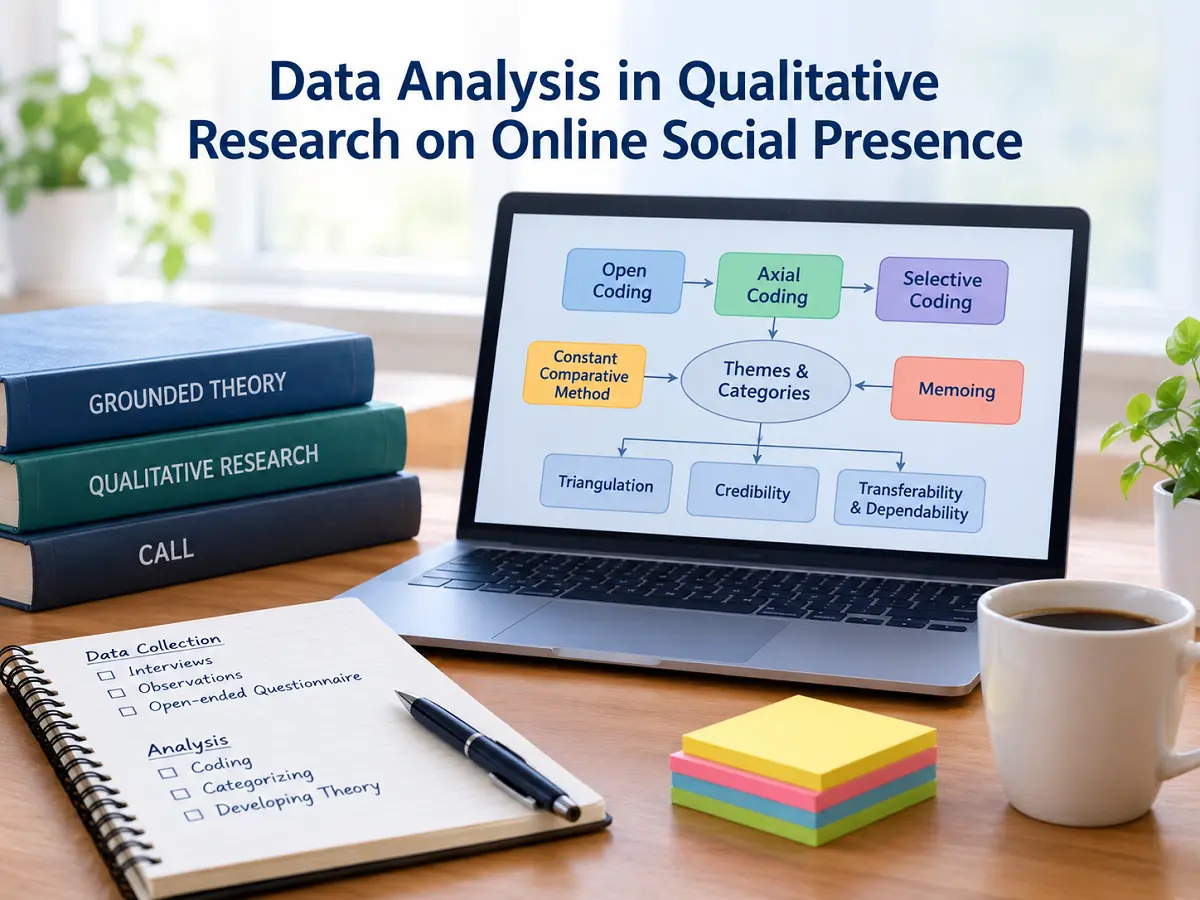
This post explores the data analysis methods used in my PhD study on social presence in computer-assisted language learning (CALL) and online learning communities. It explains grounded theory, including open, axial, and selective coding, constant comparative analysis, and memoing. The post also examines the researcher’s role as a participant-observer, data triangulation through observations, interviews, and …


PhD Thesis Methodology: Qualitative Research Design and Procedure

PhD Thesis Methodology: Qualitative Research Design and Procedure

This article presents an excerpt from Dr. Mohammad Hossein Hariri Asl’s PhD thesis, focusing on the methodology of establishing an effective online learning community. It discusses qualitative research design, purposeful sampling, participant selection, and the procedures used in an online English conversation class with 42 students. The study explores content-based instruction, synchronous online learning, and …

Qualitative Data Collection: Interviews, Observation, and Questionnaires

Qualitative Data Collection: Interviews, Observation, and Questionnaires

This article examines three qualitative data collection instruments used in an online language learning study: semi-structured interviews, participant observation, and open-ended questionnaires. It explains how interviews supported grounded theory and the constant comparative method, how observations and audio recordings contributed to triangulation, and how open-ended questionnaires provided richer participant responses. The discussion also covers individual …

Qualitative Research Methodology in Online English Learning

Qualitative Research Methodology in Online English Learning

This article presents the methodology of a qualitative study investigating social presence and interactivity in online English learning. It discusses the rationale for adopting qualitative research, participant selection, sampling strategies, instrumentation, and the use of grounded theory. The study examines iteration, saturation, criterion sampling, snowball sampling, semi-structured interviews, memo-writing, constant comparative analysis, and the researcher’s …