Qualitative Data Collection: Interviews, Observation, and Questionnaires

Qualitative Data Collection: Interviews, Observation, and Questionnaires

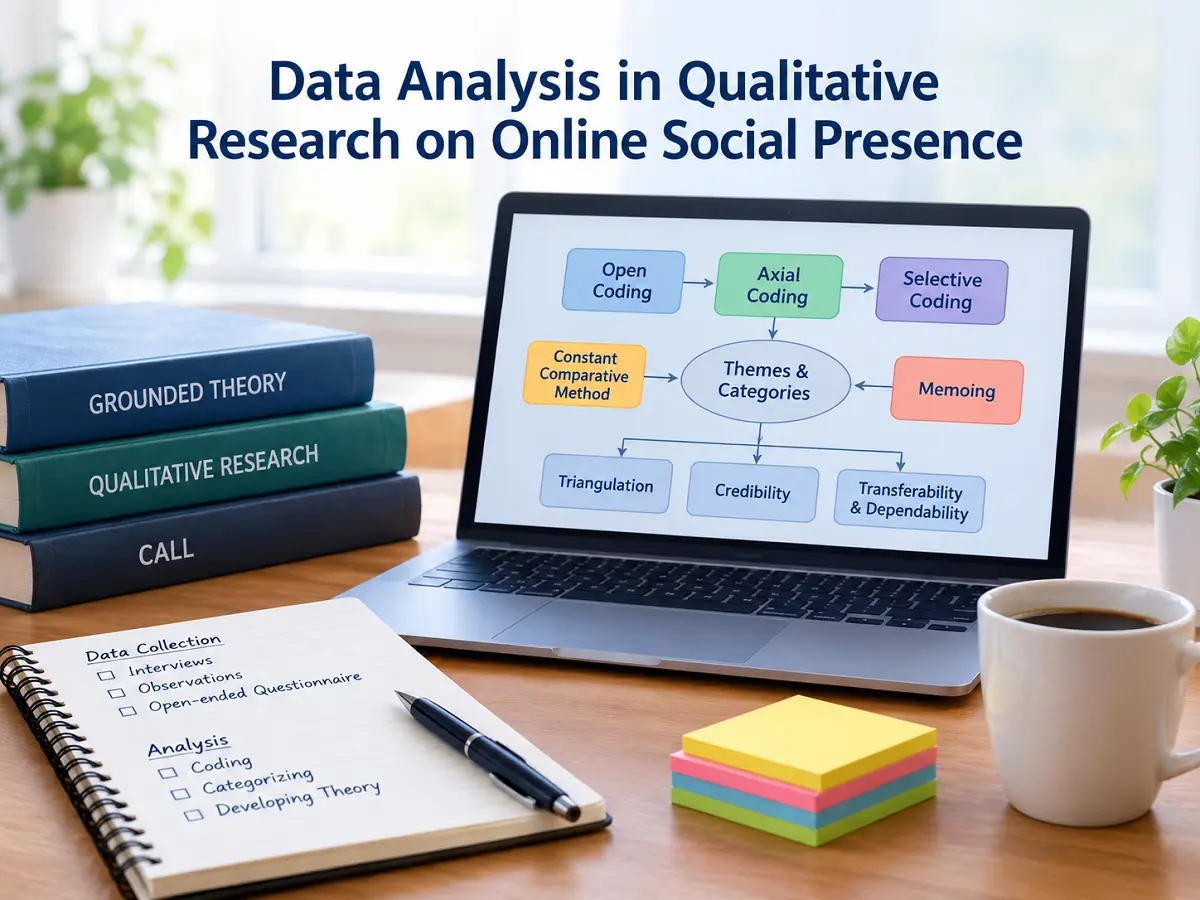
This article examines three qualitative data collection instruments used in an online language learning study: semi-structured interviews, participant observation, and open-ended questionnaires. It explains how interviews supported grounded theory and the constant comparative method, how observations and audio recordings contributed to triangulation, and how open-ended questionnaires provided richer participant responses. The discussion also covers individual …

Qualitative Research Methodology in Online English Learning

Qualitative Research Methodology in Online English Learning

This article presents the methodology of a qualitative study investigating social presence and interactivity in online English learning. It discusses the rationale for adopting qualitative research, participant selection, sampling strategies, instrumentation, and the use of grounded theory. The study examines iteration, saturation, criterion sampling, snowball sampling, semi-structured interviews, memo-writing, constant comparative analysis, and the researcher’s …

Criticisms and Challenges of Computer-Assisted Language Learning

Criticisms and Challenges of Computer-Assisted Language Learning

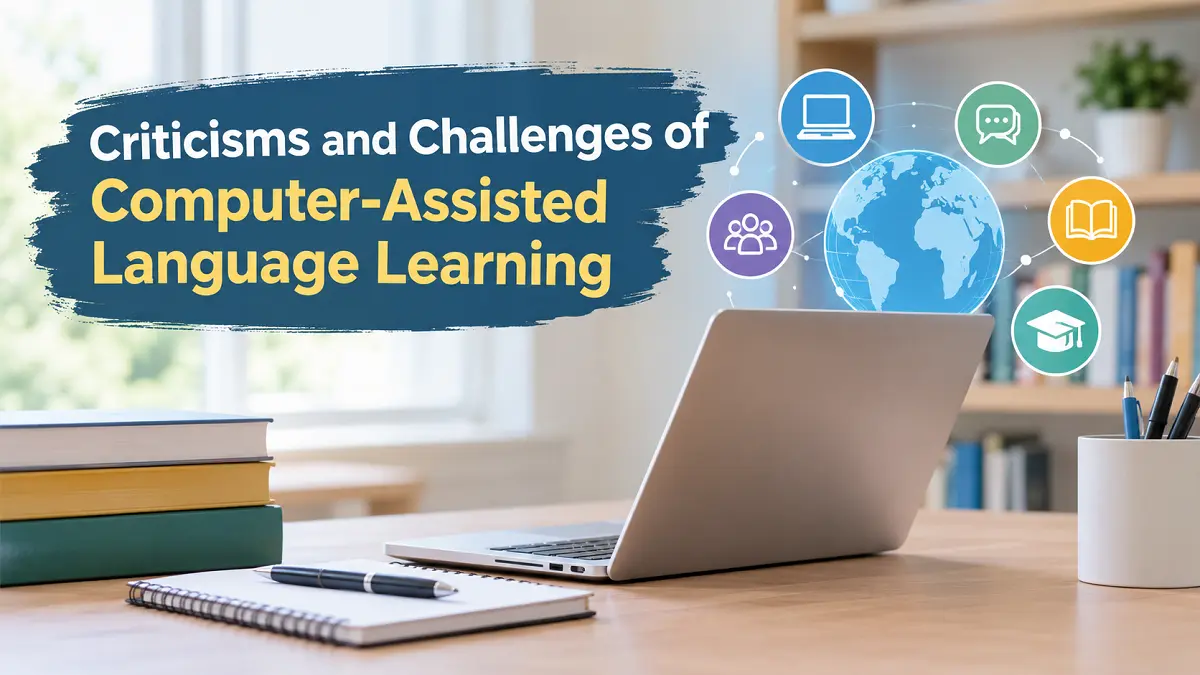
Computer-Assisted Language Learning (CALL) offers significant opportunities for language education, but it also faces important pedagogical, technical, methodological, and learner-related challenges. This article examines major criticisms of CALL, including the novelty effect, overemphasis on technology, inadequate learner-centeredness, limited attention to learning styles, right-to-left language challenges, material development issues, and insufficient collaboration and integration. It also …

Negotiation of Meaning in Second Language Learning

Negotiation of Meaning in Second Language Learning

Negotiation of meaning plays a central role in second language learning by promoting comprehension, interaction, feedback, pushed output, and noticing. This article explores how negotiation supports SLA in educational settings and examines the role of computer-mediated communication (CMC), online discussions, synchronous tasks, and CALL in facilitating meaningful interaction. Drawing on research by Long, Pica, Warschauer, …

Three Types of Assessment in Computer-Assisted Language Learning

Three Types of Assessment in Computer-Assisted Language Learning

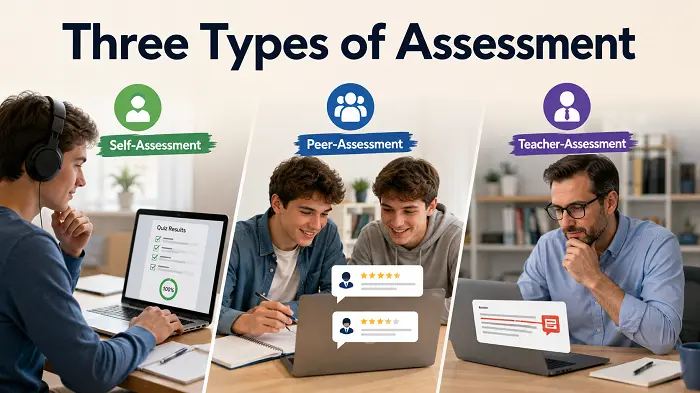
Explore three important types of assessment in computer-assisted language learning (CALL): self-assessment, peer-assessment, and teacher-assessment. This article examines how digital tools, learning management systems, online peer review, digital portfolios, grammar checkers, and teacher feedback can support language learning. It also discusses learner autonomy, collaboration, negotiation of meaning, error correction, and the role of technology in …

Collaboration, Immediacy, Belonging, and CBI in CALL

Collaboration, Immediacy, Belonging, and CBI in CALL

This article explores four influential concepts in Computer-Assisted Language Learning (CALL): collaboration, immediacy, sense of belonging, and Content-Based Instruction (CBI). Drawing on established research, it explains how these concepts contribute to learner interaction, social presence, motivation, and language development in online environments. The discussion also highlights practical principles for implementing CBI and fostering meaningful communication …

Social Presence and Collaborative Learning in Online Education

Social Presence and Collaborative Learning in Online Education

This article explores the role of social presence, collaboration, and interactivity in online learning environments, particularly in CALL and CMC-based language education. Drawing on major studies and theoretical frameworks, it examines how teacher presence, group interaction, online communication, and learner engagement contribute to student satisfaction, community building, and effective virtual learning experiences. The article also …

Social Presence and Student Interaction in Online Language Learning

Social Presence and Student Interaction in Online Language Learning

Explore the critical role of social presence and student interaction in online language learning environments. This article delves into how computer-mediated communication (CMC) reshapes participation, examining linguistic complexity, negotiation patterns, and the shift toward more balanced classroom discourse. It contrasts early theories that emphasized communication media with modern views that prioritize participant behavior in developing …

Asynchronous Communication in Language Learning Explained

Asynchronous Communication in Language Learning Explained

Computer-mediated communication (CMC) has transformed how languages are taught and learned in online environments. From real-time voice interaction to reflective, text-based exchanges, digital tools offer unique pedagogical affordances for L2 learners. This article explores synchronous and asynchronous CMC modes, including VoIP, discussion forums, blogging, and podcasting, highlighting their educational benefits, limitations, and implications for collaborative …

ICT and Synchronous Communication in Language Learning

ICT and Synchronous Communication in Language Learning

Information and Communication Technology (ICT) has transformed language learning by providing access to authentic materials, interactive tools, and online communication platforms. From general-purpose software to advanced Computer-Assisted Language Learning (CALL) programs, ICT offers learners and teachers opportunities to improve language skills effectively. Synchronous computer-mediated communication (SCMC) and instant messaging platforms allow real-time interaction, enhancing collaboration, …