Three Types of Assessment in Computer-Assisted Language Learning

Three Types of Assessment in Computer-Assisted Language Learning

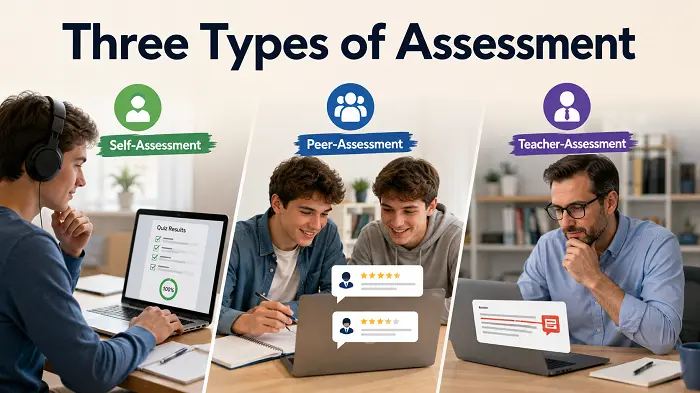
Explore three important types of assessment in computer-assisted language learning (CALL): self-assessment, peer-assessment, and teacher-assessment. This article examines how digital tools, learning management systems, online peer review, digital portfolios, grammar checkers, and teacher feedback can support language learning. It also discusses learner autonomy, collaboration, negotiation of meaning, error correction, and the role of technology in …

Listen to Any Text on LELB Society with On-Demand Text-to-Speech

Listen to Any Text on LELB Society with On-Demand Text-to-Speech

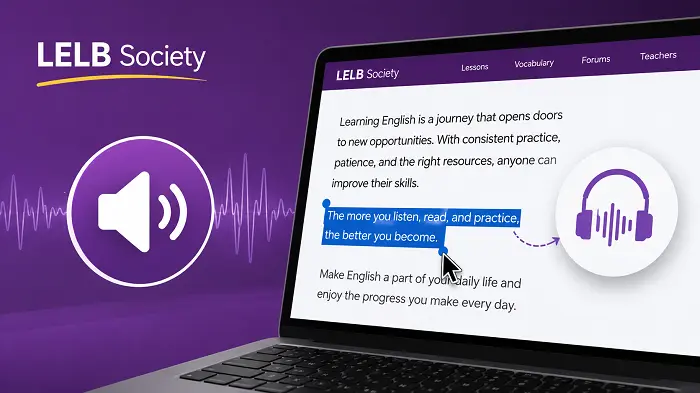
Registered members of LELB Society can select any text on the website—from a single word or phrase to a complete sentence or paragraph—and listen to it instantly with high-quality text-to-speech technology. This on-demand feature helps English learners improve listening comprehension, pronunciation, vocabulary, and overall language awareness. By listening to selected words and passages repeatedly, learners …

Robita Series: Fun English Conversations Between Robot and Bita

Robita Series: Fun English Conversations Between Robot and Bita

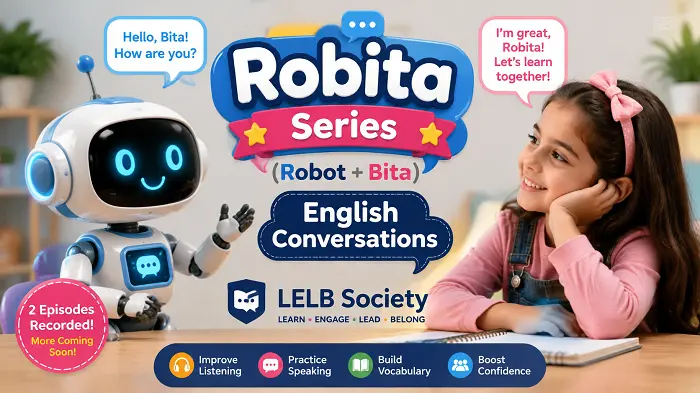
Discover the Robita Series, a creative English learning project featuring conversations between Robita, an AI-powered robot, and Bita. In each episode, children practice English through natural dialogues, questions, and everyday topics. With two episodes already recorded and more to come, Robita Series helps young learners improve listening, speaking, vocabulary, and communication skills in an engaging …

Collaboration, Immediacy, Belonging, and CBI in CALL

Collaboration, Immediacy, Belonging, and CBI in CALL

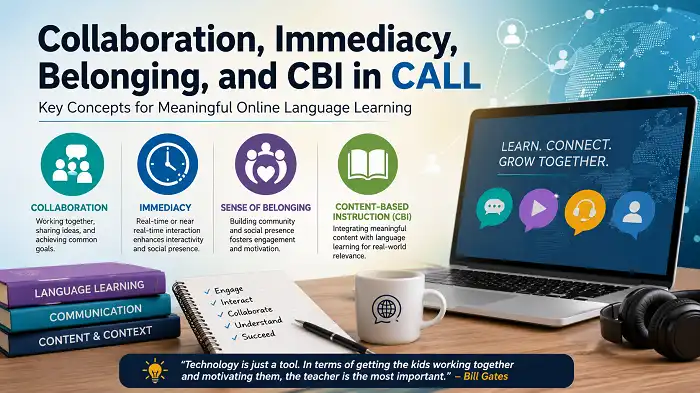
This article explores four influential concepts in Computer-Assisted Language Learning (CALL): collaboration, immediacy, sense of belonging, and Content-Based Instruction (CBI). Drawing on established research, it explains how these concepts contribute to learner interaction, social presence, motivation, and language development in online environments. The discussion also highlights practical principles for implementing CBI and fostering meaningful communication …

Google Chrome Reading Mode for Accessibility and Focus

Google Chrome Reading Mode for Accessibility and Focus

Discover how Google Chrome Reading Mode can improve readability, focus, and accessibility for visually impaired users and online learners. In this article, I compare Chrome’s clean reading experience with Microsoft Edge’s Read Aloud feature and explain why I personally prefer Chrome for distraction-free reading. Learn about the strengths and limitations of Chrome Reading Mode, including …

Asynchronous Communication in Language Learning Explained

Asynchronous Communication in Language Learning Explained

Computer-mediated communication (CMC) has transformed how languages are taught and learned in online environments. From real-time voice interaction to reflective, text-based exchanges, digital tools offer unique pedagogical affordances for L2 learners. This article explores synchronous and asynchronous CMC modes, including VoIP, discussion forums, blogging, and podcasting, highlighting their educational benefits, limitations, and implications for collaborative …

ICT and Synchronous Communication in Language Learning

ICT and Synchronous Communication in Language Learning

Information and Communication Technology (ICT) has transformed language learning by providing access to authentic materials, interactive tools, and online communication platforms. From general-purpose software to advanced Computer-Assisted Language Learning (CALL) programs, ICT offers learners and teachers opportunities to improve language skills effectively. Synchronous computer-mediated communication (SCMC) and instant messaging platforms allow real-time interaction, enhancing collaboration, …

Computer-Mediated Communication (CMC) in Language Learning

Computer-Mediated Communication (CMC) in Language Learning

Computer-Mediated Communication (CMC) has become a fundamental component of modern language teaching and learning. This post examines how CMC environments, tools, and strategies support interaction, collaboration, and authentic language use. By reviewing definitions, historical developments, instructional techniques, and influential research studies, readers will gain a clear understanding of how CMC reshapes second language pedagogy and …

Advantages of CALL in Second Language Learning

Advantages of CALL in Second Language Learning

Computer-Assisted Language Learning (CALL) has revolutionized the way students acquire and practice new languages. Unlike traditional classroom settings, CALL environments provide learners with individualized instruction, authentic materials, and instant feedback. This post explores the major advantages of CALL, such as motivation, skill integration, record keeping, and authentic learning experiences. By combining theory and empirical research, …

History and Evolution of Computer-Assisted Language Learning (CALL)
History and Evolution of Computer-Assisted Language Learning (CALL)

Computer-Assisted Language Learning (CALL) has revolutionized language education since its emergence in the 1960s. This comprehensive review explores the evolution of CALL across three major stages — behavioristic, communicative, and integrative — highlighting how technology has transformed teaching and learning practices in second or foreign language education. From grammar drills and syntax exercises to interactive …