

Qualitative Data Collection: Interviews, Observation, and Questionnaires
This article examines three qualitative data collection instruments used in an online language learning study: semi-structured interviews, participant observation, and […]
Current TESL issues (Teaching English as a Second Language) in an interactive fashion enriched with distinctive keywords and tags and comment forms to discuss the issues
This article examines three qualitative data collection instruments used in an online language learning study: semi-structured interviews, participant observation, and […]

This article presents the methodology of a qualitative study investigating social presence and interactivity in online English learning. It discusses […]

Computer-Assisted Language Learning (CALL) offers significant opportunities for language education, but it also faces important pedagogical, technical, methodological, and learner-related […]

Negotiation of meaning plays a central role in second language learning by promoting comprehension, interaction, feedback, pushed output, and noticing. […]
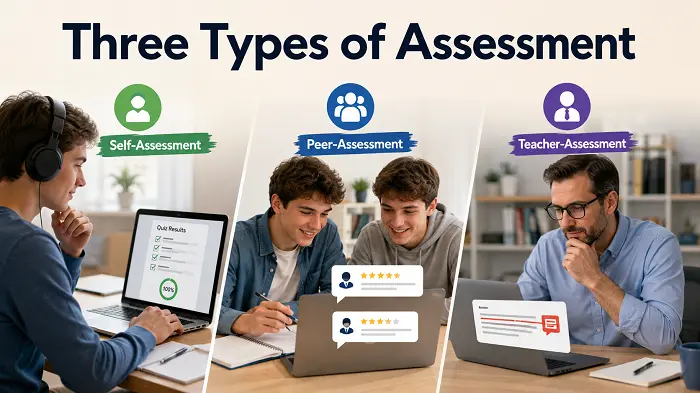
Explore three important types of assessment in computer-assisted language learning (CALL): self-assessment, peer-assessment, and teacher-assessment. This article examines how digital […]
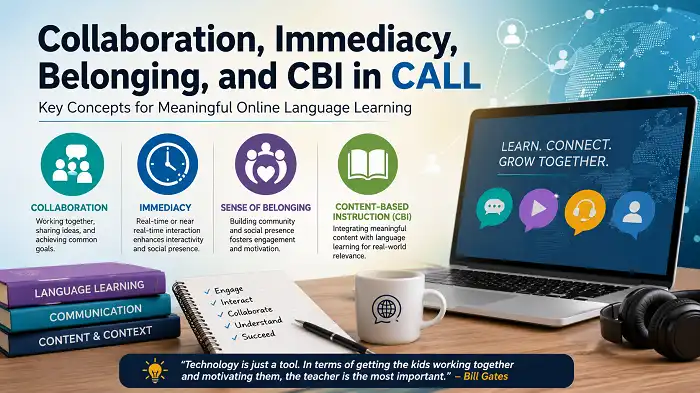
This article explores four influential concepts in Computer-Assisted Language Learning (CALL): collaboration, immediacy, sense of belonging, and Content-Based Instruction (CBI). […]

This article explores the role of social presence, collaboration, and interactivity in online learning environments, particularly in CALL and CMC-based […]

Explore the critical role of social presence and student interaction in online language learning environments. This article delves into how […]

Computer-mediated communication (CMC) has transformed how languages are taught and learned in online environments. From real-time voice interaction to reflective, […]