
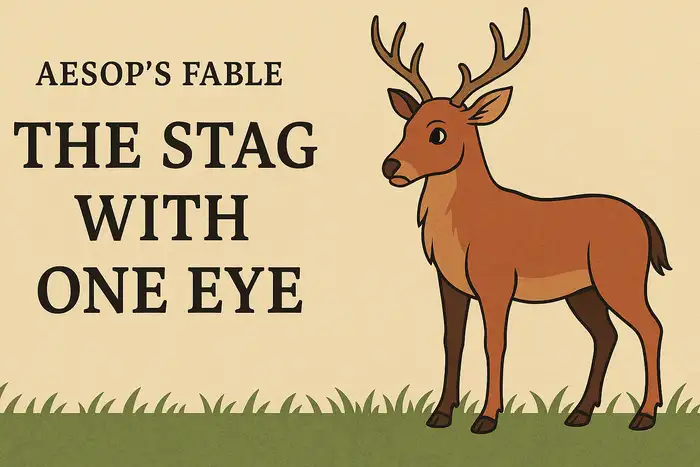
The Stag with One Eye by Aesop for ESL students with a video, vocabulary practice in real context, questions for discussion and comprehension, and the moral of the short story Video of the Stag with One Eye https://www.youtube.com/watch?v=mwNuWHHXy2A The Stag with One Eye Once there was a stag who had lost sight in one of his eyes. Despite his partial blindness, he had learned to adapt and survive. He often grazed near the edge of the sea, always keeping his good eye fixed on the land. He was cautious and alert, knowing that hunters and hounds usually came from inland. ...
The Stag with One Eye by Aesop for ESL Students
About the Author

Related Posts


2 .What mistake did the stag make that ultimately led to his death?
– The stag’s mistake was that he only paid attention to the land and ignored the sea, which is where the danger came from.
Thank you for answering the question correctly. Just a minor point to make, though:
In your adjective clause (…, which is where …) it’s better to change “is” to “was” because you’re referring to the past events in the story.
1 . Why did the stag only watch the land and not the sea?
– Because he thought the land was dangerous and the sea was harmless, he only watched the land to keep himself safe.
Excellent! We have 2 old sayings or proverbs in English listed below with the same central message:
Meaning: People who seem quiet or harmless may surprise you, sometimes in dangerous ways.
This is more of a saying than a formal proverb.
This expresses your idea directly, but it is more of a quotation or paraphrase than a traditional proverb.
1. The stag turned his blind side toward sea without worry because the sea was harmless, calm, open, and devoid of threats.
2. The stag believed that the only threat could come from the land. Because of this, he ignored the sea and left himself vulnerable on that side.
3. In my opinion, overconfidence and arrogance can lead to a failure to see reality.
Happy to see you practice commenting frequently.
Feedback:
The word, failure, is considered singular in this context.