Table of Contents
This chapter explores how teacher presence and socialization were fostered in an online English conversation course. Drawing on established pedagogical principles, it explains how structured posting schedules, clear participation requirements, recorded sessions, and conversational guidelines supported effective online instruction. It also examines how BuddyPress, bbPress discussion forums, and synchronous chat tools promoted social presence, learner autonomy, and student–student interaction in a virtual learning environment.
Teacher Presence
To stay organized and practice discipline in our virtual classes that, according to Palloff and Pratt (2003), if not appropriately controlled, tend to become disordered and messy, the researcher was inspired by the tips proposed by Palloff and Pratt (2003) on creating structure in our online course as the following:
- Create specific posting times: The researcher created a post in conjunction with the selected topic for the next session and published it on Friday. The participants had plenty of time – from Friday to Tuesday – to develop the main content of the course through their comments and replies in the corresponding comment form on the published post. The deadline for submitting the assignments (at least one comment and one reply) was Tuesday, 9:00 pm, i.e. 24 hours before our synchronous voice-based discussions on Skype and Discord.
- Be specific about the number of responses to other students’ posts required weekly: Content development for our round table activity in the form of commenting and replying was obligatory. In other words, the participants without assignments were seriously barred from entering the voice channel on Discord or joining our conferences on Skype where our virtual classes were held.
- Be specific and clear about all course expectations: To mention some items of our class regulations (Appendix C), the participants were expected to keep their environment completely quiet, use their PCs or laptops for the classes (not portable devices), listen to/watch the relevant audio/video files embedded in the posts of each session before the class, and so forth.
The researcher mindfully created podcasts of the recorded sessions of our round tables. Then he simply embedded the podcasts in corresponding posts. The availability of podcasts on our blog made it possible for the participants to raise the level of their consciousness in two principal ways: (1) the prospect of self-appraisal through listening to their own recorded contribution to the course, and (2) projecting their cognizance onto our upcoming sessions as they had been notified that each session would be recorded and uploaded (Stanley, 2013).

In our CBI-based round tables, the researcher monitored the participants’ questions in accordance with Grice’s (1989) conversation maxims as indicated below because in CBI, according to Pessoa, Hendry, Donato, Tucker and Lee (2007), an excessive focus on language forms might occur when language teachers may not be acquainted with the academic subject, CBI pedagogy, or techniques for engaging the students in academic discussions.
- Quality Factor: The questions must be semantically challenging and thought-provoking.
- Quantity Factor: The questions must be fairly informative (as informative as required).
- Relation Factor: The questions must be to the point and relevant.
- Manner Factor: The questions must be orderly and not semantically obscure.
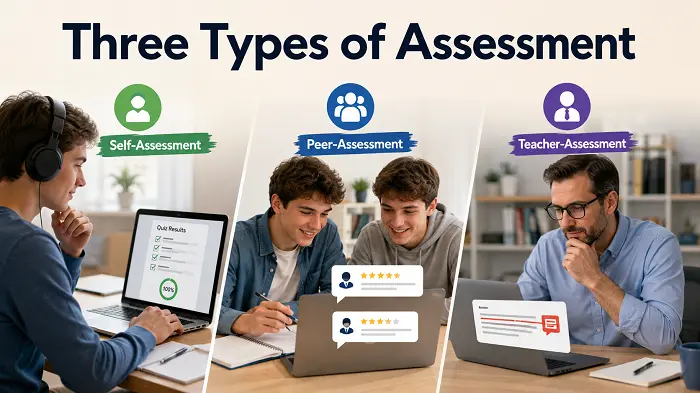
With regard to the aforementioned four principles, the researcher felt obligated to confirm them before our synchronous classes through utilizing the same comment forms and replying to the participants’ questions violating the principles. It is noteworthy to add that, particularly in the second phase of the investigation, the researcher intentionally reduced his presence to perform linguistic assessment (explicit error correction), trying to encourage the participants to perform self- and peer-assessment asynchronously. In so doing, teacher-assessment was voluntarily considered to be a last resort to evaluate the participants’ activities.
Encouraging Socialization
With the aim of enhancing the level of interactivity and social presence among the participants, the researcher consciously downloaded and installed BuddyPress on his WordPress-based website. BuddyPress helped the researcher to build a particular type of online community or social network with members profiles or information that the participants chose to share with each other (Stanley, 2013), activity streams or short notes on what the participants were doing (Stanley, 2013), user groups, public and private messaging, and the like. Each participant, who planned to attend our English conversation class, was required to create an account and join our online community, which was perfectly feasible on BuddyPress installed on our learning blog.

Account creation was together with setting personalized profiles with specific fields exclusively for the sake of learning English as a second/foreign language created by the researcher, such as Proficiency Level (elementary, pre-intermediate, intermediate, upper-intermediate, advanced, native speaker), English Style (American or British), Members’ Roles (English learner, English teacher or both), Short Biography, as well as some obliquely related fields, such as Age, Gender, Geographical Location, etc.
Moreover, two main discussion forums were created with bbPress, the principal discussion forum software program on WordPress. These two forums were English Questions and Challenging Questions in English. In the former forum, the participants could exchange questions and answers exclusively about the form of language. In the latter one, however, the participants could partake in an exchange of questions and answers vis-à-vis the challenging topics that were specified for our round tables in our English conversation class.
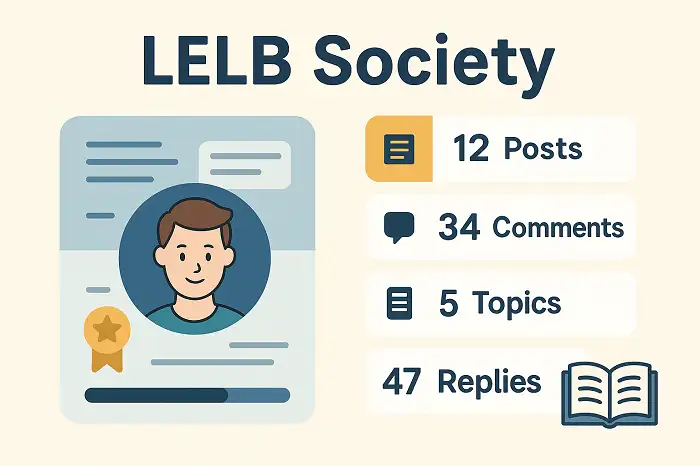
The employment of discussion forums, according to Manning and Johnson (2011), encouraged the participants, especially those who were quieter and more reticent (e.g., Mana), to experience an optimum level of student-student interaction asynchronously where there was no pressure of real-time communication in a more stress-free, and at the same time, reflectivity-arousing milieu.
In addition, the researcher set up an Internet Relay Chat (IRC) application at the bottom right corner of our website at LELB.net on which the participants and the other members of the community could chat with each other synchronously either privately or in a public chat room equipped with emoticons and file sharing.
The chat application was set up in a way that the registered members, including the participants, and the new users appeared respectively with their profiles specifications and guests. Each chatter could alter their online status to being Available, Idle, Busy or Offline to have their own online privacy. A considerable amount of interactivity and social presence was realized through synchronous text messaging between the researcher and the participants, and among the participants.
References
- Grice, P. (1989). Studies in the ways of words. Massachusetts, MA: Harvard University Press.
- Manning, S., & Johnson, K. E. (2011). The technology tool belt for teaching. San Francisco, CA: Jossey-Bass.
- Palloff, R. M., & Pratt, K. (2003). The virtual student: A profile and guide to working with online learners. San Francisco, CA: Jossey-Bass.
- Pessoa, S., Hendry, H., Donato, R., Tucker, G. R., & Lee, H. (2007). Content-based instruction in the foreign language classroom: A discourse perspective. Foreign Language Annals, 40(1), 102-121. doi:10.1111/j.1944-9720.2007.tb02856.x
- Stanley, G. (2013). Language learning with technology: Ideas for integrating technology in the classroom. Cambridge: Cambridge University Press.