Table of Contents
- Video of Distance Learning and CALL in Modern Language Education
- Distance Learning
- Key Characteristics of Distance Learning
- Computer Assisted Language Learning (CALL)
- Alternative Terms Related to CALL
- Growth and Recognition of CALL Research
- Key Research Questions in CALL
- Three Major Communities of CALL
- Qualities of a Successful CALL Program
- References
This article explores the evolution of distance learning and Computer Assisted Language Learning (CALL) in higher education. It examines how technological advancements have transformed traditional teaching into dynamic, learner-centered environments. By outlining key definitions, features, and classifications, the post highlights the pedagogical, engineering, and practical aspects of CALL and the role of integrated virtual learning environments in enhancing online education. This resource benefits educators, researchers, and students in applied linguistics and educational technology.
Video of Distance Learning and CALL in Modern Language Education

Distance Learning
Higher education is experiencing a noticeable paradigm shift from pedagogy to learning, creating an opportunity to implement new strategies within both traditional and virtual learning atmospheres. To be more specific, the emerging technologies are considered to be the key platform to achieving innovative delivery and assessment methods. In this regard, the new integrated learning environments look to provide distributed access to a unique network of course materials and relevant information sources (Broad, Matthews & McDonald, 2004).
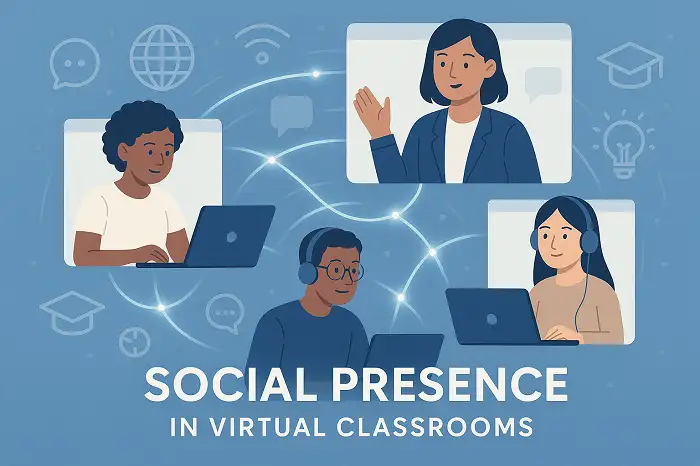
Hall and Knox (2009) contend that distance learning is where there is no or relatively minimal requirement for learners to physically attend the institution where they are studying. The term distance learning was first used in reference to “traditional paper-based distance courses delivered by mail” (Dudeney & Hockly, 2007, p. 136). However, nowadays distance learning refers to learning via technology, including the Internet, CD-ROMs, and portable devices. According to Dudeney and Hockly (2007), although distance learning and e-learning are almost interchangeable, the latter is a more recent term.
Key Characteristics of Distance Learning
Mood (1995) outlines the main four characteristics of distance learning in this way:
- Teachers and learners are physically separate from each other.
- An organized educational institution must influence or control courses.
- Media are regarded as channels of communication that give rise to student involvement.
- Communication is two-way and adopts various forms.

Broad et al. (2004) conducted a study on the effectiveness of an Integrated Virtual Learning Environment (IVLE) and came to this conclusion that there is value in using the Web as a means of enhancing learning and teaching. Their study lends some support to the notion that the Web is more than just a passing fad and has the potential to play a significant role in emerging learning and teaching strategies.
Computer Assisted Language Learning (CALL)

CALL is defined as the search for and study of applications of the computer in the field of language teaching and learning (Levy, 1997). CALL covers a broad spectrum of concerns, including the pedagogies implemented through technology and their evaluation. As a consequence, CALL draws from other areas within and beyond applied linguistics for conceptual and technical tools to account for and evaluate computer-based learning (Chapelle, 2001). By definition, CALL is tied to language learning methods. It never stands on its own but “assists language learning, and therefore is meant to serve methods” (Decoo, 2003, p. 269).
Alternative Terms Related to CALL
It is so elusive to define CALL that it has received some other terms and acronyms, which are all related to each other (Beatty, 2003):
- Computer-aided Instruction (CAI)
- Computer-assisted Learning (CAL)
- Computer-assisted Language Instruction (CALI)
- Computer-assisted Language Teaching/Testing (CALT)
- Computer Adaptive Teaching/Testing (CAT)
- Computer-based Training (CBT)
- Computer-mediated Communication (CMC)
- Computer-mediated Interaction (CMI)
- Intelligent Computer-assisted Language Learning (ICALL)
- Network-based Language Teaching (NBLT)
Growth and Recognition of CALL Research

The number of research studies in CALL has increased remarkably over the last decades, and as technology becomes more integrated into language teaching, we can expect the pace to continue (Greene, 1998; Hubbard, 2005; Leahy, 2008; Levy, 1998). Levy and Hubbard (2005) did a study on the rationale for the dominance of the term, CALL, over the above-mentioned alternatives. They came to this conclusion that there must be a strong case for the use of the term, CALL, as a general label because of the following three points:
- The distinctiveness and complexity of language as an object for learning,
- The need for a global term that can be relatively employed to describe what we do, and
- The de facto existence of a substantial and international group of individuals and established professional organizations that have continued to use the term for more than two decades, such as CALL Journal, EuroCall and its journal ReCALL, the CALL Interest Section of TESOL, Computer Assisted Language Instruction Consortium (CALICO), Japan Association of Language Teachers CALL Interest Group (JALTCALL), Asia Pacific Association for CALL (APACALL) and Pacific CALL Association (PacCALL).
Key Research Questions in CALL

According to Chapelle and Jamieson (1986), the three major questions that are frequently posed in the field of CALL are:
- Do students like it?
- Do students use it?
- Does it work?
They contend that these three questions should be substituted for the following two ones:
- What kind of students like and use a particular type of CALL?
- Do those students who use CALL achieve greater success in the second language?
Three Major Communities of CALL

The world of CALL seems to be really multifaceted by nature. Some scholars contend that the arena of CALL is basically divided into the following three communities (Colpaert, 2002):
- The Research Community: It is an interdisciplinary field of science in which the major challenge for the researchers is to retrieve relevant facts and findings in all related disciplines and to translate them into usable concepts.
- The Engineering Community: It is currently dominated by two approaches: (1) the Rapid Application Development approaches, which are systematic and holistic, and (2) the more traditional, generic and systematic models which focus on analysis, design, development, implementation and evaluation as consecutive stages with their own required expertise, methodology and expected outcomes.
- The Practice Community: It stands for all the places in the world where CALL tools and courseware are being used in classroom and self-study situations.
Qualities of a Successful CALL Program
Chapelle (2001) lists some specific qualities that a successful CALL program should possess (pp. 499–501):
- Language learning potential: The extent to which a CALL activity can be expected to be beneficial for language learning.
- Learner fit: The appropriate fit of CALL materials to learners’ linguistic ability level and individual characteristics.
- Meaning focus: The direction of learners’ attention primarily toward the meaning of the language required to accomplish the task.
- Authenticity: The degree of correspondence between a CALL task and the language use the learner is likely to engage in outside the classroom.
- Positive impact: The effects of a CALL task beyond its language learning potential.
- Practicality: How easily learners and teachers can implement the CALL task within the particular constraints of a class or language program.
References
- Beatty, K. (2003). Computers in language classroom. In D. Nunan (Ed.), Practical English language teaching (pp. 247-266). New York, NY: McGraw Hill.
- Broad, M., Matthews, M., & McDonald, A. (2004). Accounting education through an online-supported virtual learning environment. Active Learning in Higher Education, 5(2), 135-151. doi:10.1177/1469787404043810
- Chapelle, C. A. (2001). Computer applications in second language acquisition: Foundations for teaching, testing and research. Cambridge: Cambridge University Press.
- Chapelle, C., & Jamieson, J. (1986). Computer-assisted language earning as a predictor of success in acquiring English as a second language. TESOL Quarterly, 20(1), 27-45. doi:10.2307/3586387
- Colpaert, J. (2002). The world of CALL. Computer Assisted Language Learning, 15(5), 437-439. doi:10.1076/call.15.5.437.13469
- Decoo, W. (2003). Language methods and CALL: Redefining our relations. Computer Assisted Language Learning, 16(4), 269-274. doi:10.1076/call.16.4.269.23410
- Dudeney, G., & Hockly, N. (2007). How to teach English with technology. Harlow, UK: Pearson Education Limited.
- Greene, D. (1998). LATCH: A syllabus design for EFL instruction in CALL. Computer Assisted Language Learning, 11(4), 381-396. doi:10.1076/call.11.4.381.5668
- Hall, D. R., & Knox, J. S. (2009). Language teacher education by distance. In A. Burns & J. C. Richards (Eds.), The Cambridge guide to second language teacher education (pp. 218-229). Cambridge: Cambridge University Press.
- Hubbard, P. (2005). A review of subject characteristics in CALL research. Computer Assisted Language Learning, 18(5), 351-368. doi:10.1080/09588220500442632
- Leahy, C. (2008). Learner activities in a collaborative CALL task. Computer Assisted Language Learning, 21(3), 253-268. doi:10.1080/09588220802090295
- Levy, M. (1997). Computer-assisted language learning: Context and contextualization. Oxford: Oxford University Press.
- Levy, M. (1998). Review of computer-assisted language learning: Context and conceptualization. Language Learning & Technology, 2(1), 17-18.
- Levy, M., & Hubbard, P. (2005). Why call CALL ‘‘CALL’’? Computer Assisted Language Learning, 18(3), 143-149. doi:10.1080/09588220500208884
- Mood, T. A. (1995). Distance education: An annotated bibliography. Englewood, IL: Libraries Unlimited, Inc.