Table of Contents
This section of Chapter 4 of my PhD thesis on social presence explores how social context influences interaction and social presence in online language learning. Based on qualitative findings, it discusses learner satisfaction, user-friendly interfaces, friendly learning environments, peer interaction, and the advantages and limitations of voice and video conferencing in computer-assisted language learning (CALL).
Results and Discussion
Restatement of the Problem
Despite numerous advancements in the realm of CALL, this interdisciplinary field of study has been subject to some criticism. Some scholars (e.g., Herring, 2007; Levy, 1997; Ridder, 2000) contend that superiority of technology over both pedagogy and systematic research could be misleading in the long term. Herring (2007) believes that computer networks do not necessarily ensure “democratic, equal-opportunity interaction” (p. 13), as a result, a more critical analysis of CMC and communication technology is required.
Hubbard (2005) argues that our understanding of CALL is not profound enough due to a term that he refers to as the novelty effect, which means that a substantial proportion of our knowledge and experience in the field of CALL emanates from novice learners and teachers. A practical solution to the novelty effect, according to Hubbard (2005), could be conducting more longitudinal studies.

Furthermore, with the aim of carrying out more comprehensive studies, some CALL specialists (e.g., Chapelle, 1997; Cobb, 2009; Guba, 1981; Hubbard, 2005; Leahy, 2008; Lincoln & Guba, 1985; Richardson & Swan, 2003; Swan, 2002; Tu, 2001; Warschauer, Grant, Real and Rousseau (2004) maintain that qualitative research in conjunction with CALL ought to receive even more attention to yield more thorough answers to the current issues of CALL, which are socially oriented.
On the other hand, the majority of the existing CALL programs do not fall into the integrative category (Felix, 2001) on account of a dearth of sociocultural considerations. Surprisingly, there still exist intentional or unintentional attempts to disintegrate the whole system into discrete variables, such as acquisition of grammar, reading comprehension, discourse analysis, etc. (Felix, 2001). Moreover, students are not invited to assume some active roles in CALL programs basically due to the myth that student activeness might be interpreted as teacher passivity (Warschauer, Turbee & Roberts, 1996). As a consequence, the students’ experience of Web-based language learning is not sufficiently researched (Felix, 2001).
Another myth that might overshadow the realm of CALL is this fallacy that any successful language teacher could necessarily be an effective language e-teacher, as well. As James (1996) has stated, an effective CALL teacher should assess the materials of the course critically to create communicative exercises and activities rather than simply assume that groups of students would automatically eventuate in the realization of social presence. Besides, according to Ridder (2000), CALL teachers, who might perfectly know what to teach, do not seem to know how to teach in virtual language classes. For example, according to Blin (2004), CALL students are still lacking in social interdependency and metacognitive awareness.
This chapter will reflect the findings that were obtained throughout the investigation on the significance of establishing a successful online learning community by virtue of generating an optimum level of social presence and optimizing interaction patterns in the realm of integrative CALL. In this study as the researcher’s Ph.D. dissertation project, the participants were given opportunities to increase their interaction with each other to fulfill academic objectives.
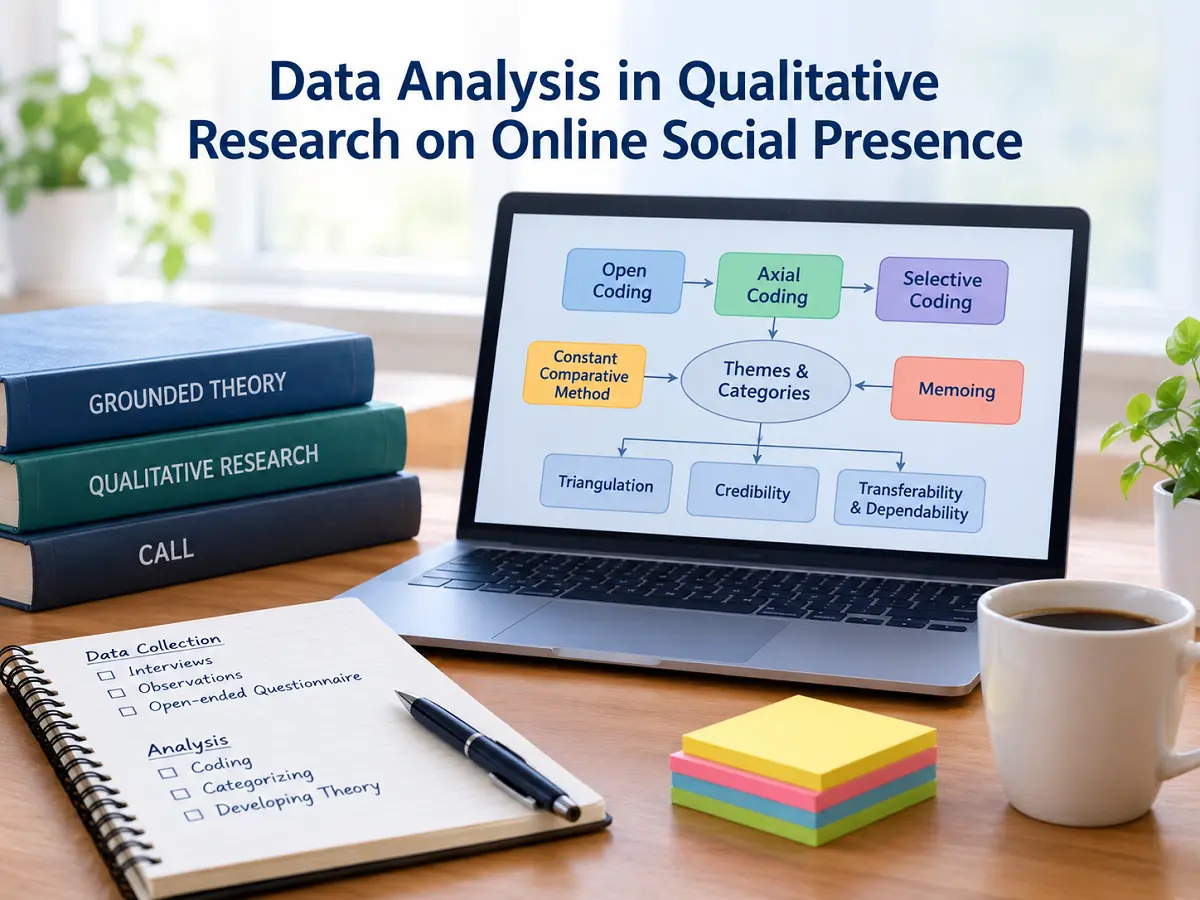
The participants were interviewed individually and en masse because interviewing was the main source of data collection and analysis in this qualitative study based on grounded theory. Subsequently, on the basis of constant comparative method in grounded theory (Charmaz, 2005; Corbin & Strauss, 1990; Creswell, 2007; Glaser & Strauss, 1967), the researcher attempted to consider and reconsider the obtained results in some specified categories based on the research questions to actualize saturation in the ultimate findings of the research through cyclical data collection and analysis (Dörnyei, 2007).
In the following paragraphs, the obtained data in the results and discussion sections will be reported and discussed respectively in six categories on the basis of the six research questions. In this regard, the number of our six research questions in the following headings will be represented by the letter “Q” standing for question plus the number of the research questions in the same order they appeared in Chapter 1. In each category based on the research questions, initially, the results germane to each category will be reported. Subsequently, in the discussion section, a more detailed account of the reported data and results will be provided.
Results of Q1: The Important Characteristics of Social Context

The realization of social presence in CMC is not possible unless we first endeavor to provide the very foundation from which social presence originates, i.e. social context (Gunawardena, 1995; Steinfield, 1986; Tu, 2001/2002; Tu & McIsaac, 2002; Walther, 1997). Nevertheless, an appropriate social context leading to or conducive to social presence requires a substantial amount of consideration and engineering on the part of the CALL specialists.
To help the participants to develop a sense of academic satisfaction, which is so crucial for creating social presence in virtual courses (Gunawardena, 1995), the researcher endeavored to provide the participants with a social context that was conducive to language learning interactively with some special features and services that are thoroughly specified in Appendix G. For example, the participants could use our built-in photo dictionary based on tooltip technology with hundreds of illustrated entries to help the learners to make mental associations between words and their meanings. Our photo dictionary was greatly favored by F. Rezanejad and S. Ghomi in our call for feedback sessions. In this regard, Chen (2011) contends, “the development of adequate collocational knowledge is important for foreign language learners” (p. 59).
Another decisive factor of an effective social context, which is directly related to the realization of a sense of satisfaction in the learners, turned out to be its self-sufficiency. In this regard, a self-sufficient social context can make the L2 learners independent of referring to other external sources while they are practicing the second/foreign language on the blog.
The social context of a learning blog that reflects self-sufficiency can automatically increase Daily Time on Site, which indicates the amount of time each user stays on a website. This feature might have a direct influence on optimizing social presence in language learning blogs because the longer each L2 learner happens to stay on a blog equipped with social features, namely IRC, forums, comments, shoutboxes, podcasts, etc., the more socially interactive that online community is likely to become. In this regard, H. Rezaei in an individual interview, stated that our community had provided him with almost everything that he needed to practice English either alone or in partnership with his peers.

The social context upon which social presence is supposed to be realized must be dynamic and vibrant. That is to say, the teacher or CALL specialist needs to update it in order to meet the academic requirements of the learners. The significance of a dynamic social context that receives requisite updates was pointed out by almost all of the participants, including H. Rezaei, H. Zanjani, S. Ghomi and T. Ghanooni in several group interviews. However, as criticized by S. Ghomi in one of the individual interviews, sometimes the social context of our blog would become “too dynamic and rather confusing”. For instance, he explained that the arrangement of the main menu items changed too frequently, which was rather puzzling to him.
Through the analysis of the semi-structured interviews individually and collectively, it became clear that a friendly learning environment was of primary importance to almost all of the participants (e.g., H. Rezaei, H. Zanjani, Leila, M. Jalali, M. Rostampour, Nafiseh, S. Nasiri, V. Kalhor) because by means of this noticeable aspect of social context (i.e., friendly and inviting learning environment), the L2 learners are actively encouraged to interact with each other to account for shared learning, as explicitly stated by H. Zanjani. In this regard, Hiltz and Wellman (1997) contend that CMC can enable learners with shared interest to form and sustain rapport and academic communities.
As stated in Chapter 3, thanks to BuddyPress, the users of our online community could find ideal English partners or pen pals to practice English and virtually socialize with. According to V. Kalhor, this software program, i.e. BuddyPress, as an influential element of an interactive social context, had provided the participants and the other members of the community with this opportunity to build up a good rapport with each other.

In this regard, H. Rezaei, who was a visually impaired student like the researcher, argued that using a foreign language for communication is rather stressful and demanding for the students. Hence, creating a friendly learning environment is extremely important to moderate the level of stress and anxiety in the L2 learners. Furthermore, according to M. Jalali, who was rather introverted, our round tables occurring in a friendly atmosphere stimulated her to express her ideas orally in the class, thus overcoming her acute shyness and reticence.
Moreover, Nafiseh from Belgium and Leila from Karaj, in another group interview, highlighted the stress-free and friendly features of our virtual classes. According to them, a virtual English class could not reach an optimum level of interactivity unless these two prerequisite attributes (i.e., being friendly and stress-free) are first taken care of.
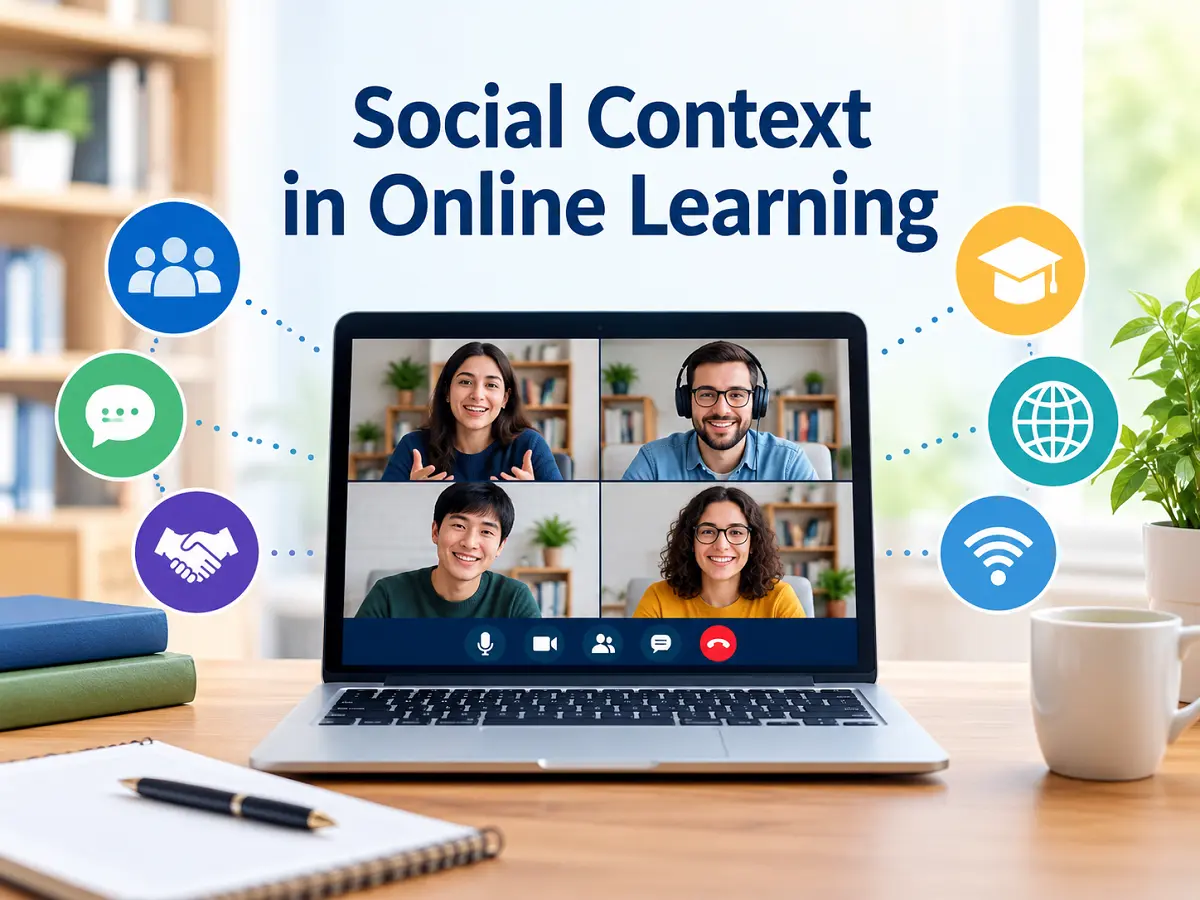
Lacking face-to-face communication seemed fairly noticeable in the eyes of some of the participants, including M. Gholinejad, Niaz, R. Mousavi, T. Ghanooni and V. Kalhor, according to whom, our course was not based on real-life situations. Since we did not use webcams in our online classes on Skype and Discord, the characteristics of our social context failed to satisfy some socially-oriented requirements of the participants. For example, T. Ghanooni and V. Kalhor, in a group interview on the characteristics of an appropriate social context, claimed that seeing each other on webcam is more conducive to the realization of social presence as having eye contact in virtual classes can make the social context more friendly and interactive.
Although our social context based on voice conferencing received some criticism from the majority of the participants, some others, namely A. Ahadzadeh, F. Rezanejad, H. Zanjani, M. Hesabi and S. Daliri, who were proportionately smaller in number, advocated for voice conferencing in our both interviews and questionnaires, arguing that voice conferencing was self-sufficient because, in so doing, the learners could pay more attention to the form of language and express themselves more effectively, which, according to F. Rezanejad, was not quite possible if the participants could see each other on their webcams as video conferencing might be rather distracting.
F. Rezanejad further added that voice-based classes could provide a safer and more secure social context for online female students. Being in accord with F. Rezanejad’s point of view, M. Hesabi, in the same group interview, argued that voice conferences could make a more stress-free social context because she did not need to take care of her appearance and the way she got dressed in the class. H. Zanjani, in an individual interview, pointed out that in our virtual classes, she had “developed an ear”, that is, her listening skills had improved tremendously because we did not have nonverbal communication and she had to depend upon her listening skills to be able to communicate with the other students and the teacher.
Discussion of Q1: The Important Characteristics of Social Context

The significant role of social context in the realization of social presence is likened to the unquestionable effect of an appropriate physical classroom with all requisite facilities in face-to-face language classes because social context is regarded as a stepping stone to the fulfilment of social presence. That is to say, CALL practitioners are expected to give a high priority to setting an applicable social context with some special qualities that will be discussed in the following paragraphs.
Online teachers, CALL practitioners and language faculties should realize that their L2 learners or customers are language learners rather than programmers or coders. In other words, the User Interface (UI) of any online institution or learning community for practicing L2 languages must be user-friendly, simple, inviting, appealing, and mobile-friendly since a significant proportion of the e-learners of these institutional communities are the young who have a propensity for using portable devices.
Furthermore, since the process of L2 learning could appear rather stressful and demanding to some students, the coordinators of CALL programs ought to consider some unique facilities to stimulate online communication and socialization, for instance, account creation, profiling, private or public messaging, etc. providing that the learners’ activities are moderately monitored to preclude over-socialization, which is a threat to effective language learning.
The social context for holding virtual language classes, especially conversation ones, should support video conferencing providing that the voice quality is not undermined on account of unreliable Internet connections. The examination of the transcribed semi-structured interviews cast light on this point that virtual English classes in the form of video conferencing through activating webcams can make the social context friendlier and more inviting because the L2 learners can use both verbal and nonverbal communication, especially eye contact and facial expressions, to have more successful conversations in more real-life contexts.
Furthermore, video conferencing could be of assistance to the e-teacher to ascertain whether the learners pay enough attention to the class or not. The students, on the other hand, are made to be more conscious and mindful of class activities as they know that they are being watched by their peers and teacher.
Although the majority of the participants advocated for video conferencing in comparison to voice conferencing, most of the female students were in favor of the latter, arguing that voice conferencing is a safer method for online language learning. In fact, this group of our participants found video conferencing rather intimidating and stressful. This rather peculiar attitude of our female participants could be implied in this way that irrespective of the researcher’s deliberate attempts to generate social presence, some of the students, particularly the female ones, had not developed an adequate sense of belonging to our online society because they could not completely trust their peers.

Apart from the user interface, the social context as a dynamic weblog and its constituents in their entirety must be hosted on a reliable and robust server to provide numerous e-learners simultaneously with a smooth and satisfying experience of navigating on the website as the learning community and exploring it effectively. Blogging systems, such as WordPress, Drupal, etc. as open source content management systems (CMSs), can provide the teacher and the L2 learners with exceptional opportunities to learn a second/foreign language interactivity because blogging can account for the creation of social presence by means of nested comment forms, categorized discussion forums, polling/voting systems, podcasting, and archiving systems with rating applications.
Blogging can transform any educational website into a viable social context in which the learners can maximize their interactivity and perceive social presence by virtue of commenting that changes any static webpage to dynamic web posts that are ideal for interactivity. Furthermore, blogging makes it possible for archiving the academic posts for future use. Creating podcasts of virtual conversation classes in which the participants play an integral role by developing the content in the form of interactive comments and replies and archiving them on the blog in an open-ended and ongoing mode for future use and reference can enhance the interactive and communicative qualities of any academic social context.
The social context of e-learning makes it quite distinct from the traditional contexts of language learning, especially from this perspective that language learning should not necessarily take place in the or at the time of the class (i.e., synchronous communication). Since the majority of the learners are not aware of this important point, it is on the part of the e-teachers or CALL specialists to instill this paradigm shift into the language learners of the third millennium. Due to this old-style mindset, generally among teacher-dependent learners, some of the participants intermittently requested the researcher to increase the class time because, in simple words, they thought that their asynchronous activities outside the class were not academically productive, which is technically a myth.
On the significance of creating a sense of satisfaction as a prerequisite for realizing interactivity and social presence, it is important to note that the more satisfaction the learners gain, the more time they spend staying on the learning community, which consequently increases the chances of more interaction with the other satisfied learners, which per se is considered to be a ticket to the realization of social presence.
Despite numerous advantages of CMC, it appears that even the most ideal social contexts cannot satisfy all the needs of L2 learners inasmuch as the fact that some language learners prefer to socialize with their teachers, and particularly their classmates, in real-life and face-to-face venues. The L2 learners of this ilk tend to make friends with their classmates and see each other from time to time, which is impossible in purely CMC-based classes unless social contexts are supplemented with blended learning, provided the e-learners of the course live in close proximity.
Blended learning refers to the integration of technology and the Internet into face-to-face classes under the teacher’s supervision with the employment of materials exclusively for academic purposes to satisfy the students’ aims and needs (Marsh, 2012).
References
- Blin, F. (2004). CALL and the development of learner autonomy: Towards an activity-theoretical perspective. ReCALL, 16(2), 377-395. doi:10.1017/S0958344004000928
- Chapelle, C. (1997). CALL in the Year 2000: Still in search of research paradigms? Language Learning and Technology, 1(1), 19-43.
- Charmaz, K. (2005). Grounded theory in the 21st century: Application for advancing social justice studies. In N. K. Denzin & Y. S. Lincoln (Eds.), The sage handbook of qualitative research (pp. 507-535). California, CA: Sage.
- Chen, H. H. (2011). Developing and evaluating a web-based collaboration retrieval tool for EFL students and teachers. Computer Assisted Language Learning, 24(1), 59-76. doi:10.1080/09588221.2010.526945
- Cobb, S. C. (2009). Social presence and online learning: A current view from a research perspective. Journal of Interactive Online Learning, 8(3), 241-254.
- Corbin, J., & Strauss, A. (1990). Grounded theory research: Procedures, canons, and evaluative criteria. Qualitative Sociology, 13(1), 3-21. doi:10.1007/bf00988593
- Creswell, J. W. (2007). Qualitative inquiry and research design: Choosing among five approaches (2nd ed.). Thousand Oaks, CA: Sage Publications.
- Dörnyei, Z. (2007). Research methods in applied linguistics. Oxford: Oxford University Press.
- Felix, U. (2001). The web’s potential for language learning: The student’s perspective. ReCALL, 13(1), 47-58. doi:10.1017/s0958344001000519
- Glaser, B. G., & Strauss, A. L. (1967). The discovery of grounded theory: Strategies for qualitative research. New York, NY: Aldine.
- Guba, E. G. (1981). Criteria for assessing the trustworthiness of naturalistic inquiries. Educational Communication and Technology, 29(2), 75-91.
- Gunawardena, C. (1995). Social presence theory and implications for interaction and collaborative learning in computer conferences. International Journal of Educational Telecommunications, 1(2-3), 147-166.
- Herring, S. C. (2007). Computer-mediated discourse. In D. Tannen, D. Schiffrin & H. Hamilton (Eds.), The handbook of discourse analysis (pp. 612-634). Oxford, UK: Blackwell. doi:10.1002/9780470753460.ch32
- Hiltz, S. R., & Wellman, B. (1997). Asynchronous learning networks as a virtual classroom. Communications of the ACM, 40(9), 44-49. doi:10.1145/260750.260764 217 INTERACTIVITY AND SOCIAL PRESENCE IN CALL
- Hubbard, P. (2005). A review of subject characteristics in CALL research. Computer Assisted Language Learning, 18(5), 351-368. doi:10.1080/09588220500442632
- James, R. (1996). CALL and the speaking skill. System, 24(1), 15-21. doi:10.1016/0346-251x(95)00050-t
- Leahy, C. (2008). Learner activities in a collaborative CALL task. Computer Assisted Language Learning, 21(3), 253-268. doi:10.1080/09588220802090295
- Levy, M. (1997). Computer-assisted language learning: Context and contextualization. Oxford: Oxford University Press.
- Lincoln, Y. S., & Guba, E. G. (1985). Naturalistic inquiry. Beverley Hills, CA: Sage.
- Marsh, D. (2012). Blended learning: Creating learning opportunities for language learners. Cambridge: Cambridge University Press.
- Richardson, J. C., & Swan, K. (2003). Examining social presence in online courses in relation to students’ perceived learning and satisfaction. JALN, 7(1), 68-88.
- Ridder, I. D. (2000). Are we conditioned to follow links? Highlights in CALL materials and their impact on the reading process. Computer Assisted Language Learning, 13(2), 183-195. doi:10.1076/0958-8221(200004)13:2;1-D;FT183
- Steinfield, C. W. (1986). Computer-mediated communication in an organizational setting: Explaining task-related and socioemotional uses. In M. L. McLaughlin (Ed.), Communication yearbook 9 (pp. 777-804). Thousand Oaks, CA: Sage.
- Swan, K. (2002). Building learning communities in online courses: The importance of interaction. Education, Communication & Information, 2(1), 23-50. doi:10.1080/1463631022000005016
- Tu, C. H. (2001). How Chinese perceive social presence: An examination of interaction in online learning environment. Educational Media International, 38(1), 45-60.
- Tu, C. H. (2002). The relationship between social presence and online privacy. Internet and Higher Education, 5(4), 293-318. doi:10.1016/s1096-7516(02)00134-3
- Tu, C. H., & McIsaac, M. (2002). The relationship of social presence and interaction in online classes. The American Journal of Distance Education, 16(3), 131-150. doi:10.1207/s15389286ajde1603_2
- Walther, J. B. (1997). Group and interpersonal effects in international computer-mediated communication. Human Communication Research, 23(3), 342-369. doi:10.1111/j.1468-2958.1997.tb00400.x
- Warschauer, M., Grant, D., Real, G. D., & Rousseau, M. (2004). Promoting academic literacy with technology: Successful laptop programs in K-12 schools. System, 32(1), 525-537. doi:10.1016/j.system.2004.09.010
- Warschauer, M., Turbee, L., & Roberts, B. (1996). Computer learning networks and student empowerment. System, 24(1), 1-14. doi:10.1016/0346-251x(95)00049-p 230 INTERACTIVITY AND SOCIAL PRESENCE IN CALL