
Table of Contents
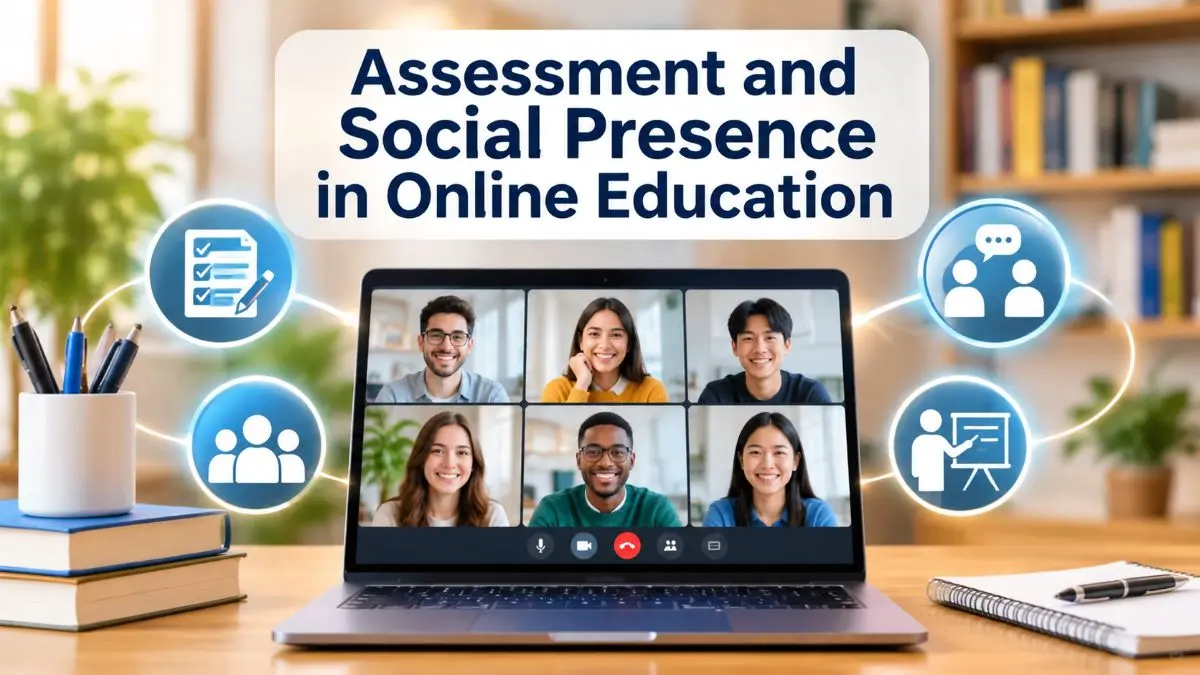
This section of Chapter 4 of my PhD thesis examines the ideal type of assessment for fostering social presence in online language learning communities. Drawing on participants’ interviews, questionnaires, and research observations, it explores the roles of self-assessment, peer-assessment, and teacher-assessment, highlighting the importance of asynchronous peer interaction, collaborative writing, learner autonomy, and teacher presence in promoting social presence.
Results of Q4: The Ideal Type of Assessment to Trigger Social Presence
Unfortunately, asynchronous activities, particularly peer-assessment did not receive adequate attention from the majority of the participants, namely Amir, M. Jalali, Soozi, T. Ghanooni, Z. Rousta and Zhanara. On the contrary, they gave priority to teacher-assessment in their both questionnaires and interviews. For instance, Amir, an Iranian participant living in Malaysia, complained that the class time (i.e., 60 minutes per week) was insufficient, and requested that we could consider more time for the class, which could be implied in this way that he – like many other participants – neglected the significant potential of asynchronous peer-assessment that we engaged in during the entire week. Moreover, F. Rezanejad, Fatemeh and V. Kalhor had almost the same idea. In our group interviews, they contended that synchronous interaction was more natural and similar to real-life communication, thus being more useful for learning a second or foreign language. As a consequence, they prioritized the most immediate or instantaneous type of teacher-assessment and error correction.
In their questionnaires, the same participants mentioned in the preceding paragraph maintained that they did not trust their peers’ accuracy in English; therefore, they did not practice peer-assessment adequately. In this regard, it was Zhanara, natively from Kazakhstan, who severely cast doubt on the efficacy of peer-assessment in our interviews, rationalizing that the other students should merely answer the questions, and they are not in the position to perform any type of assessment.
When the researcher intentionally endeavored to decrease the level of his assessment, especially explicit error correction in the class with the purpose of encouraging the participants to practice more peer-assessment, most of the students (e.g., F. Rezanejad, L. Soleimani, R. Mousavi, S. Daliri, S. Ghomi, Soozi, T. Ghanooni, Z. Rousta & Zhanara) openly criticized him for his negligence in performing explicit error correction in the class synchronously as well as asynchronous error correction in our comment forms.
In this regard, T. Ghanooni, in one of our group interviews, openly stated that not only did error correction from the teacher’s side synchronously or asynchronously distract or embarrass her, but also it did help her to improve her accuracy in English, especially through taking notes and using them in the sessions to come. In another interview, she admitted that teacher’s explicit and immediate error correction might appear rather embarrassing or distressing for new students. According to L. Soleimani, being corrected by the teacher in the class could be as useful to the other students as it is to the corrected student, encouraging the students to pay heed to the mistakes/errors that their peers make in the class.
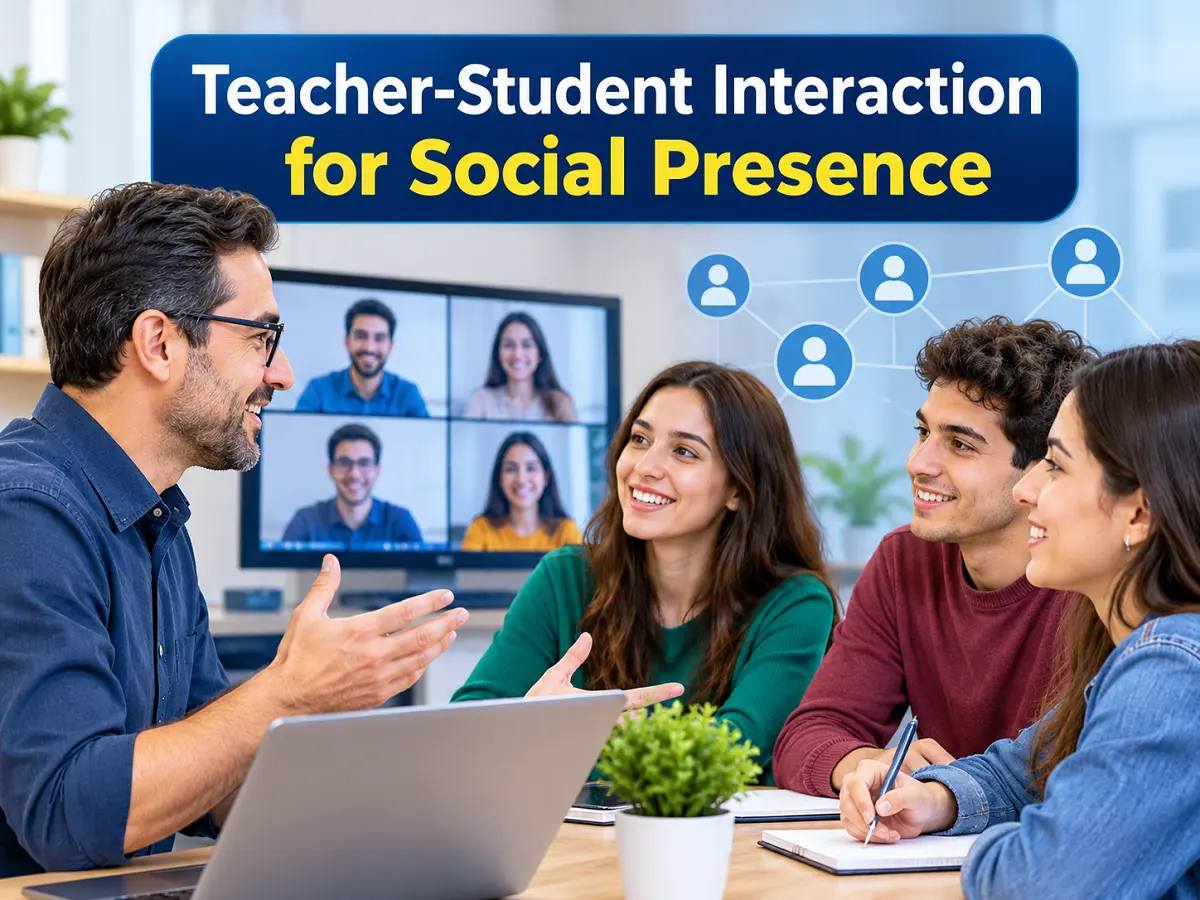
Effective teacher-student interaction promotes social presence when teachers balance guidance with learner autonomy. Rather than dominating discussions, teachers should encourage peer-assessment, collaborative learning, and student-student communication within a supportive and trustworthy online community.
In another group interview, F. Rezanejad and Z. Rousta requested a stronger teacher’s presence and assessment. To be more precise, Fatemeh proposed that the teacher should evaluate the students’ proficiency more explicitly and give them some scores occasionally. Z. Rousta, on the other hand, suggested that the teacher ought to teach the students some standard basic techniques intermittently for improving their fluency in English, developing necessary writing skills, giving successful presentations, etc. that are obliquely related to the English language.
On the other hand, Azadeh wisely contended that the main obstacle to e-learning in Iran is NOT the low quality of the Internet, but the overall perspective of Iranians on the Internet effectiveness for educational purposes because, according to her, e-learning requires the learners to interact with each other and peer-assessment is undeniably conducive to online communication. Hence, to encourage more student-student interactivity and peer-assessment, collaborative writing was devised and implemented in the second phase of the study.
Our collaborative writing activity proved to be highly successful in encouraging the participants to practice self-assessment (edit their own paragraphs of the entire essay in our comment forms) because they knew that their paragraphs would also be assessed by their peers. It is noteworthy to mention that in one of our sessions, the students could not edit their own paragraphs because the researcher had forgotten to update the special WordPress plugin for commenting. To his astonishment, the researcher was contacted for several times by his students for this temporary technical problem.
It was observed that the prospect of imminent peer-assessment in case of being, for example, grammatically incorrect, unclear, etc. in the collaborative writing activity did motivate the students to take the concept of self-assessment more seriously. This positively competitive activity also proved to be effective in increasing the rate of immediacy in interaction among the participants inasmuch as the fact that they used to refer to the corresponding comment forms in which they were supposed to compose a collaborative essay.

In his questionnaire, S. Ghomi mentioned that our collaborative writing activity was a perfect example of peer-assessment because it furnished the participants with this exceptional opportunity to practice negotiation of both form (focusing on vocabulary and grammar points) and meaning (asking for clarification) in a moderately interactive fashion. This practice of peer-assessment, according to S. Ghomi, facilitated the process of learning from each other and sharing their knowledge on the part of the students, which made them more autonomous and independent of the teacher.
On the other hand, S. Ghomi criticized our collaborative writing activity for being rather too demanding and time-consuming. Striving to decrease peer-assessment in our collaborative writing activity, S. Ghomi proposed that we could write an essay just once a week, i.e. on either Saturdays or Tuesdays. He also suggested that in each writing session, only one student would be in charge of writing the essay individually, and the other students could assess the essay. S. Ghomi’s proposition was vetoed by A. Ahadzadeh and F. Rezanejad because they approved of the efficiency of our collaboration in this writing activity. They reasoned that they were learning a lot through being corrected by their classmates. F. Rezanejad also added that after being assessed and corrected by the other students and the teacher, each essayist could revise their own paragraph and re-post it in the same place, that is, our comment forms.
R. Mousavi criticized our collaborative writing activity for lacking adequate unity as an integral principle for essay writing. Reasoning that peer-assessment could not be of practical use to him as an IELTS candidate, R. Mousavi solicited a more accurate instruction for our writing task in our paid class. He elaborated on his point in this way that the introductory paragraph developer (i.e., the first essayist in a chronological order) laid the foundation of the entire essay. However, if he/she had not observed the requisite rules, the essay in its entirety would have been composed incorrectly due to the fact that the other essayists were supposed to be compliant with the topic sentence developed by the first essayist without showing any objection to it. Besides, in his questionnaire, R. Mousavi argued that in our argumentative essays, each single supporting paragraph developer as an individual essayist failed to first review the previous opposing or similar arguments, which per se indicated a paucity of peer-assessment among the participants.
With regard to our collaborative writing activity, in one call for feedback session, R. Mousavi pointed out that after going through asynchronous peer-assessment in the comment forms, the teacher could explain about some blatant grammar mistakes orally in the class. This request, which was also agreed by some other students, revealed that no matter how hard the researcher endeavored to encourage peer-assessment, the majority of the participants, irrespective of what they were pretending, did not still trust peer-assessment sufficiently.
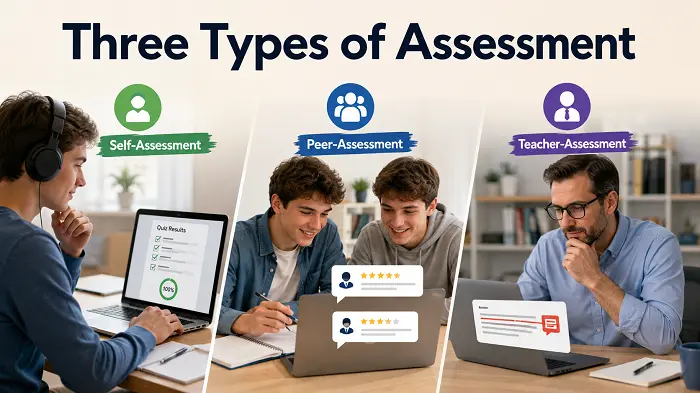
On the significance of peer-assessment, especially in the second phase of the investigation when the participants were practicing an abundance of peer-assessment, F. Rezanejad confirmed that our round tables provided her with this opportunity to listen carefully to her peers and reflect upon their ideas critically. She asserted that following our courses for over six months had enhanced her sense of criticality and reflectivity.
In his questionnaire, M. Gholinejad explicitly mentioned that self-assessment was the most important type of assessment because, as a reflective person and a nurse, he was used to evaluating his own performance.
Discussion of Q4: The Ideal Type of Assessment to Trigger Social Presence
The type of assessment (self-, peer- or teacher-assessment) that is preferred by a language learner could, to some extent, reflect his/her personality. The students who tend to perform more self-assessment are more reflective and autonomous learners. The L2 learners that often implement peer-assessment are more sociable, friendly and gregarious people. On the other hand, the students whose preferred type of assessment is teacher-assessment are normally more inclined to be teacher-dependent. This latter group, unlike the students advocating peer-assessment, are more conservative and defensive people. This research project in which the researcher and the participants were in constant contact with each other over a year, to some extent, confirmed this tentative conclusion.
Despite the fact that self-assessment is not a salient feature of interactivity and online communication, it appears that it must take precedence over the other two types of assessment, i.e. peer- and teacher-assessment to account for student autonomy and reflectivity. With regard to self-assessment in CALL programs, it is advisable that the teacher supply the learners with ample educational opportunities to get involved in asynchronous communicative activities, including commenting, replying, posting, etc. in the comment forms and discussion boards in a way that the learners can edit their own posts before being edited by their classmates or teacher.
On the other hand, self-assessment has such a domino effect that it can remind the L2 learners that the contents of their blog and their online interactivity are NOT static. That is to say, this domino effect of self-assessment can turn the static inertia of interactivity into a dynamic one because having performed self-assessment, the hesitant learners would be tempted to do the same thing on their peers and assess their language, as well.
The analysis of the semi-structured interviews alongside the researcher’s observations verified this research hypothesis that peer-assessment carries more weight in comparison to the other two types of assessment (i.e., self- and teacher-assessment) in fostering interactivity and social presence, particularly in asynchronous channels of communication, namely comment forms, discussion boards, public chat rooms with the history of previous activities, and the like. When the learners develop the habit of performing peer-assessment with the purpose of learning from each other in a constructive and collaborative manner to fulfill a sense of academic satisfaction (Gunawardena, 1995), then “a feeling of community and connection among learners” (Palloff & Pratt, 2005, p. 7) or social presence is developed and consolidated among the interactive members of the community, which can never be accomplished through the exclusive implementation of self- or teacher-assessment.
Social Presence in Online Learning
It is in the light of peer-assessment in CALL programs that the learners raise their reflectivity, criticality and awareness in response to, first, their own asynchronous contributions on the blog, knowing that they will be assessed by their peers, and second, their peers’ contributions in a friendly, open-ended and interactive mode. This degree of awareness of another person in an online setting and a consequent appreciation of online interpersonal relationship (Walter & Burgoon, 1992; Tu, 2002; Hauck & Warnecke, 2013) is the perfect end-result of peer-assessment.
A CALL program that is inclusive of self- and teacher-assessment and exclusive of peer-assessment for a variety of reasons can never claim to be interactive or integrative. In other words, this CALL program does not blossom into computer-mediated communication (CMC) with a profusion of collaboration and interactivity mostly among the language learners as the partakers or contributors of the online community. When L2 learners refer to their learning blog solely to attend virtual synchronous classes or receive feedback from the teacher, then this learning community fails to actualize the building blocks of social presence, such as realization of needs and goals that are shared among the learners (McMillan & Chavis, 1986) and establishing rapport among the learners. Furthermore, this community – which, in fact, is not fair to be called so – does not help the learners to perceive that they are real communicators (Short, Williams & Christie, 1976, as cited in Pratt & Palloff, 2007).
Analyzing the data made it clear that the participants did not give enough heed to the value of peer-assessment as an ideal technique for increasing the interactivity level among the L2 learners. This unfortunate condition manifested itself in the following forms:
- The participants were rather too dependent upon the teacher’s presence and his error correction in spite of his intentional withdrawal from establishing an immediate presence.
- Asynchronous peer-assessment was anathema to a large proportion of the participants, and especially at the outset of this study, the researcher had to stimulate the learners excessively to conduct peer-assessment and have interaction in our comment forms and discussion boards.
- There was a popular misconception among the participants that the only time, place, and person for learning a language were respectively the class time, our voice channel on Discord, and the teacher. As a result, they did not show a great tendency to perform peer-assessment and learn from each other outside the class time. However, this unpleasant attribute, which was dominant in the first phase of the study, improved to a high extent in the second phase of the investigation by reducing the teacher’s presence, his immediacy in responding, and the employment of additional interactive activities, such as argue for/against and collaborative writing.
- Another fallacy that had been internalized in the learners was that the majority of them thought that the best way to practice English was to have a chance (our synchronous voice-based classes) to speak this language. In other words, they disregarded this fact that developing accuracy and fluency in English should not be taken for granted, and it requires consistent practice and organized efforts.
For the language learners to be encouraged to perform peer-assessment, the significance of the teacher’s presence comes into existence. As mentioned earlier, the teacher should not be overactive in practicing immediacy in asynchronous communication media on the blog. In the first phase of the current investigation, the researcher/teacher was rather too immediate in replying to the participants’ comments, which per se impeded learners’ interactivity and peer-assessment. Nevertheless, in the second phase of the study, the researcher intentionally reduced his immediate presence in our interactive activities, such as commenting and replying in our comment forms and discussion forums with the intention of encouraging the learners to perform peer-assessment interactively.
However, there are some other important criteria that the teacher should bear in mind to galvanize the students into conducting peer-assessment. As stated by Tu (2002) and Tu and McIsaac (2002), the two factors of trust and privacy play an integral part in promoting interactivity and social presence. Ensuring the privacy of the social context in which online communication takes place by virtue of monitoring and authorizing the members’ activities and accounts on the part of the teacher can facilitate the process of peer-assessment because the senses of trust and belonging in and to the community and the communicators would automatically ascend.
This community and its communicators could be compared to a large company whose staff – in spite of differences and dissimilarities – ought to collaborate with each other and learn from each other so that the company could thrive. The CEO of this company (i.e., the e-teacher of an interactive learning community) must be prudent and resourceful enough to foster team spirit among the personnel by providing a fair, safe, private, dynamic, welcoming, trustworthy and friendly atmosphere in which learning and working from and with each other are constantly encouraged.
The social context of any language learning blog that encourages asynchronous communicative activities and peer-assessment is recommended to take advantage of rating/ranking, voting and polling systems to reflect the overall graded opinions or assessment of the language learners with regard to the socially contributed materials and contents in the form of posts, comments, replies, and so forth.

Our round table activity, in which the dominant technique of Initiation-Response Feedback (IRF) was consciously violated by motivating the students to create the content of the course and challenge each other with their own questions, cast light on this point that IRF could be counterproductive when it comes to peer-assessment because in this rather traditional technique, the students are conditioned by the teacher to respond only when stimulated by the teacher. Our round tables instilled this relatively novel notion into the learners that when they can create the content of the course autonomously, then they can, too, perform peer-assessment, and if their peer-assessment is grammatically, semantically, punctuationally, collocationally, pragmatically, etc. wrong, it is not the end of the world, and in so doing, they simply give this permission to the teacher to act upon error correction in the form of teacher-assessment, which should happen as a last resort to accommodate learner-learner interactivity.
Our round tables provided this exceptional opportunity for the learners to practice peer-assessment both synchronously and asynchronously because it was a part of their assignments to create one question and reply to one of the existing questions in the comment forms and discussion boards before the class (i.e., asynchronous interactivity and peer-assessment). Subsequently, they could undergo the same treatment in our virtual classes (i.e., interactivity and peer-assessment) but instantaneously, and eventually, they could refer back to their own social contributions and interactions, which were archived on the blog, carrying out further peer-assessment asynchronously while being well-informed about the real intentions of their peers upon attending the synchronous classes.
Our collaborative writing activity in our paid class in the second phase of the current study appeared to be highly successful in motivating the learners to assess each other’s paragraphs both linguistically (negotiation of form) and semantically (negotiation of meaning). When the learners realize that a collaborative writing activity – like the one that was put to the test in this research – can increase their literacy skills in essay writing, grammar improvement, collocational knowledge, diction, use of logic, relevancy practice, punctuation marks, use of conjunctions and so forth, even the most incredulous learners who do not have faith in the efficacy of peer-assessment will volunteer to learn from each other independently of the teacher.
Although our collaborative writing activity facilitated asynchronous peer-assessment to a noticeable extent, it received some criticism from the participants. The participants were often complaining about insufficient unity in the entire essay composed by several essayists. More to the point, since our collaborative writing activity was one of the sections of our paid classes in the second phase of the study on both Saturdays and Tuesdays (i.e., twice a week), it was rather too time-consuming for the essayists to compose a congruent and coherent essay by virtue of conducting asynchronous peer-assessment.
Almost all of the participants unanimously concurred with this view that synchronous communication, particularly voice-based synchronous CMC, was more preferable to asynchronous CMC to fulfill academic objectives. It is unquestionable that any language institute without the presence of classes with synchronous communication is incomplete as synchronous CMC offers the most natural, real-life and instantaneous mode of communication to language learners, something that they are eventually supposed to experience in the real life. However, the question is whether the exclusive employment of synchronous communication would necessarily culminate in raising the level of interactivity among the students or not.
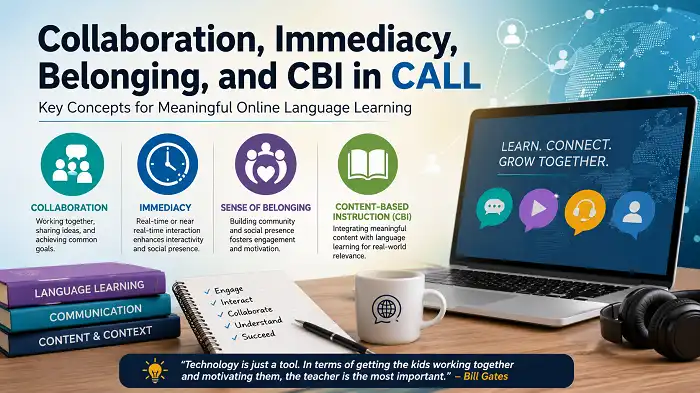
The answer of this study to this question is negative. Successful synchronous CMC is a prerequisite for realizing a sense of academic satisfaction in the learners. On the other hand, its absolute implementation (i.e., not amalgamated with asynchronous CMC) could be viewed as an obstacle to the promotion of peer-assessment, which is an integral element of interactivity and social presence. In other words, when a CALL program is exclusively founded upon synchronous communication, then it would be rather unfair to consider this education system to be able to promote peer-assessment and interactivity, and as a consequence, social presence.
To promote more peer-assessment in a friendly social context with a particular emphasis on asynchronous CMC, which is a ticket to the establishment of social presence in a language learning blog, the teacher is advised to take some factors into consideration. First and foremost, the interest factor must be taken care of. All of the scholastic activities and tasks, namely the selected topics, the user interface of the social context, and the channels of communications (discussion boards, comment forms, podcasts, chat rooms, etc.), should appear appealing to the learners. It is worthwhile to add that the initial encouragement of asynchronous CMC, especially in language learning blogs with low worldwide popularity, is likened to a type of inertia of a static ilk. In other words, it requires an abundance of creative and dogged persistence in getting the ball of asynchronous communication rolling so that this inertia would shift to a dynamic one.
The conduction of the study over one year in which the researcher technically attended all of the class activities like the other participants led to the development of this understanding that due to a high level of teacher-dependency and a paucity of teamwork in the language learners, teacher-assessment is actually the most favorite and trustworthy type of assessment in the eyes of the students. To the researcher’s chagrin, when he intentionally reduced his immediate interactivity and presence on LELB Society to perform error-correction, he was directly criticized by the teacher-dependent students.
In pursuit of devising an appropriate strategy to foster more peer-assessment and learner-learner interactivity, the researcher would mindfully direct the attention of the participants to this voluntary agreement according to which he would intentionally perform teacher-assessment as a last resort to stimulate more peer-assessment. This shift of policy, which was openly declared in several call for feedback sections, was regarded as a turning point in the prolonged journey of this investigation, dividing it into two distinct phases. As stated previously, thanks to the adoption of this new policy, the second phase of the study turned out to be conducive to the establishment of social presence and learner-learner interactivity.
The analysis of the transcribed interviews illuminated this point that the amalgamation of peer- and teacher-assessment in a way that the former chronologically takes place first can augment the level of interactivity among the students because, in so doing, the students become aware of each other’s errors and mistakes which could be theirs, too. As a consequence, the students’ autonomy level is effectively sustained as they need to respond to each other in the second/foreign language before the presence and assessment of the teacher.
References
- Gunawardena, C. (1995). Social presence theory and implications for interaction and collaborative learning in computer conferences. International Journal of Educational Telecommunications, 1(2-3), 147-166.
- Hauck, M., & Warnecke, S. (2013). Materials design in CALL: Social presence in online environments. In M. Thomas, H. Reinders & M. Warschauer (Eds.), Contemporary computer-assisted language learning (pp. 95-115). London, UK: Bloomsbury Academic.
- McMillan, D. W., & Chavis, D. M. (1986). Sense of community: A definition and theory. Journal of Community Psychology, 14(1), 6-23. doi:10.1002/1520.6629(198601)14:1%3C6::aid-jcop2290140103%3E3.0.co;2-i
- Palloff, R. M., & Pratt, K. (2005). Collaborating online: Learning together in community. San Francisco, CA: Jossey-Bass.
- Palloff, R. M., & Pratt, K. (2007). Building online learning communities: Effective strategies for the virtual classroom. San Francisco, CA: John Wiley & Sons, Inc.
- Tu, C. H. (2002). The relationship between social presence and online privacy. Internet and Higher Education, 5(4), 293-318. doi:10.1016/s1096-7516(02)00134-3
- Tu, C. H., & McIsaac, M. (2002). The relationship of social presence and interaction in online classes. The American Journal of Distance Education, 16(3), 131-150. doi:10.1207/s15389286ajde1603_2
- Walther, J. B., & Burgoon, J. K. (1992). Relational communication in computer-mediated interaction. Human Communication Research, 19(1), 50-88. doi:10.1111/j.1468-2958.1992.tb00295.x