Table of Contents
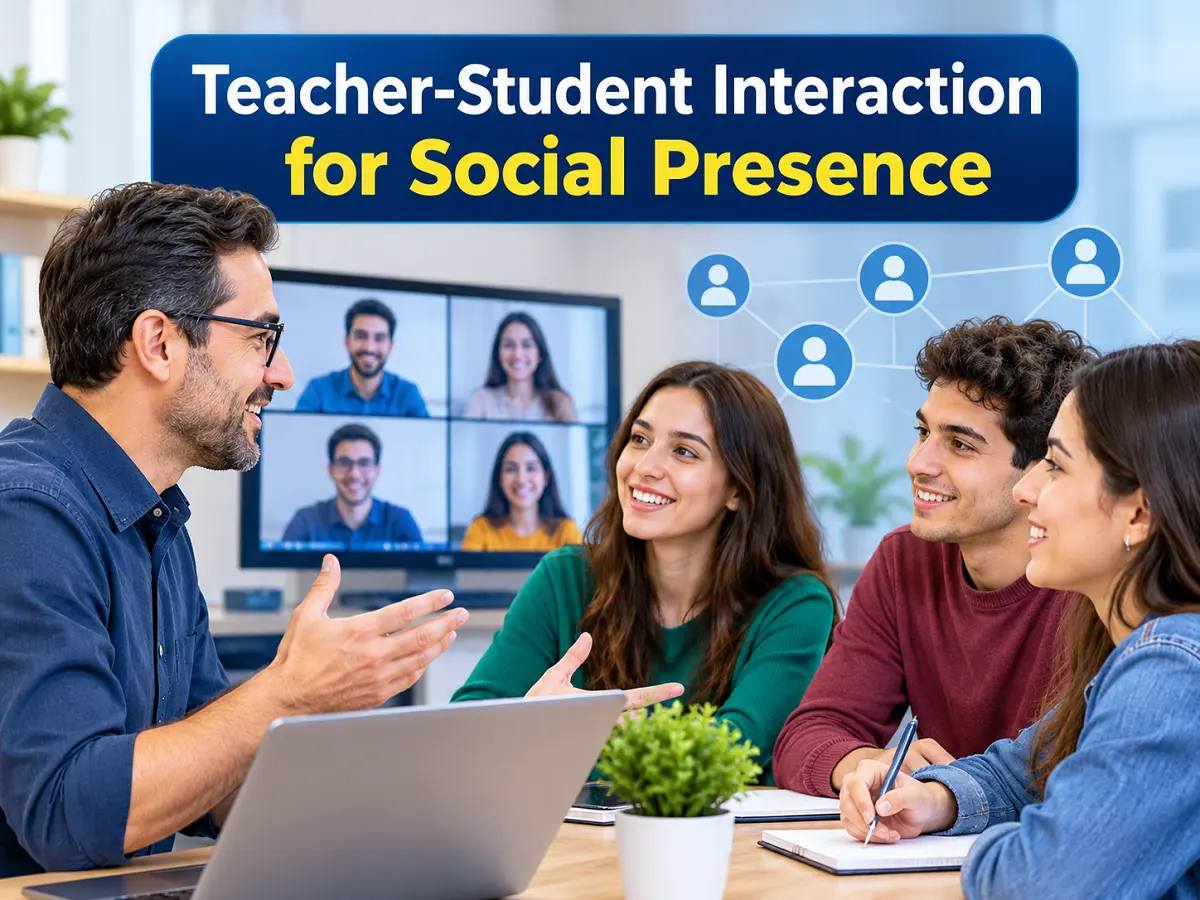
This section of Chapter 4 of my PhD thesis examines how teacher-student interaction patterns influence social presence in online language learning. Drawing on participants’ interviews, questionnaires, and classroom observations, it explores teacher immediacy, intimacy, classroom management, learner-centeredness, synchronous and asynchronous communication, peer assessment, and the importance of balancing teacher guidance with learner autonomy in CALL environments.
Results of Q2: Teacher-Student Interaction Patterns to Trigger Social Presence
One of the noticeable advantages of creating and maintain social presence in conjunction with CALL is to provide the students with ample opportunities to literally extend the synchronous class to an asynchronous one, something which is not comparatively feasible in face-to-face classes due to the fact that L2 learners in face-to-face classes cannot establish regular contact with each other outside the class. However, according to Hiltz and Wellman (1997), only about 33% of virtual classroom students can develop new friendships for non-academic purposes, which is insignificant in comparison to the case in traditional classes.
As explained in Chapter 3, our comment forms and discussion boards equipped with polling and ranking applications proved to be effective in maintaining asynchronous interactivity among the participants and between the researcher and the participants, which was confirmed by H. Rezaei and Zhanara in their questionnaires. To be more precise, if the learners had English questions (grammatical, lexical, collocational, etc.), they could use the discussion forum, Question-and-Answer in English, or leave their questions as comments on relevant posts, to receive appropriate responses from the researcher or the other participants.
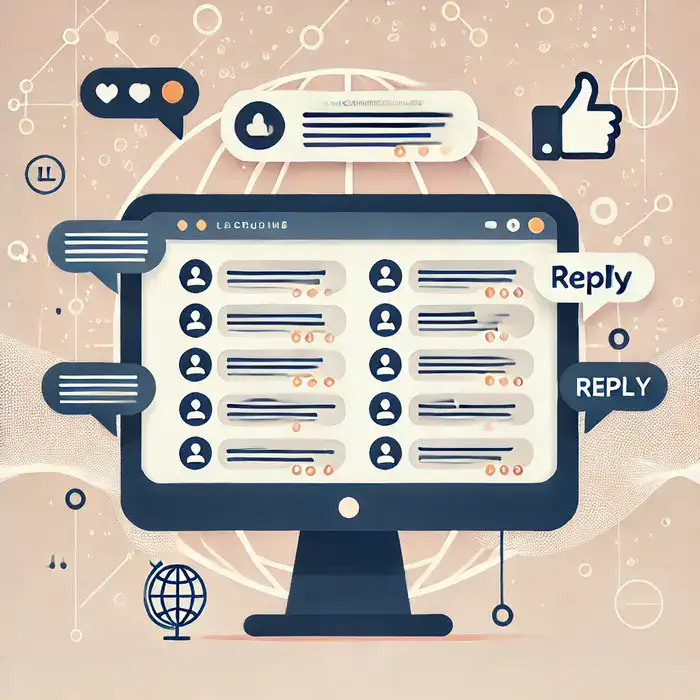
On the dichotomy between synchronous and asynchronous CMC (a theme that naturally emerged in our call for feedback sessions), all of the participants gave priority to the former medium of communication. S. Daliri, T. Ghanooni and V. Kalhor explained that the superiority of synchronous communication over asynchronous CMC (as they believed so) lies at the heart of the prospect of establishing oral communication with the other students without any delay or pause. They further added that real-life communication does not allow you to think about, write down, or record what you are going to say, and then verbalize it. Besides, Fatemeh claimed that synchronous communication is more relatively at the disposal of more proficient English learners.
On the contrary, T. Ghanooni admitted that asynchronous communication could provide this exceptional opportunity for the students to increase the number of their respondents. That is to say, unlike synchronous communication in which each student often has one single communicator at a time, in asynchronous communication, each post, comment, reply, etc. might end up receiving several responses from various respondents. S. Daliri also added that his experience in asynchronous communication had given him this chance to reflect upon his own and his classmates’ comments and replies with more scrutiny before hitting the Post Comment button.
As stated by Hiltz and Wellman (1997), managing virtual classes tends to be more challenging in comparison to traditional ones to encourage organized interactivity because identifying and chastising rule violators are by no means easy, and this turbulent situation might lead to “electronic normlessness or a lack of conformity to shared guidelines for behavior” (Hiltz & Wellman, 1997, p. 48). In this regard, S. Nasiri, in a group interview, declared that the role of the teacher is even more significant than the role of topics and themes in virtual classes because class organization and management are so crucial in e-learning.
T. Ghanooni, in another group interview, rephrased S. Nasiri’s comments in this way that an online English teacher ought to be wiser and more attentive in the class in comparison to a traditional English teacher. She reasoned that an e-teacher should pay attention to even slight sounds coming from the side of the students, making sure that they are on the right track. That is to say, the online English teacher is expected to verify that the students are both electronically and academically online, and not offline in the latter case.
Regarding teacher-student interaction patterns, especially for managing virtual classes that was naturally raised in our semi-structured interviews, in support of what S. Nasiri and T. Ghanooni said, S. Ghomi added that an online English teacher must be “smarter than a traditional English teacher” because in the latter case, the teacher can get to know the students by, for example, observing them in person, while in the former case, the e-teacher must be shrewd enough to be able to feel real empathy with the students who might be thousands of miles away. As elucidated in this paragraph and the one before, it is interesting to note that some participants, namely S. Nasiri, S. Ghomi and T. Ghanooni, were unconsciously referring to Hiltz and Wellman’s (1997) issue of electronic normlessness and the e-teacher’s responsibility to control and manage it in virtual classes.
With reference to teacher’s presence in our round table and argue for/against activities to promote social presence, there always existed a considerable controversy among the participants reflected in our interviews. On the one hand, students, namely R. Mousavi, criticized the classes for “not giving the students enough autonomy and independency by having to obey strict rules”. He reprimanded the teacher for being “too directive”, and perhaps due to this particular viewpoint, he chose not to continue the course after three sessions. V. Kalhor was a participant who had the same viewpoint about the researcher being too strict.
On the other hand, the majority of the participants, for instance, M. Gholinejad, who was a nurse, advocated an even stronger teacher’s presence. To be more precise, the latter group would criticize the teacher for not stopping the participants making irrelevant and untenable statements, although it was their turn to speak. Likewise, Amin requested that the teacher should pay more attention to the time limit (approximately 60 seconds) that each student had for taking turns in our synchronous voice-based discussions.
Examining the completed open-ended questionnaires elucidated this point that many participants, such as R. Mousavi, T. Ghanooni, V. Kalhor and Z. Rousta, strongly despised a paucity of intimacy in the researcher and his interaction with the students. Advocating for intimacy, Z. Rousta, a university lecturer in the field of economics, recounted how she lost interest, and finally, quit a traditional English class simply due to the fact that the English teacher was by no means intimate. She explained that she was not accustomed to emotionless and cold attitudes, particularly from a teacher. Discontented with inadequate intimacy in the researcher’s interaction patterns (as she believed so), Z. Rousta abandoned her participation in our virtual classes.

Teacher-Student Interaction Patterns
Furthermore, in another call for feedback session, S. Daliri and S. Ghomi, who had previously advocated for the researcher’s seriousness, affirmed that his strictness in interacting with the participants had some adverse effect on the phenomenon of social presence and interactivity. To exemplify this point, S. Daliri contended that the researcher was rather impatient with the students with a lower level of proficiency in English because less proficient students, according to S. Daliri, should have been given more time in our negotiations, which was against our class regulations.
On the other hand, S. Ghomi expressed his disapproval when the researcher was, according to him, too strict even to new participants who were not familiar with our class rules. As he said, the teacher used to criticize the new participants for not studying the specific post on our class regulations and attending their first session unprepared. This hypersensitivity of the researcher, as stated by S. Ghomi, reduced the chance of holding a class with more than seven students at a time.
Another complaint about the researcher’s flaw in interacting with the students was made by T. Ghanooni in her questionnaire, censuring the researcher for discriminating against her in the class, which was never the researcher’s original intention. In fact, she had a strong tendency to disregard our rules. For instance, she used to interrupt the other students in our discussions recklessly and write too informally in our comment forms. These conducts could entice the other students to adopt unruly behaviors, resulting in a chaotic class, which was against our objectives.
In our call for feedback sections, the students who had attended face-to-face classes before (e.g., Firouzeh & T. Ghanooni), pointed out that they found our virtual classes more learner-centered and less teacher-driven. They reasoned that in the face-to-face classes they had attended, “the teacher used to speak more”. As H. Zanjani, S. Daliri, S. Ghomi and T. Ghanooni argued in their questionnaires, the researcher/teacher was successful in subtly regulating and managing the class in which the students were literally centralized through, for instance, regularly requesting the participants’ feedback and implementing it in our virtual classes as far as possible.

In this regard, in one of our call for feedback sessions, S. Ghomi stated that the possibility of expressing opinions and criticism freely on the part of the students either asynchronously (on discussion forums, comment forms, etc.) or synchronously (in our call for feedback sections) was helpful in arousing the interest level of the students to maximize their interaction and develop a sense of belonging to the course.
Regarding the participants’ freedom to express their criticism, H. Hosseini, L. Soleimani and S. Nasiri astutely criticized our round tables for lacking adequate dynamism and not practicing improvisation inasmuch as the fact that the participants, according to them, did not get the chance to discuss points that came into their mind at the moment. However, H. Zanjani clearly disagreed with H. Hosseini in this way that our classes were relatively more dynamic than traditional classes because the traditional classes that she had been accustomed to were basically book-centered and teacher-driven.
This viewpoint (i.e., lack of dynamic interactivity in our round tables) was also supported by F. Rezanejad and T. Ghanooni in our group interviews in the sense that the very act of asking the students to develop questions and reply to them does not necessarily guarantee the development of social presence in virtual English classes. Afterwards, some modifications were made to the procedure, especially in the second phase of the investigation, to overcome this problem, which was discussed in Chapter 3.
Moreover, according to S. Daliri, the researcher adopted a democratic management style in his teaching because, for instance, the participants could even determine the topics for discussion and express their ideas and criticisms freely, and above all, the teacher – like the students or even more seriously than them – assumed the participants’ responsibilities and completed the tasks. Two other factors regarding teacher-student interaction patterns (not necessarily referring to the researcher) that merit consideration turned out to be his/her creativity to design appropriate activities and tasks to engage the students (H. Zanjani) and knowledgeability and preparation to inspire the students in the negotiations (S. Nasiri).
However, the researcher, as the participant observer, noticed that practicing an excess of learner-centeredness might undermine teacher-student interactivity in a CALL program. For example, in the light of close observations, it became clear that, especially in the first phase of the study, practicing teacher’s intimacy, which is an important factor in teacher-student interactivity (Argyle & Dean, 1965; Cobb, 2009), in an uncontrolled manner might result in less sobriety and discipline on the part of the learners.
The intentional reduction of the researcher’s immediacy in our asynchronous channels of communication in the second phase of the investigation to encourage more peer-assessment provoked some criticism reflected in the participants’ interviews and questionnaires. The participants, including N. Jahan from Bangladesh, S. Daliri, S. Ghomi, T. Ghanooni and V. Kalhor, demanded more immediate interactivity of the teacher, especially in the form of asynchronous error correction. In this regard, N. Jahan contended that an optimum level of online immediacy in interaction with her classmates and teacher helped her to have an exchange of ideas and information in a cyclical and recurrent fashion, which per se triggered even more emerging discussion among the online partakers.
The creation of podcasts on the part of the researcher in partnership with the participants through recording and archiving our round tables turned out to be moderately effective in enhancing the level of motivation, activeness and engagement in the participants, thus promoting social presence in them, which is also supported by Bender and Waller (2013). Nevertheless, the researcher observed that the act of creating podcasts and archiving our round tables could cause tension and anxiety in some learners as they knew that their presence in our round tables would be recorded and accessible to others publicly. As a consequence, it was noticed that some participants occasionally became too defensive or judgmental, which could emasculate interactivity among the learners.
Discussion of Q2: Teacher-Student Interaction Patterns to Trigger Social Presence

Each online teacher must bear in mind that distance learning is a both individual and social experience on the part of the students (Paran, Furneaux & Sumner, 2004). It is individual from this perspective that each student brings a unique combination of prior experiences and knowledge to learning and share it with others. On the other hand, online learning is a social activity from this perspective that learners are supposed to have interaction with the learning material, their instructors and classmates in order to learn effectively.
The findings of this study clarified this point that our argue for/against, round table, and collaborative writing activities were moderately successful in facilitating the process of learning for the learners in both individualized and interactive modes inasmuch as the fact that the learners could first make a contribution to the course in an individualized and asynchronous fashion while using our comment forms, discussions boards, polling systems, etc., and subsequently, they would maximize their interaction with their peers on the blog before our classes (asynchronous CMC), and later on, during the classes (synchronous CMC). In so doing, our interactive class activities offered us direct evidence to support that it is feasible to create an online learning community in which individualized interactivity and interactive individualization could be actualized.
In terms of the online language teacher’s presence in a socially oriented learning community, it should be pointed out that this type of presence ought to be learner-centered by nature. That is to say, the language e-teacher or CALL practitioner is expected to consider the L2 learners’ needs, tastes and goals and give a high priority to them. Nevertheless, it is contrary to the teacher’s passivity because, as a coordinator, facilitator and enabler, a CALL specialist should wisely create a virtual classless class to accommodate different interests and cultural backgrounds, which is an absolutely arduous and ongoing task.
This teacher, who is neither too central nor too marginal in the social context and academic activities, can realize learner-centeredness by means of soliciting the students’ feedback and opinions, applying and implementing their needs analysis (e.g., through anonymous questionnaires), encouraging the learners to assume constructive responsibilities in the class (e.g., giving lectures, creating the content of conversation classes in the form of questions), installing as many polling or voting systems as required on the website, encouraging the learners to determine the topics for conversation classes, installing some rating systems through which the learners could grade or rank digital contents by means of, for instance a five-star ranking application, and so forth.

In the prolonged journey of this investigation, the analysis of the semi-structured interviews together with the researcher’s close observations that were processed immediately after each class cast light on this issue that the maxim of “moderation is the key” is also applicable to the employment of learner-centeredness in CMC education systems. To be more specific, showing too much intimacy (e.g., treating the students as if they were your close friends), forgiveness (if the learners bring lame excuses for evading their responsibilities or showing disruptive behaviors), and immoderate submissiveness to the learners’ interests and tastes under any circumstances turn out to be counterproductive attributes in the long term due to the fact that practicing intimacy excessively increases the likelihood of turning virtual language classes into a chaotic and disordered atmosphere in which the odds of successful language learning would be too slim. The L2 learners would have too many absences, they would be frequently late, they would not take the course and class activities seriously enough, and after a while, the teacher would not be treated with adequate dignity anymore.
Regarding this issue from another perspective, according to the criticism of some participants, the researcher was rather too intolerant of any violation of our class regulations even from new students, which in fact inhibited them from attending the second session of our online classes. Reflecting upon this disparaging trait (i.e., insufficient intimacy to new students) gave the researcher this hard and valuable lesson that as distance learning is still a relatively novel approach to learning, the e-teacher is advised to be fairly friendly, flexible and intimate to the learners, particularly in the first few sessions. It is important to add that the researcher successfully updated this negative quality, and accordingly, free classes with few students turned to paid classes with growing students.
The majority of the participants, to be more precise, all of the male participants and half of the female participants, advocated for the superiority of immediacy over intimacy in conjunction with online communication. Despite the fact that both intimacy and immediacy are among the integral ingredients of student interactivity and involvement, the analysis of the data confirmed this research hypothesis that the latter carries more weight in conjunction with triggering more communication and collaboration in a language learning blog.
However, between intimacy and immediacy, intimacy should receive immediate attention at the outset of any CALL program before any interactivity. In other words, intimacy takes precedence over immediacy, yet when it is noticed that immediate interactivity is no longer an aspiration, then the teacher should be prudent enough lest a surplus of intimacy should jeopardize requisite disciplines for the successful maintenance of the learning blog.

It is important to note that the L2 learners should not receive too much immediacy exclusively from the side of the teacher, especially in an asynchronous mode in comment forms and discussion forums, which was a blatant mistake the researcher made in the first phase of the current investigation because, in principle, the teacher/researcher involuntarily did not allow or motivate the students to increase their involvement or interactivity on the blog.
In other words, too much immediacy on the part of the teacher obstructs peer-assessment in the form of student interactivity on a learning blog. In the second phase of the investigation, particularly in the collaborative writing activity, the teacher voluntarily reduced his immediacy in performing teacher-assessment in the form of error correction, encouraging the participants to conduct peer-assessment, which was subsequently supplemented with teacher-assessment. This shift of emphasis, which was wisely advised by the supervisor of the research project, helped the study to get closer to its primary objective, i.e. increasing interactivity and social presence in language learning blogs.
The employment of comment forms and discussion boards with the following specific qualities can trigger immediacy and student interactivity to a high extent:
- The comment forms and discussion boards must be thematically (e.g., classified forums or embedded comment forms on various interesting subjects) and functionally (e.g., classified forums for English questions on grammar, writing skills, etc.) categorized.
- The comment forms and discussion boards must support nested or threaded functionality so that the topics, posts, comments and replies are easily distinguishable.
- The comment forms and discussion boards must be kept open and ongoing to welcome subsequent responses and interactivity in a cyclical and recursive fashion.
- As mentioned above, the teacher should allow and encourage the learners to have interaction in the comment forms and discussion forums by controlling his/her over-immediacy.
- The themes and functions (as mentioned in Item 1) must be interesting, exciting and informative to prompt immediate collaboration.
- If possible, it is recommended that the comment forms should use Asynchronous JavaScript and XML (AJAX) functionality to avoid reloading the pages upon posting each comment or reply.

Initiation-Response Feedback (IRF) appears to be in conflict with collaborative constructivism in education which, according to Abrams (2001), “learners are not to be viewed as passive recipients of ready-made systems of knowledge, transmitted to them by the knower, the instructor” (p. 492). As mentioned in the preceding paragraph, inspiring the learners to shoulder some class responsibilities is an ideal method for helping the learners to unlearn some dominant education systems, such as IRF.
The prospect of asynchronous communication that perfectly supplements synchronous communication merits due consideration as these two modes of interaction, which is not always feasible in traditional classes, can be of practical assistance to the learners to self-regulate their own learning in a more learner-centered and less teacher-driven ambience and extend the time of learning beyond fixed class time by interacting with their classmates and pen pals even thousands of miles away.
Another advantage of asynchronous communication over synchronous CMC that can account for more interactivity is the positive attribute of being ongoing, open and recursive. That is to say, over the course of time, the learners can make subsequent social contributions to the existing educational contents on the blog that have been created by the participants themselves. Employing asynchronous CMC, the language learners can challenge each other, exchange questions and answers, request clarification, express their opinions freely about various topics, and so forth in a socially academic manner.
Another superiority of asynchronous CMC over instantaneous communication has something to do with the ideally high levels of reflectivity and autonomy on the part of the language learners. To be more precise, as implied in the preceding paragraph, in asynchronous CMC, the learners could be encouraged to assume active and responsive roles in the creation of the content of the course, as it literally occurred in our round table activity.
This autonomy-raising feature of asynchronous CMC per se promotes more student reflectivity because, first of all, the learners have plenty of time to ruminate over the existing contents on discussion boards, comment forms, posts, polling systems, etc., and second of all, they know that their contributions are recorded and archived on the blog under their own profile specifications. In this regard, Swan (2002) asserts, “asynchronous discussion affords participants the opportunity to reflect on their classmates’ contributions while creating their own, and on their own writing before posting them” (p. 26).
In interaction with the L2 learners, especially synchronously and in the classes, the teacher is supposed to be a patient and close listener (not interjecting the learners’ speech), and a fair and nonjudgmental coordinator lest he/she practice discrimination among the learners. The e-teacher is also required to develop requisite managerial techniques for effective classroom management and organization, which seems to be more complicated than face-to-face classroom management, particularly when the classes are voice-based and the teacher cannot see what the learners are actually doing at their computers perhaps thousands of miles away.
This teacher must pay attention to almost any aspect of the class, making certain that everything is on the right track. In this regard, the significance of having an acceptable level of computer literacy on the part of the teacher comes into existence to be able to handle some technical problems that might unexpectedly occur either in synchronous virtual classes or in asynchronous interactive activities on the learning blog.

Apart from spending a considerable amount of time maintaining the website, including creating class posts, archiving the classes with embedded podcasts, and so forth, the researcher was regarded as one of the participants of the study in interaction with the other students. That is to say, he did not order the participants to “do as I say, not as I do”. This sense of responsibility on the part of the teacher proved to be admirable and motivating in the eyes of the participants, thus increasing the students’ involvement and interactivity, which led to the creation of social presence.
One of the basic questions of CALL is how to fulfill the requirements of communicative language teaching when employing the technology (Kecskés, 1986). It is important to note that online English teachers and institutions ought not to suppose that creating social presence in its entirety would be the only ticket to the success of their students and consequently their own business. In point of fact, social presence should be at the mercy of academic satisfaction that is to be perceived and appreciated by L2 learners.
In other words, conscious interactivity and organized online communication, which are conducive to social presence, are regarded as a means of establishing an effective atmosphere to learn second/foreign languages. Although social presence and interactivity are two indispensable elements of any successful and progressive CALL program in the new millennium, they are by no means self-sufficient, and any CALL program exclusively founded upon social presence and interactivity appears to be an impressive castle built upon sand.
References
- Abrams, Z. I. (2001). Computer-mediated communication and group journals: Expanding the repertoire of participant roles. System, 29(4), 589-503. doi:10.1016/s0346-251x(01)00041-0
- Argyle, M., & Dean, J. (1965). Eye-contact, distance and affiliation. Sociometry, 28(3), 289-304. doi:10.2307/2786027
- Bender, W. N., & Waller, L. B. (2013). Cool tech tools for lower tech teachers: 20 tactics for every classroom. Thousand Oaks, CA: Corwin Press.
- Cobb, S. C. (2009). Social presence and online learning: A current view from a research perspective. Journal of Interactive Online Learning, 8(3), 241-254.
- Hiltz, S. R., & Wellman, B. (1997). Asynchronous learning networks as a virtual classroom. Communications of the ACM, 40(9), 44-49. doi:10.1145/260750.260764 217 INTERACTIVITY AND SOCIAL PRESENCE IN CALL
- Kecskés, I. (1988). Computer programs to develop both accuracy and fluency. System, 16(1), 29-35. doi:10.1016/0346-251x(88)90007-3
- Paran, A., Furneaux, C., & Sumner, N. (2004). Computer-mediated communication in distance MA programmes: The student’s perspective. System, 32(3), 337-355. doi:10.1016/j.system.2004.02.007
- Swan, K. (2002). Building learning communities in online courses: The importance of interaction. Education, Communication & Information, 2(1), 23-50. doi:10.1080/1463631022000005016