Table of Contents
- Video of Social Presence and Collaborative Learning
- Enhancing Collaborative Learning in Online Environments
- Social Presence and Student Satisfaction
- Collaborative Reflection and Identity Formation in CMC
- Community Indicator Frameworks in CALL and CMC
- Social Presence in Text-Based CMC
- Teacher Presence and Online Learning Communities
- Three Dimensions of Social Presence
- Social Context in CMC Environments
- Online Communication and Digital Literacy Skills
- Interactivity in Online Learning Environments
- CALL-Based Communication Strategies for L2 Classes
- Interaction and Cognitive Development in Online Learning
- Three Types of Interactivity in Online Courses
- Indicators of a Successful Online Learning Community
- References
This article explores the role of social presence, collaboration, and interactivity in online learning environments, particularly in CALL and CMC-based language education. Drawing on major studies and theoretical frameworks, it examines how teacher presence, group interaction, online communication, and learner engagement contribute to student satisfaction, community building, and effective virtual learning experiences. The article also discusses practical strategies for fostering collaborative learning, meaningful interaction, and socially constructed knowledge in asynchronous online classes.
Video of Social Presence and Collaborative Learning

Enhancing Collaborative Learning in Online Environments
With the purpose of enhancing collaborative learning in online environments, Palloff and Pratt (2005) propose the following guidelines:
- Small-group assignments
- Research assignments encouraging the learners to explore and present additional resource material to their peers
- Group work on case studies
- Simulations and role plays
- Forums on which the learners can do their homework collaboratively
- Asynchronous discussion on reading material and discussion questions
- Papers posted to the course site with mutual feedback provided
Social Presence and Student Satisfaction

Gunawardena and Zittle (1997, as cited in Cobb, 2009) conducted a study on the effectiveness of social presence as a predictor of overall student satisfaction in an inter-university computer conference based on an asynchronous text-based CMC. The participants were required to do a research project, share results with their peers, moderate discussion on their research project, and participate in the discussions of other students’ research projects. The results indicated that social presence is considered to be a reliable predictor of student satisfaction. On the other hand, the findings proved that among subjects with a low level of social presence, emotion use had no effect on satisfaction, while at higher levels of social presence, emotion use was associated with increased satisfaction.
Collaborative Reflection and Identity Formation in CMC
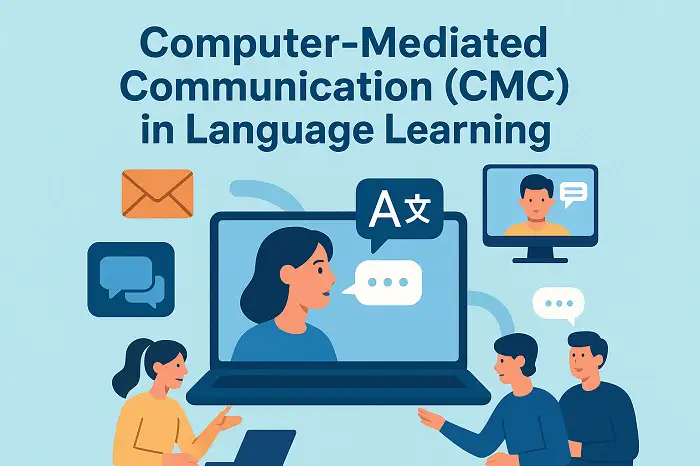
Hauck and Warnecke (2013) carried out a comprehensive study on analyzing the content of teacher trainees’ asynchronous interaction in a discussion forum to explore how the trainees developed awareness in the asynchronous interaction they were involved in, with particular emphasis on the social context and the learning environment where the interactive activities occurred.
The results showed that social presence has positive effects on both form and content of CMC-based learning. Likewise, it was clarified that the task performances of the participants in the forums developed from the individual and static stages of learning into an ongoing process of identity formation and self-awareness in response to ever-changing contextual circumstances. Moreover, Hauck and Warnecke’s (2013) study cast more light on the effectiveness of implementing collaborative tasks to spark collaborative reflection on issues related to participation, motivation, and thus, social presence in CMC-based learning environments.
Community Indicator Frameworks in CALL and CMC
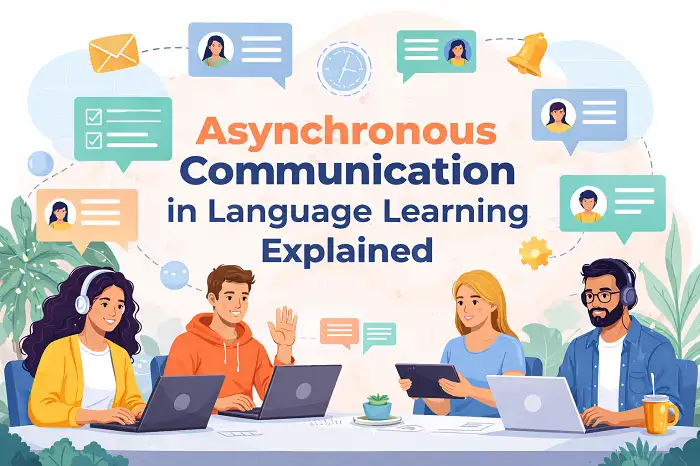
According to Hauck and Warnecke (2013), the following four community indicator frameworks have a considerable impact on the success of CALL and CMC-based language learning/teaching:
-
Participation: patterns of core group activity, sustained engagement, etc.
-
Cohesion: turn taking, use of humor, tolerance, etc.
-
Identity: establishing limits and boundaries, developing self-awareness in discussions, etc.
-
Creativity Capability: sense of purpose, motivation, personal and technical skills, etc.
Social Presence in Text-Based CMC
It is believed that text-based CMC is potentially low in realizing social presence (Gunawardena, 1995) because the person should be considered a “real person in mediated communication” (p. 151). Although sufficient interaction is necessary to promote social presence, it should be taken into account that according to Hall and Herrington (2010), the amount of interaction is not the only criterion to consider vis-à-vis social presence, that is, the type of interaction is also significant (if not more important). They (Hall & Herrington, 2010) believe that self-disclosure and the use of affective language are also essential for actualizing intimacy and immediacy that are required in technological environments.
Teacher Presence and Online Learning Communities

According to Hall and Herrington (2010), online teachers should assume some specific roles so that the development of a sense of social presence could be guaranteed. Teacher presence – through the design, facilitation and administration of learning – and immediacy seem to be of primary importance to account for an effective learning community (or social presence). Gunawardena (1995) suggests that the teacher’s communication techniques to initiate online conversations can positively impact the learners’ perception of social presence.
An emerging research area for the field of online learning is teacher presence or virtual visibility of the teacher as perceived by online learners (Baker, 2010). According to Baker (2010) and Picciano (2002), in distance education, teachers must be seen in order to be perceived as present in online learning communities. For this purpose, e-teachers, particularly online language teachers, should develop consistent patterns of interaction, communicate accessibility, provide consistent and substantive feedback, and moderate discussions effectively.
Three Dimensions of Social Presence

Social presence consists of three major dimensions: (1) social context, (2) online communication, and (3) interactivity (Tu, 2001; Tu & McIsaac, 2002). In this categorization, online communication and interactivity seem to be interchangeable. However, the former is principally associated with the requisite skills, techniques and strategies (in theory) to actualize social presence, whereas the latter is more concerned with the required activities and tasks (in practice) to fulfill the same objective.
Social Context in CMC Environments
“Social context is constructed from the CMC users’ characteristics and their perception of the CMC environment” (Tu, 2002, p. 296). Social contexts, such as task orientation (Steinfield, 1986), users’ perception of online settings (Steinfield, 1986), privacy (Tu, 2002), topics, recipients/social relationships, trust, availability of CMC, and social process contribute to the degree of social presence (Tu, 2002; Tu & McIsaac, 2002).
It is believed that different social processes, setting and purposes are components of social context and affect social presence. According to Gunawardena (1995), CMC is generally described as a medium that is low in non-verbal and social context cues. As a result, she offers the following techniques for improving the social context in CMC:
- Conferences participants can project their identities and build online communities.
- Computer conferences moderators should promote the creation of conducive learning environments.
- CMC participants can be trained to create social presence in a text-based medium and build a sense of community.
- Moderators should start the conference with introductions and social exchanges if the system used is a listserv, or create a separate area for social chit chat in a conferencing system.
- Moderators should facilitate discussions by initially recognizing all contributions, summarizing frequently, and weaving ideas together.

Education is considered to be a social practice (Lowenthal, 2009); as a result, the success and effectiveness of any CMC program should be at the heart of its surrounding discourse (Herring, 2007). When it comes to applying learner-centeredness to CALL programs, a newer term should always be taken into account and that is User-centered Design (UCD). UCD advocates the inclusion and participation of stakeholders throughout the software development life cycle.
It arose out of the need to bridge the gap between a system’s initial design and its eventual use (Farmer & Gruba, 2006). UCD can result in socio-constructivist learning environments where teachers and students collaborate successfully, and CALL practitioners and learners act as both consumers and producers of knowledge within a specific community of practice. It promotes situated learning which examines the roles of individuals and poly-motivation, cognitive apprenticeship and autonomous exploration in producing high-quality learning.
Regarding the social context of CMC, Shin (2006) conducted a study on the ecological considerations of virtual venues. The results of the study showed that the context in which online learning activities take place should be on the basis of “an interconnected relationship among contextual elements of the learning environment that learners configure for learning tasks” (Shin, 2006, p. 78). In other words, the social context of online classes violates any exclusively rigid conception of learning and its contexts to account for group dynamics, co-constructed language environments and language socialization (Shin, 2006; van Lier, 2004).
Online Communication and Digital Literacy Skills

Online communication is concerned with the attributes of the language used online and the applications of online language (Tu, 2002; Tu & McIsaac, 2002). To be successful online communicators, L2 learners need to develop some text-based skills, namely typing, reading and writing (in general, computer literacy) because without these skills, students will develop communication anxiety (Gunawardena, 1991, as cited in Tu & McIsaac, 2002; Sengupta, 2001) and “the development of literacy and communication skills in new on-line media is critical to success in almost all walks of life” (Shetzer & Warschauer, 2000, p. 171). In this regard, Tu (2002) suggests that “training the students to use the medium and making them comfortable using it are crucial to the success of collaborative learning” (p. 296).
Strategies for maintaining online instructional quality, as perceived by both faculty and student respondents, include maintaining open communication with students, ensuring that online courses are as rigorous as their traditional counterparts, using a variety of instructional methods to appeal to students’ varied learning styles, requiring students to interact with the instructor and with each other to foster group cohesiveness, and using group work to help students build a strong learning community (Gaytan & McEwen, 2007).
Palloff and Pratt (2007) contend that the following items indicate that a successful online learning community has been realized (p. 31):
- Active interaction involving both course content and personal communication
- Collaborative learning evidenced by comments in a student-student, rather than student-teacher interaction pattern
- Socially constructed meaning evidenced by agreement or questioning, with the intent to achieve agreement on issues of meaning
- Sharing of resources among students
- Expressions of support and encouragement exchanged between students, as well as willingness to critically evaluate the works of others
Beatty and Nunan (2004) conducted a study on 10 students, five of them working on a computer interface based on a behaviorist model of instruction, and the other five working on a constructivist model of instruction to investigate which one of the two instructional models would lead to a greater exploration and more instances of collaboration. It was hypothesized that a constructivist model of instruction would result in more collaboration, which was not confirmed by the analyzed data.
Interactivity in Online Learning Environments
Interactivity includes the activities in which CMC users engage and the communication styles they use, such as responsive time, task types, topics (Argyle & Dean, 1965), immediacy in interaction (Baker, 2010; Cobb, 2009; Tu, 2002), communication styles, and size of communities (Swan, 2002; Tu, 2001/2002; Tu & McIsaac, 2002). With regard to interactivity, immediacy is of primary importance because responses in an asynchronous CMC are delayed and not immediate. As a result, a feeling of low interactivity in asynchronous CMC does diminish social presence (Tu, 2001).
CALL-Based Communication Strategies for L2 Classes

Chapelle and Jamieson (2008, p. 172) propose the following tips for teaching communication with CALL to enhance interactivity and social presence in virtual L2 classes:
-
Design communication tasks that challenge students to learn more English.
-
Use written electronic communication to help learners slow down the conversation and notice language.
-
Use written electronic communication for the whole class to provide more opportunities for participation.
-
Provide opportunities for oral interaction among learners.
-
Encourage learners to use online help during communication.
-
Teach learners strategies for electronic communication.
Interaction and Cognitive Development in Online Learning
According to Richardson and Swan (2003), interaction among participants is critical in learning and cognitive development from a socio-cognitive theory point of view, in which learning is identified as an interactive group process where learners actively construct knowledge and then build upon that knowledge through the exchange of ideas with others.
Three Types of Interactivity in Online Courses
Researchers in the field of computer-based education have identified three types of interactivity that support learning in online courses (Swan, 2002):
-
Interaction with Content: The ability of learners to access, manipulate, synthesize, and communicate content information
-
Interaction with Instructors: The ability of learners to communicate with and receive feedback from their instructors
-
Interaction with Classmates: The ability of learners to communicate with each other about content to create an active learning community

It is important to note that these three types of interaction are, in practice, closely intertwined with each other. That is to say, “interaction among students, for example, is supported by instructor facilitation and support, which, in turn, centers on content. These forms of interaction, however, provide useful lenses for thinking about interaction online” (Swan, 2002, p. 24).
Indicators of a Successful Online Learning Community
Palloff and Pratt (2007) contend that the following items indicate that a successful online learning community has been realized (p. 31):
- Active interaction involving both course content and personal communication
- Collaborative learning evidenced by comments directed primarily student to student, rather than student to instructor
- Socially constructed meaning evidenced by agreement or questioning, with the intent to achieve agreement on issues of meaning
- Sharing of resources among students
- Expressions of support and encouragement exchanged between students, as well as willingness to critically evaluate the works of others
References
- Argyle, M., & Dean, J. (1965). Eye-contact, distance and affiliation. Sociometry, 28(3), 289-304. doi:10.2307/2786027
- Baker, C. (2010). The impact of instructor immediacy and presence for online student affective learning, cognition, and motivation. The Journal of Educators Online, 7(1), 1-30. 209 INTERACTIVITY AND SOCIAL PRESENCE IN CALL
- Beatty, K., & Nunan, D. (2004). Computer-mediated collaborative learning. System, 32(2), 165-183. doi:10.1016/j.system.2003.11.006
- Chapelle, C. A., & Jamieson, J. (2008). Tips for teaching with CALL: Practical approaches to computer-assisted language learning. New York, NY: Pearson-Longman. 211 INTERACTIVITY AND SOCIAL PRESENCE IN CALL
- Cobb, S. C. (2009). Social presence and online learning: A current view from a research perspective. Journal of Interactive Online Learning, 8(3), 241-254.
- Farmer, R., & Gruba, P. (2006). Towards model-driver end-user development in CALL. Computer Assisted Language Learning, 19(2), 149-191. doi:10.1080/09588220600821529
- Gaytan, J., & McEwen, B. C. (2007). Effective online instructional and assessment strategies. The American Journal of Distance Education, 21(3), 117–132.
- Gunawardena, C. (1995). Social presence theory and implications for interaction and collaborative learning in computer conferences. International Journal of Educational Telecommunications, 1(2-3), 147-166.
- Hall, A., & Herrington, J. (2010). The development of social presence in online Arabic learning communities. Australasian Journal of Educational Technology, 26(7), 1012-1027.
- Hauck, M., & Warnecke, S. (2013). Materials design in CALL: Social presence in online environments. In M. Thomas, H. Reinders & M. Warschauer (Eds.), Contemporary computer-assisted language learning (pp. 95-115). London, UK: Bloomsbury Academic.
- Herring, S. C. (2007). Computer-mediated discourse. In D. Tannen, D. Schiffrin & H. Hamilton (Eds.), The handbook of discourse analysis (pp. 612-634). Oxford, UK: Blackwell. doi:10.1002/9780470753460.ch32
- Lowenthal, P. R. (2009). The evolution and influence of social presence theory on online learning. In T. T. Kidd (Ed.), Online education and adult learning: New frontiers for teaching practices (pp. 124-139). Hershey, PA: IGI Global. doi:10.4018/978-1-60566-830-7.ch010 221 INTERACTIVITY AND SOCIAL PRESENCE IN CALL
- Palloff, R. M., & Pratt, K. (2005). Collaborating online: Learning together in community. San Francisco, CA: Jossey-Bass.
- Palloff, R. M., & Pratt, K. (2007). Building online learning communities: Effective strategies for the virtual classroom. San Francisco, CA: John Wiley & Sons, Inc. 223 INTERACTIVITY AND SOCIAL PRESENCE IN CALL
- Picciano, A. G. (2002). Beyond student perceptions: Issues of interaction, presence, and performance in an online course. JALN, 6(1), 21-40.
- Richardson, J. C., & Swan, K. (2003). Examining social presence in online courses in relation to students’ perceived learning and satisfaction. JALN, 7(1), 68-88.
- Sengupta, S. (2001). Exchanging ideas with peers in network-based classrooms: An aid or a pain? Language Learning & Teaching, 5(1), 103-134.
- Shetzer, H., & Warschauer, M. (2000). An electronic literacy approach to network-based language teaching. In M. Warschauer & R. Kern (Eds.), Network-based language teaching: Concepts and practice (pp. 171-185). New York, NY: Cambridge University Press. doi:10.1017/cbo9781139524735.010
- Shin, D. (2006). ESL students’ computer-mediated communication practices: Context configuration. Language Learning & Teaching, 10(3), 65-84.
- Steinfield, C. W. (1986). Computer-mediated communication in an organizational setting: Explaining task-related and socioemotional uses. In M. L. McLaughlin (Ed.), Communication yearbook 9 (pp. 777-804). Thousand Oaks, CA: Sage.
- Swan, K. (2002). Building learning communities in online courses: The importance of interaction. Education, Communication & Information, 2(1), 23-50. doi:10.1080/1463631022000005016
- Tu, C. H. (2001). How Chinese perceive social presence: An examination of interaction in online learning environment. Educational Media International, 38(1), 45-60.
- Tu, C. H. (2002). The relationship between social presence and online privacy. Internet and Higher Education, 5(4), 293-318. doi:10.1016/s1096-7516(02)00134-3
- Tu, C. H., & McIsaac, M. (2002). The relationship of social presence and interaction in online classes. The American Journal of Distance Education, 16(3), 131-150. doi:10.1207/s15389286ajde1603_2