
Table of Contents
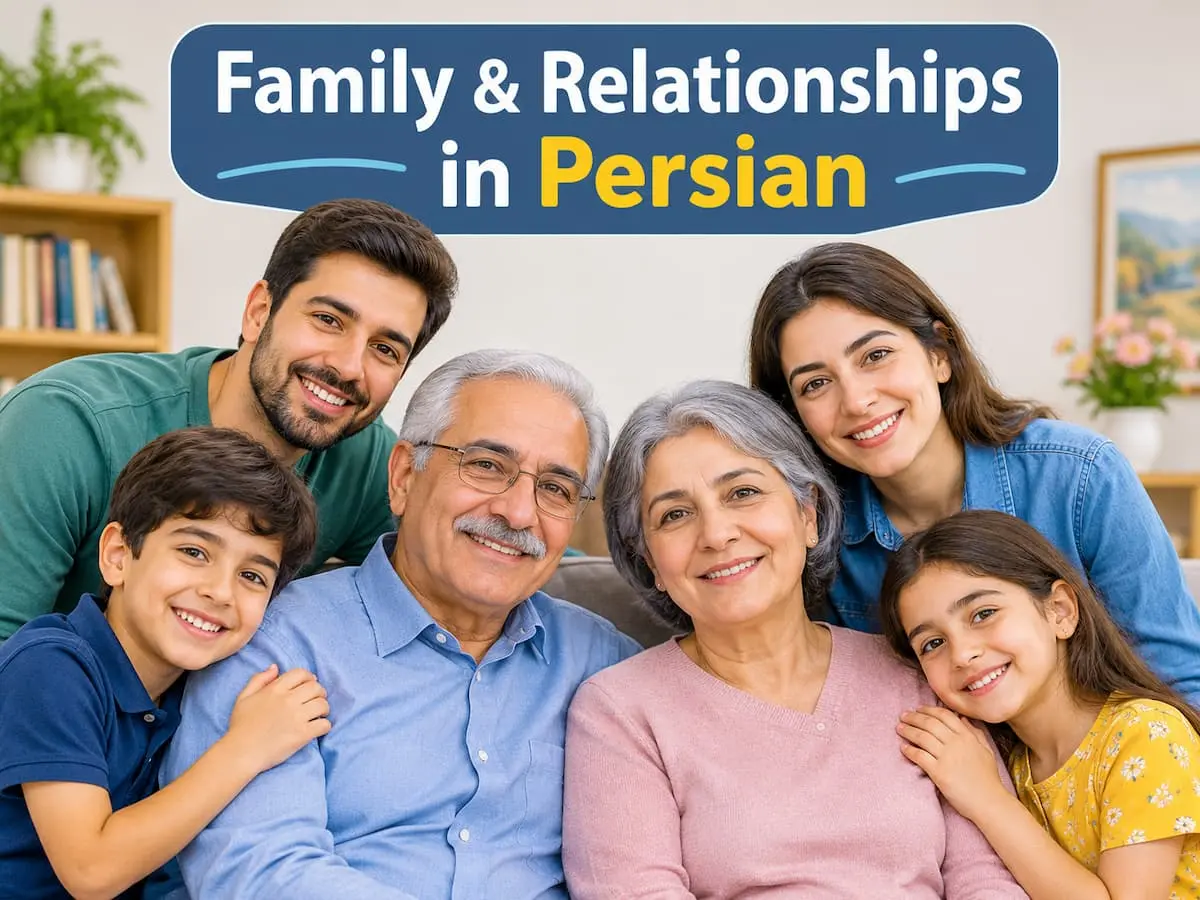
Learn how to talk about family and relationships in Persian with practical vocabulary, natural expressions, and everyday questions. This video-supported lesson introduces Persian words for family members, relatives, parents, siblings, children, marital status, and family connections, with English translations and easy-to-follow pronunciation to help adult learners communicate more confidently in everyday Persian conversations at home and in everyday social settings.
1. Talking About Your Family

The most common Persian word for “family” is خانواده (khânevâdeh). It can refer to your immediate family or your family as a whole. فامیل (fâmil) usually means relatives or extended family, while اقوام (aqvâm) is a more formal word for relatives.
- خانواده (khânevâdeh) — family
- فامیل (fâmil) — relatives; extended family
- اعضای خانواده (a’zâ-ye khânevâdeh) — family members
- خانوادهام (khânevâde-am) — my family
To say “My family is very close,” use خانوادهام خیلی صمیمی هستند (khânevâde-am kheili samimi hastand). صمیمی (samimi) describes a warm, close relationship. A large family is خانواده پرجمعیت (khânevâde-ye porjam’iyat), and a small family is خانواده کمجمعیت (khânevâde-ye kamjam’iyat).
Pronunciation is given in a learner-friendly Latin transliteration of standard Iranian Persian; it is approximate, not IPA.
Video of Family and Relationships in Persian

2. Immediate Family Members

These are essential words for describing your immediate family. فرزند (farzand) is a general word for “child,” while پسر (pesar) and دختر (dokhtar) mean “son” and “daughter” respectively.
- پدر (pedar) — father
- مادر (mâdar) — mother
- والدین (vâledeyn) — parents
- پدر و مادر (pedar o mâdar) — parents
- همسر (hamsar) — spouse
- شوهر (shohar) — husband
- زن (zan) — wife
- پسر (pesar) — son
- دختر (dokhtar) — daughter
- فرزند (farzand) — child
- بچه (bacheh) — child; kid (informal)
- برادر (barâdar) — brother
- خواهر (khâhar) — sister
- خواهر و برادر (khâhar o barâdar) — siblings
To introduce someone, say این پدر من است (in pedar-e man ast) — “This is my father.” In casual speech, you may hear این پدرمه (in pedarameh). Likewise, این خواهر منه (in khâhar-e mane) means “This is my sister.” The shorter forms are common in casual speech.
Use دارم (dâram) to say “I have.” For example, من دو تا خواهر دارم (man do tâ khâhar dâram) means “I have two sisters.”
3. Grandparents and Extended Family

Persian has distinct words for relatives on your father’s side and your mother’s side. This distinction is especially useful when talking about aunts, uncles, and cousins.
- پدربزرگ (pedarbozorg) — grandfather
- مادربزرگ (mâdarbozorg) — grandmother
- نوه (naveh) — grandchild
- عمو (amu) — father’s brother; paternal uncle
- عمه (ammeh) — father’s sister; paternal aunt
- دایی (dâyi) — mother’s brother; maternal uncle
- خاله (khâleh) — mother’s sister; maternal aunt
- پسرعمو / دخترعمو (pesar-amu / dokhtar-amu) — male / female cousin, child of a paternal uncle
- پسرخاله / دخترخاله (pesar-khâleh / dokhtar-khâleh) — male / female cousin, child of a maternal aunt
The other cousin terms follow the same pattern: پسرعمه / دخترعمه (pesar-ammeh / dokhtar-ammeh) are the children of your paternal aunt, and پسردایی / دختردایی (pesar-dâyi / dokhtar-dâyi) are the children of your maternal uncle. Persian often specifies the exact family connection.
برادرزاده (barâdarzâdeh) means your brother’s child, while خواهرزاده (khâharzâdeh) means your sister’s child.
4. Marriage and Family Relationships
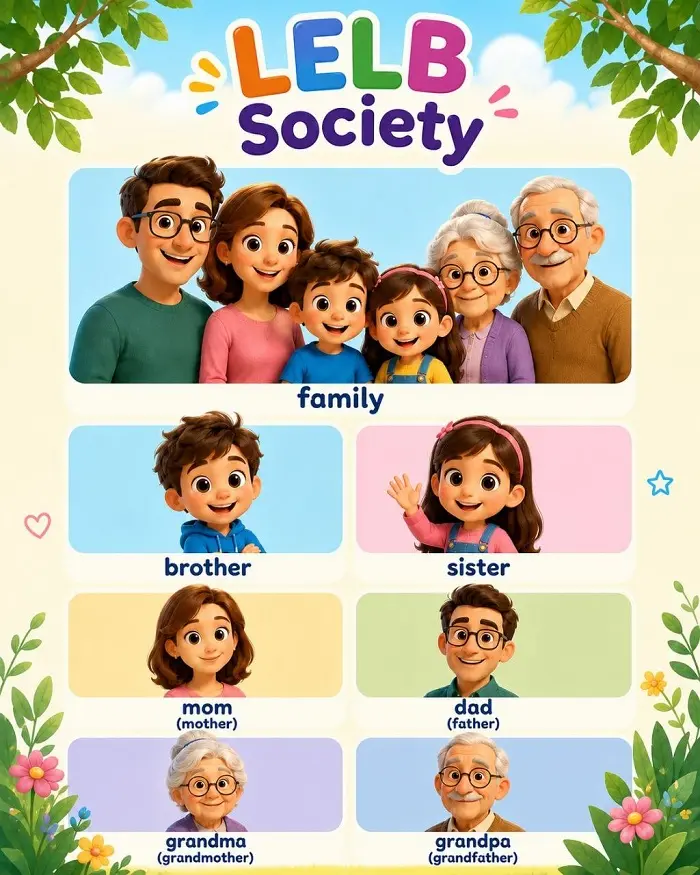
For marital status, مجرد (mojarrad) means “single” or “unmarried,” and متأهل (mota’ahhel) means “married.” These expressions are useful when the topic comes up naturally and is appropriate for the conversation.
- مجرد (mojarrad) — single; unmarried
- متأهل (mota’ahhel) — married
- ازدواج (ezdevâj) — marriage
- ازدواج کردن (ezdevâj kardan) — to get married
- نامزد (nâmzad) — fiancé or fiancée
- نامزدی (nâmzadi) — engagement
- همسرم (hamsaram) — my spouse
- شوهرم (shooharam) — my husband
You can say من مجردم (man mojarradam) — “I am single,” or من متأهلم (man mota’ahhelam) — “I am married.” To say that you are engaged, use من نامزد دارم (man nâmzad dâram), literally “I have a fiancé/fiancée.” نامزد من (nâmzad-e man) means “my fiancé” or “my fiancée”; the same Persian word is used for either.
To say “I got married,” use ازدواج کردم (ezdevâj kardam). For example, پنج سال پیش ازدواج کردم (panj sâl pish ezdevâj kardam) means “I got married five years ago.” To introduce your spouse, say این همسر من است (in hamsar-e man ast) — “This is my spouse.” همسر (hamsar) is a respectful, gender-neutral word.
5. Useful Questions and Answers

In Persian, داری (dâri) is informal, while دارید (dârid) is more polite or formal.
- خانوادهات چند نفره است؟ (khânevâde-at chand nafare ast?) — How many people are in your family?
- چند تا خواهر و برادر داری؟ (chand tâ khâhar o barâdar dâri?) — How many siblings do you have?
- چند تا فرزند دارید؟ (chand tâ farzand dârid?) — How many children do you have?
- پدر و مادرت کجا زندگی میکنند؟ (pedar o mâdaret kojâ zendegi mikonand?) — Where do your parents live?
- متأهل هستید؟ (mota’ahhel hastid?) — Are you married?
You can answer من با خانوادهام زندگی میکنم (man bâ khânevâde-am zendegi mikonam) — “I live with my family,” or من یک برادر و دو خواهر دارم (man yek barâdar o do khâhar dâram) — “I have one brother and two sisters.”
6. A Short Everyday Conversation

Read this dialogue to see the vocabulary in context.
مینا: خانوادهات چند نفره است؟
Mina: khânevâde-at chand nafare ast?
Mina: How many people are in your family?
علی: ما پنج نفر هستیم؛ پدر، مادر، دو خواهر و من.
Ali: mâ panj nafar hastim; pedar, mâdar, do khâhar o man.
Ali: There are five of us: my father, mother, two sisters, and me.
مینا: خواهرهات از تو بزرگترن یا کوچکتر؟
Mina: khâharhât az to bozorgtar-an yâ kuchaktar?
Mina: Are your sisters older or younger than you?
علی: یکی از خواهرهام از من بزرگتره و اون یکی کوچکتر.
Ali: yeki az khâharhâm az man bozorgtare va un yeki kuchiktar.
Ali: One of my sisters is older than me, and the other is younger.
مینا: با خانوادهات زندگی میکنی؟
Mina: bâ khânevâde-at zendegi mikoni?
Mina: Do you live with your family?
علی: بله، فعلاً با پدر و مادرم زندگی میکنم.
Ali: bale, fe’lan bâ pedar o mâdaram zendegi mikonam.
Ali: Yes, for now I live with my parents.
7. Describing Family Members

Useful adjectives include مهربان (mehrabân) — kind; صمیمی (samimi) — close or affectionate; بزرگتر (bozorgtar) — older; and کوچکتر (kuchaktar) — younger. Persian adjectives usually follow the noun and connect to it through an ezâfe sound, often represented by “-e” in transliteration.
For example, مادرم خیلی مهربان است (mâdaram kheili mehrabân ast) means “My mother is very kind,” and برادر بزرگترم دانشجو است (barâdar-e bozorgtar-am dâneshju ast) means “My older brother is a university student.”
8. Practice Your Persian
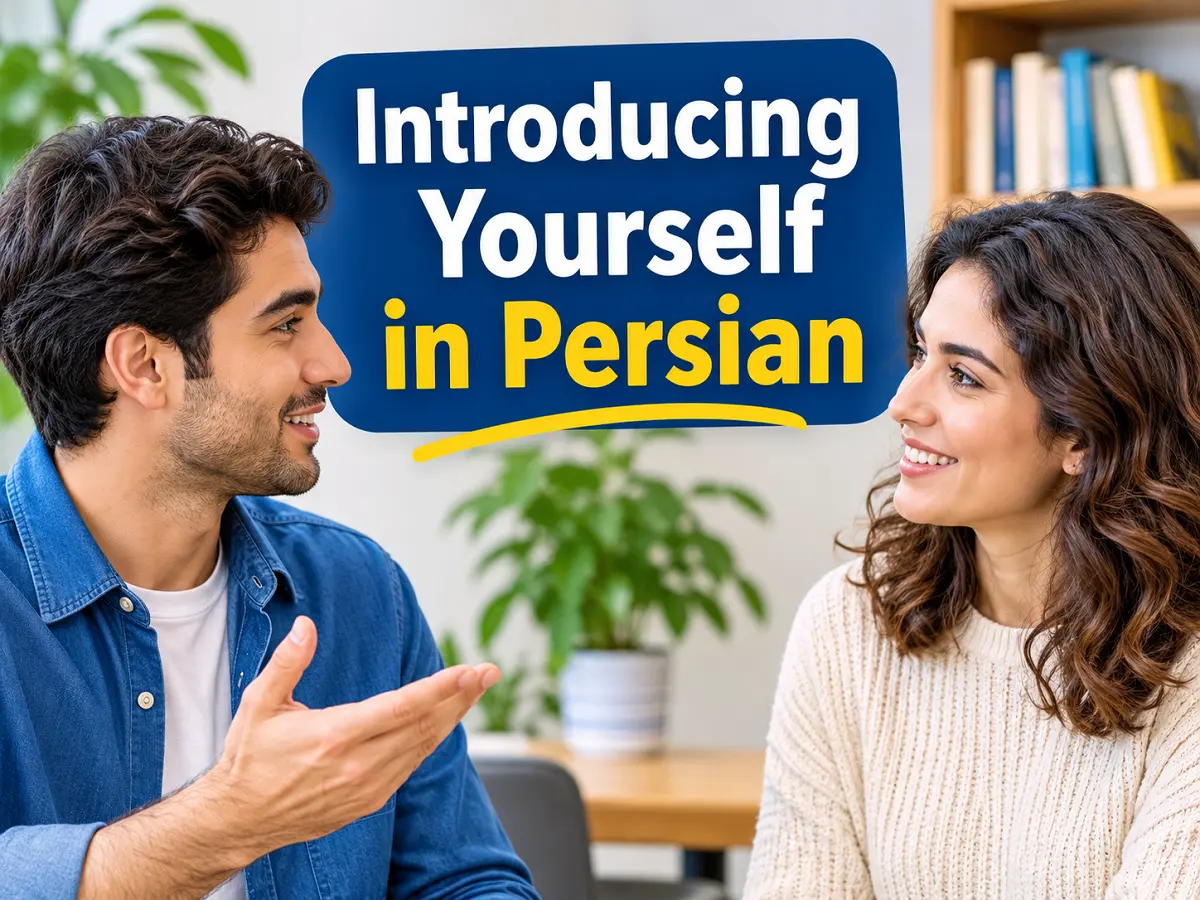
Practise by introducing your family in three or four sentences. Mention how many people are in it, whether you have siblings, and where your parents live. You can also describe a family photograph: این خانواده من است (in khânevâde-ye man ast) — “This is my family.” Then identify each person: این پدرم است (in pedaram ast) — “This is my father”; این مادرم است (in mâdaram ast) — “This is my mother”; and این برادرم است (in barâdaram ast) — “This is my brother.”
Use at least five family words from this lesson. Repeat the patterns aloud and adapt them to your own family to remember the vocabulary.