Table of Contents
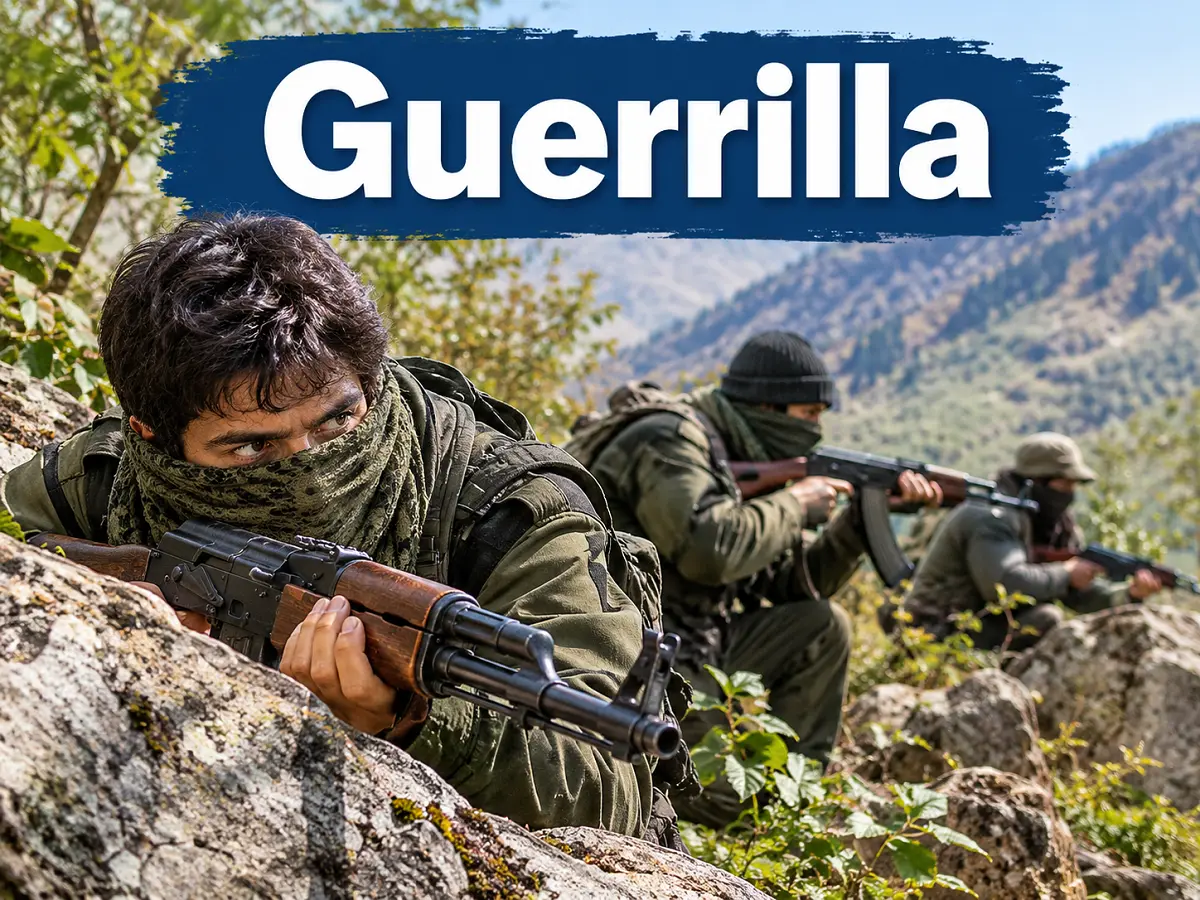
Guerrilla refers to a type of irregular warfare in which small, independent groups use surprise attacks, ambushes, and rapid movements against a larger or more organized military force.
Definition of Guerrilla
/gəˈrɪl.ə/ (Noun)
The word guerrilla has two closely related meanings:
- Guerrilla warfare: A form of irregular warfare in which relatively small groups of fighters use unconventional military tactics, such as ambushes, sabotage, sudden raids, and hit-and-run attacks, rather than engaging in direct, large-scale battles.
- Guerrilla fighter: A person who takes part in this type of irregular warfare, typically operating in a small, mobile unit rather than as part of a conventional army.

Unlike conventional warfare, guerrilla warfare generally relies on mobility, concealment, familiarity with the surroundings, and surprise rather than superior numbers or heavy military equipment.
Synonyms of Guerrilla
rebel, insurgent, paramilitary fighter, freedom fighter
Video of Guerrilla

Guerrilla in Context
The mountainous region provided an ideal environment for guerrilla warfare. Small groups of fighters moved through narrow paths and unfamiliar terrain, avoiding direct confrontations with a much larger military force. Instead of relying on heavy weapons or large formations, they used surprise attacks and quickly changed their positions to avoid being detected.

During the conflict, the guerrilla fighters disrupted supply routes and communication systems. Their knowledge of the local surroundings allowed them to plan unexpected operations and withdraw before opposing forces could organize an effective response. Although they lacked the equipment and resources of a conventional army, their mobility and unconventional tactics made them difficult to defeat.
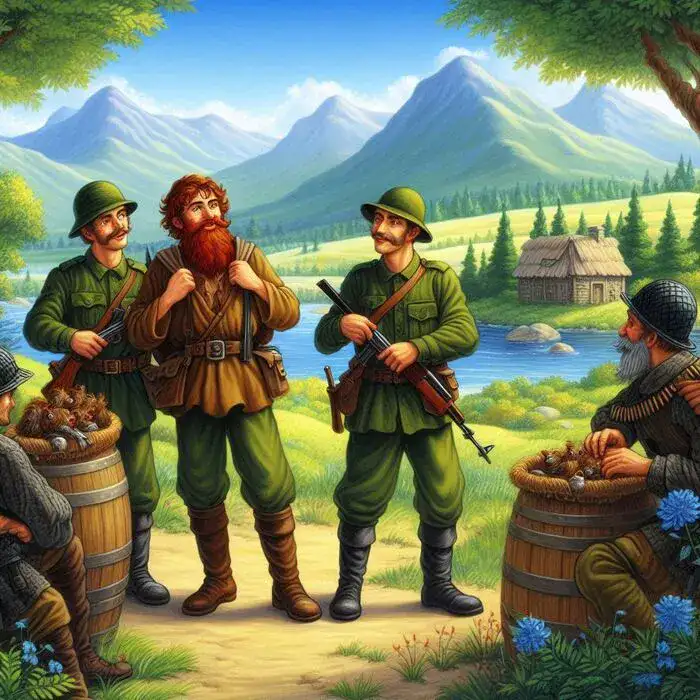
Military analysts explained that guerrilla warfare required more than courage and physical strength. Successful operations depended on careful planning, coordination, reliable information, and an understanding of the surrounding environment. The conflict demonstrated how smaller fighting forces could challenge a considerably stronger opponent by avoiding traditional battlefield strategies.
Origin of Guerrilla
The word guerrilla entered English in the early 19th century from the Spanish word guerrilla, meaning “little war.” It is a diminutive form of guerra, meaning “war.” The term originally referred to irregular warfare conducted by small, independent fighting units.