Table of Contents
- Video of Scaffolding and Collaborative Learning
- What is Scaffolding?
- Round Table Activity for Scaffolding and Collaborative Learning
- Content-Based Instruction to Foster Engagement in L2 Learning
- Scaffolding in Synchronous and Asynchronous Learning
- Social Presence as a Foundation for Scaffolding
- Enhancing Social Presence on LELB Society
- Scaffolding Through Peer-Assessment on LELB Society
- Scaffolding Through Student Presentations and Essay Writing
At LELB Society, we implement scaffolding in asynchronous learning through interactive activities like our round table forum, where students actively engage in knowledge construction. Drawing on Vygotsky’s zone of proximal development (ZPD), our teachers foster social presence in online venues by replying directly to student comments with form-focused instruction and corrective feedback. This method encourages interactive negotiation of meaning, ensuring that learners develop accuracy and fluency simultaneously. Our collaborative flipped learning model further empowers students to prepare independently before class discussions, maximizing peer collaboration and meaningful communication. By integrating scaffolding strategies with online forums, LELB Society creates an inclusive learning environment that balances autonomy with guided support, making language acquisition more effective and engaging.
Video of Scaffolding and Collaborative Learning

What is Scaffolding?
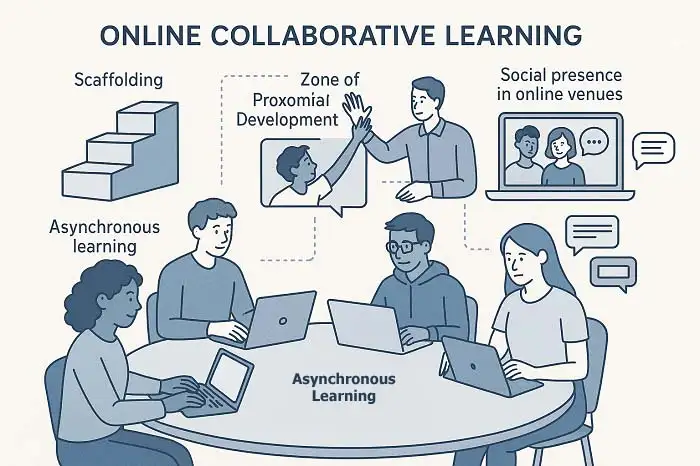
Scaffolding, as an instructional strategy, is deeply rooted in Vygotsky’s sociocultural theory, which emphasizes the fundamental role of social interaction in cognitive development. According to this theory, learning occurs first on the social plane through collaboration with more knowledgeable peers or teachers before it is internalized by the individual. Scaffolding embodies this principle by providing learners with temporary, structured support that helps them operate within their zone of proximal development (ZPD)—the gap between what they can do independently and what they can achieve with guidance. As assistance is gradually withdrawn, learners assume greater autonomy, demonstrating how knowledge is socially mediated before becoming personally constructed. Thus, scaffolding directly operationalizes sociocultural theory by translating its emphasis on socially shared learning into practical classroom strategies.
In the context of LELB Society’s online education, scaffolding refers to the structured academic support that teachers provide to help learners progress from what they can accomplish independently to what they can achieve with guidance, aligning with Vygotsky’s zone of proximal development (ZPD). This is achieved through asynchronous interactions such as our round table forums, where teachers reply directly to student comments with form-focused instruction, corrective feedback, and guided prompts that encourage learners to refine their language use. By gradually reducing assistance as students gain competence, scaffolding promotes autonomy, fosters interactive negotiation of meaning, and strengthens social presence in online venues, ultimately creating a collaborative and student-centered learning environment.
Round Table Activity for Scaffolding and Collaborative Learning

At LELB Society, the Round Table Activity is designed to integrate flipped learning with content-based instruction (CBI), ensuring that learners actively engage with challenging, thought-provoking topics before class. Each round table lesson is accompanied by a video lecture and carefully selected content on interesting and useful themes such as carpe diem, emotional intelligence, etc.. Students access the material asynchronously, allowing them to study at their own pace, reflect critically, and formulate at least one original comment or question. In addition, they are required to reply to at least one peer’s contribution, which establishes the foundation for interactive negotiation of meaning and sustained engagement with the lesson.
This asynchronous preparation fosters scaffolding by providing learners with structured guidance that helps them bridge the gap between their current knowledge and more advanced conceptual understanding. Teachers contribute to this process by offering form-focused instruction in response to student comments, correcting errors, and modeling appropriate language use. As feedback is embedded in authentic communicative exchanges, students are supported in their zone of proximal development (ZPD), where they can achieve more with assistance than alone. Over time, scaffolding gradually diminishes as learners become increasingly independent in producing accurate and meaningful language.
The collaborative dimension of the Round Table Activity ensures that learning is not limited to teacher-student interaction but expands into peer-to-peer dialogue. Through commenting, replying, and even exchanging voice messages, students co-construct knowledge and create a sense of social presence in online venues. This shared space promotes accountability, mutual support, and deeper reflection on complex topics, while the asynchronous format accommodates diverse learning styles and schedules. Many discussions generate over a hundred interactive comments, showing the effectiveness of this method in sustaining long-term engagement and academic collaboration.
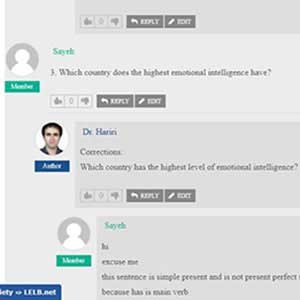
Ultimately, the Round Table Activity at LELB Society exemplifies the principles of collaborative flipped learning by blending autonomy, peer interaction, and teacher guidance. It transforms traditional online discussions into an evolving cycle of preparation, interaction, assessment, and reflection. By combining scaffolding techniques with interactive forums, this activity not only develops linguistic accuracy but also encourages critical thinking and meaningful communication, preparing students for authentic academic and professional discourse.
Content-Based Instruction to Foster Engagement in L2 Learning

At LELB Society, we employ content-based instruction (CBI) to make learning more engaging and meaningful for L2 learners, particularly in asynchronous contexts. By selecting topics that are both useful and appealing to young learners, we ensure that students remain motivated and eager to participate in lessons. To further enrich this experience, we embed carefully chosen YouTube videos into our lessons, often designed around round table activities. This multimodal approach encourages students to not only read and analyze the lessons but also to interact with authentic audiovisual materials that enhance comprehension and stimulate discussion.
In the current digital era dominated by the internet and artificial intelligence, learners demand content that is both relevant and stimulating. Without interesting and practical topics, scaffolding strategies may lose their effectiveness, as learners would not be motivated to engage in peer interaction or collaborative tasks. By integrating CBI with multimedia resources, we create a dynamic learning environment where students actively engage in lessons, making scaffolding both possible and effective in online education.
Scaffolding in Synchronous and Asynchronous Learning

At LELB Society, scaffolding takes place in two complementary formats: asynchronously through our Round Table Activity and synchronously in the live classes that follow. During the asynchronous phase, students prepare by engaging with flipped learning materials, contributing questions or comments, and replying to peers in the forum. Teachers then provide form-focused instruction and corrective feedback directly within the discussion thread, while classmates also scaffold one another’s learning by clarifying ideas, negotiating meaning, and building on shared insights. This ensures that learners receive structured support even before entering the live classroom.
The synchronous classes that follow extend this scaffolding process by allowing immediate teacher guidance and dynamic student-student interaction. Here, learners can expand on their earlier comments, receive real-time feedback, and collaborate with peers in a more interactive setting. The integration of both asynchronous and synchronous scaffolding strengthens the learning cycle: asynchronous preparation fosters reflection and autonomy, while synchronous dialogue deepens understanding and reinforces accuracy. By balancing teacher-student and peer-to-peer assistance across both modes, LELB Society creates a comprehensive environment where learners progress confidently from guided practice to independent mastery.
Social Presence as a Foundation for Scaffolding

At LELB Society, cultivating a strong sense of social presence among registered students plays a vital role in supporting scaffolding and collaborative learning. Each learner maintains a personal profile page, which strengthens their identity within the community and encourages meaningful interaction. In our Round Table sessions, learning occurs interdependently as students exchange questions, comments, and insights, fostering collaboration that mirrors Vygotsky’s sociocultural view of knowledge as socially constructed. This collective engagement provides the foundation for scaffolding, where learners both support and challenge each other to move beyond their current level of competence.
Social presence also ensures immediacy and accuracy in asynchronous communication channels such as comment forms and forums. Teachers and peers respond to contributions almost immediately and in detail, offering form-focused feedback and clarification when necessary. This timely exchange promotes an interactive cycle of scaffolding in which students refine their language use while engaging in authentic discussion. The ongoing presence of responsive interlocutors reduces the sense of isolation common in online education and reinforces accountability in the learning process.
Furthermore, the open-ended nature of commenting and discussion boards sustains continuous interaction, allowing ideas to evolve organically over time. Students are not restricted to a single turn in communication but can revisit, refine, and expand upon earlier contributions, creating a dynamic environment for interactive negotiation of meaning. This ongoing interactivity nurtures collaboration, deepens comprehension, and highlights how social presence directly facilitates scaffolding by providing learners with both immediate guidance and long-term opportunities for reflection and growth.
As a result, learning at LELB Society is socially constructed within a constructivist framework, emphasizing interdependency or social autonomy rather than individual autonomy in isolation. The teacher functions as an important facilitator, but not the sole mediator of knowledge; instead, students actively scaffold each other’s learning through collaborative dialogue, immediate feedback, and ongoing interaction in both asynchronous and synchronous channels. This shared responsibility transforms the learning process into a community-driven experience, where knowledge emerges collectively and learners progress by supporting one another, fully reflecting the principles of sociocultural theory in practice.
Enhancing Social Presence on LELB Society

To foster a strong sense of social presence in our online, community-driven school, we implement the following strategies:
- Threaded Commenting System: Nested discussion boards and comment forms allow up to 9 levels of replies, with indentation and alignment distinguishing between comments and replies.
- User Avatars via Social Login: Students’ avatars are displayed automatically through Google accounts, as login is currently enabled only via Google for ease and authenticity.
- Date Stamps on Interactions: Every comment and forum post includes a timestamp, highlighting immediacy or latency in asynchronous communication.
- Gamification of Learning: Academic activities—such as published comments, posts, forum topics, and replies—are tracked, and students receive badges or medals to reward engagement and progress.
- Content-Based Instruction (CBI): Lessons and discussions are grounded in appealing, useful, and real-world topics to maximize interest and relevance.
- Membership Website for Privacy: Built on WordPress, our membership model safeguards student privacy while promoting active participation in a supportive community.
- Multi-Authorship Structure: With 32 published authors, each having a profile page and biographical details, our site supports collaboration and showcases diverse expertise.
Scaffolding Through Peer-Assessment on LELB Society

To employ scaffolding strategies among L2 learners on LELB Society, Dr. Mohammad Hossein Hariri Asl, the founder and one of the teachers, strategically manages classroom interaction in the comment sections. Instead of immediately responding to every comment, he sometimes withholds his replies to encourage student-student interaction and peer-assessment. This approach allows learners to evaluate, correct, and expand on each other’s input, fostering critical thinking and collaborative learning while reinforcing their sense of social presence.
However, in cases where peer-assessment is delayed or insufficient, Dr. Hariri Asl steps in to provide timely support and guidance. In this way, scaffolding is maintained consistently, either through collaborative exchanges among students or through teacher intervention when necessary. This balanced method helps learners gradually move from relying on teacher feedback to becoming more autonomous and confident in their language learning journey.
Scaffolding Through Student Presentations and Essay Writing

At LELB Society, scaffolding and collaborative learning are practiced in highly interactive and practical ways, particularly through two structured activities that take the form of round tables. First, registered students deliver presentations either synchronously in live classes or asynchronously by recording their lectures and submitting them to us. These presentations—currently numbering around 80—are uploaded to a dedicated category on our website, creating a valuable archive of student-generated content. Other learners then engage with these presentations by providing feedback, either through the comment forms at the end of each post or during live class discussions. This system not only enhances students’ presentation skills but also encourages critical peer evaluation, fostering a supportive learning community.
The second activity centers on IELTS essay writing practice, which takes place in a designated category on the site. Students receive new essay topics posted regularly, and they submit their written responses as comments under each prompt. Feedback unfolds asynchronously, with students and teachers replying directly to the essays, often resulting in long threads of interaction that may accumulate dozens of replies. This iterative feedback process reinforces scaffolding by helping learners refine their writing skills step by step while benefiting from collective insights. In both activities, the round table format ensures active participation, peer learning, and continuous engagement, which are essential for successful online language education.