Table of Contents
- Video of Asynchronous Communication in Language Learning
- Synchronous Computer-Mediated Communication
- Synchronous Voice Communication (VoIP)
- Limitations of VoIP-Based Communication
- Asynchronous Computer-Mediated Communication (ACMC)
- Discussion Forums in Asynchronous CMC
- Reflective Learning Through Online Forums
- Managing and Moderating Discussion Forums
- Criticisms of Asynchronous Discussion Forums
- Blogging as an Asynchronous CMC Tool
- Technical and Social Features of Blogs
- Podcasting in Language Learning
- References
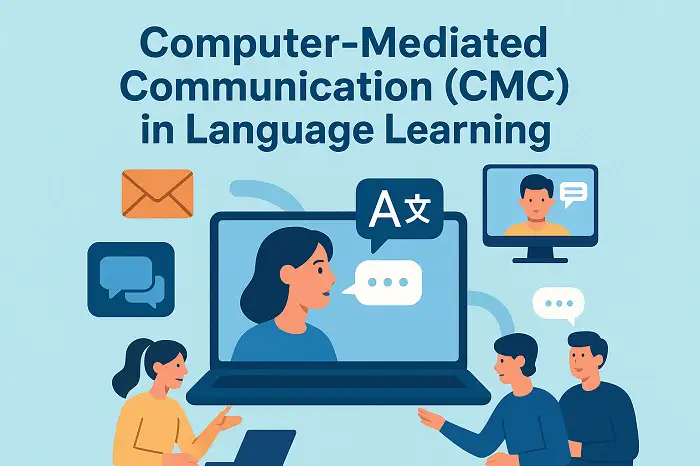
Computer-mediated communication (CMC) has transformed how languages are taught and learned in online environments. From real-time voice interaction to reflective, text-based exchanges, digital tools offer unique pedagogical affordances for L2 learners. This article explores synchronous and asynchronous CMC modes, including VoIP, discussion forums, blogging, and podcasting, highlighting their educational benefits, limitations, and implications for collaborative language learning in technology-enhanced contexts.
Video of Asynchronous Communication in Language Learning

Synchronous Computer-Mediated Communication
Synchronous Voice Communication (VoIP)
Synchronous Voice Communication. VoIP is a communication tool that converts sound from analog into digital and sends the digitalized sound over Internet network between the caller who initiates the communication with a microphone plugged into the computer and the receiver hearing synchronous voice messages through the speakers or headphones plugged into the computer (Manning & Johnson, 2011). VoIP allows the students to experience real-time or synchronous communication overseas like using the telephone, which is ideal for holding discussion classes because, in most VoIP tools, the students can simultaneously exchange text messages and share files with each other (Dudeney & Hockly, 2007; Kinoshita, 2008; Manning & Johnson, 2011).

As Stanley (2013) states, “CMC using voice is an ideal medium for collaborative learning and is perhaps one of the most exciting possibilities that technology can offer the language teacher and learners” (p. 147). According to Arcos and Sánchez (2006), audio-graphic software programs, such as Skype, allow for real-time group voice communication over the Internet, a trait that unfolds countless possibilities for interaction by making L2 learners independent of time and space.
Limitations of VoIP-Based Communication
Regardless of the numerous advantages of VoIP software programs, even those that are integrated with video conferencing, Kinoshita (2008) enumerates some criticism that VoIP could receive in this way:
-
The learners do not experience actual physical contact.
-
Visual cues, including eye contact and facial expressions, might not be noticed since the learners look at their screens rather than directly at the camera.
-
Non-facial gestures are missing as the learners generally expose merely their heads and shoulders.
-
The quality of the video can affect communication, especially when the frame rate and synchronization of the video with audio do not allow the learners to experience real-life face-to-face interaction.
Asynchronous Computer-Mediated Communication (ACMC)
If the data and language products are collected and stored for numerous sorts of analyses, such as self-corrections, pause-time, dictionary look-up use, reflection, feedback, etc., then we are dealing with an asynchronous type of CMC (Gass & Selinker, 2008; Smith, 2004). Asynchronous CMC can be used in language learning contexts, particularly when the Internet connection is slow (Gorjian, Moosavinia, Ebrahimi Kavari, Asgari & Hydarei, 2011).
In ACMC, participants are not under pressure to actually speak in real time. Instead, they engage in conversations in slow motion, while enjoying the advantage of more processing time before responding (Beauvois, 1992, as cited in Smith & Gorsuch, 2004; Swan & Shea, 2005; Wells, 1990). In other words, the participants can access previous messages and reflect upon them while still staying in a virtual conversation, something that interlocutors in actual face-to-face conversations cannot do, and this particular characteristic is fairly ideal for practicing self and peer-assessment (Hadjistassou, 2008; Swan & Shea, 2005).
L2 learners in ACMC can actually have a voice and no particular student can dominate the entire conversation. Even the teacher’s sense of directiveness gets normalized (Swan & Shea, 2005). Moreover, ACMC in the form of online forums offers an “interactive medium to students to re(create) the conditions of learning in L2 writing” (Hadjistassou, 2008, p. 356). Asynchronous CMC in the form of email lists and discussion boards is an effectual medium for exchanges among distant groups of students in collaborative learning projects (Simpson, 2002).
Discussion Forums in Asynchronous CMC

Hadjistassou (2008) conducted a study on the impact of asynchronously-mediated forums in the form of online collaborative discussion boards among 17 ESL learners in a university level writing course in which the students could present and share paper topics and raise critical questions to help their peers to think more critically about the assigned writing tasks.
The results indicated that participation in ACMC forums could encourage the students to implement narrating and describing strategies to provide their peers with necessary feedback, and in so doing, the students improved their writing skills through developing more formal and sophisticated language.
Hadjistassou’s (2008) findings are in agreement with what Sengupta (2001) proposed on the efficiency of CMC as a powerful tool in developing literacy in L2 learners because its text-based nature fosters sustained reflection upon classroom exchanges.

Chapelle and Jamieson (2008) contend that encouraging the students to participate in online discussion forums can increase the level of students’ involvement in communicative exchanges. According to Chapelle and Jamieson (2008), learners with different proficiency levels can utilize discussion boards because of the fact that they can participate in the forums at their own pace and convenience.
Kern (1995) contends that the utilization of discussion forums can reduce the students’ anxiety, boost their motivation, and consequently, increase their active participation and interaction, particularly on the part of reserved and reticent students who, for a variety of reasons, prefer not to attend oral discussions.
Porter (2004) states that online bulletin boards or discussion forums can furnish the teacher and the students with a well-written history or log of class activities. Furthermore, the learning community members can determine the immediacy attribute of posted comments, forums and replies, thanks to the date and time stamps on discussion forums.
Reflective Learning Through Online Forums

Lamy and Goodfellow (1999) carried out a study in the Open University of the United Kingdom in an online asynchronous course in French based on discussion forums to ascertain whether conscious reflection/reflectiveness was necessary in an interactive learning environment.
The findings showed that reflective conversations in which the learners carefully, consciously and reflectively plan their language products in the discussion forums fulfill the conditions for language learning in interaction and partnership with other language learners worldwide. According to Kinoshita (2008), the employment of discussion boards can provide the learners with ample opportunities to plan and analyze their linguistic production retrospectively.
Managing and Moderating Discussion Forums

Palloff and Pratt (2007) propose that the teacher should constantly monitor the activities on discussion forums and make certain that the students are posting to the appropriate discussion boards in order to prevent information overload due to poorly managed or organized information.
On the other hand, Palloff and Pratt (2007) maintain that the teacher is expected to organize the discussion forums in a way that having entered the discussion forums, the participants could feel that they have entered an active and lively conversation.
Criticisms of Asynchronous Discussion Forums
In ACMC, the communicators do not have access to nonverbal and vocal cues; as a result, there have been some controversies as to whether asynchronous environments can foster the development of intimacy and social learning communities (Hiltz & Goldman, 2005).
Salaberry (2001) argues that text-based CMC, including discussion forums, does lack audiovisual information, for instance, tone of voice, facial expressions, and body language.
Another criticism in response to discussion forums is that, according to Kinoshita (2008), in discussion forums, the learners cannot negotiate turn-taking due to the fact that overlaps and interruptions do not actually occur in this mode of communication.
Blogging as an Asynchronous CMC Tool

Blogging. A blog, weblog or a personal website updated frequently is an online journal where posted information from both teacher and students is organized and archived in reverse chronological order (Bender & Waller, 2013; Palloff & Pratt, 2005; Stanley, 2013).
The dividing line between a webpage and a weblog is that the former is static and the latter is dynamic and interactive as students can leave comments and make a social contribution to the content.
Blogging can provide ample opportunities for the students and the teacher to work individually or en masse to develop and publish content on specified topics and create a battery of links interactively. Blogs can provide educationally ideal opportunities for both teachers and students to build virtual communities in the online world.
Technical and Social Features of Blogs
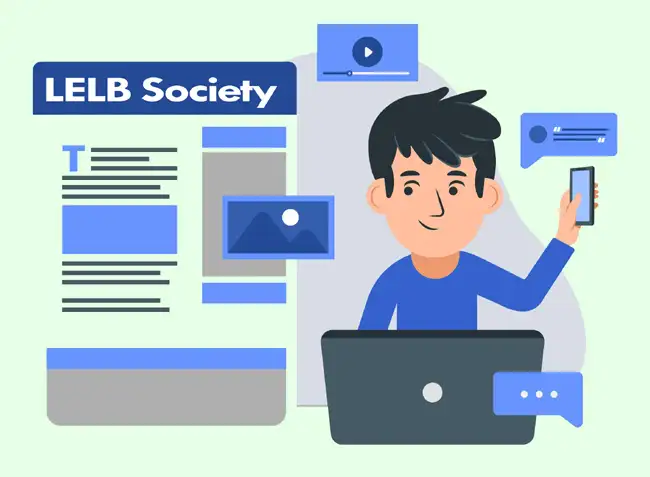
Blogs are highly accessible worldwide as students can log in to their accounts on their personal computers, laptops, tablets, mobile devices, etc. as long as they simply have an Internet connection. One of the defining features of a blog is that it is perfectly syndicated through Really Simple Syndication (RSS).
Both teacher and students can leave posts, and each post can have comments and replies on a blog. WordPress and EduBlogs are perfect examples of pioneer blogging systems in the world.
Podcasting in Language Learning
Podcasting. A podcast is a video or audio multimedia clip about a particular topic characteristically in the format of a radio talk show. When students subscribe to podcasts, they can receive upcoming podcast episodes regularly.
Podcasts can be a great source of authentic listening for students of English. Creating and using podcasts can augment the level of autonomy in the L2 learners if they are invited to take part in creating podcasts (coursecasting).
References
- Arcos, B. D. I., & Sánchez, I. A. (2006). Ears before eyes: Expanding tutors’ interaction skills beyond physical presence in audio-graphic collaborative virtual learning environments. In P. Zaphiris & G. Zacharia (Eds.), User-centered computer aided language learning (pp. 74-93). Hershey, PA: Idea Group Inc. doi:10.4018/978-1-59140-750-8.ch004
- Bender, W. N., & Waller, L. B. (2013). Cool tech tools for lower tech teachers: 20 tactics for every classroom. Thousand Oaks, CA: Corwin Press.
- Chapelle, C. A., & Jamieson, J. (2008). Tips for teaching with CALL: Practical approaches to computer-assisted language learning. New York, NY: Pearson-Longman. 211 INTERACTIVITY AND SOCIAL PRESENCE IN CALL
- Dudeney, G., & Hockly, N. (2007). How to teach English with technology. Harlow, UK: Pearson Education Limited.
- Gass, S. M., & Selinker, L. (2008). Second language acquisition: An introductory course. New York, NY: Routledge.
- Gorjian, B., Moosavinia, S. R., Ebrahimi Kavari, K., Asgari, P., & Hydarei, A. (2011). The impact of asynchronous computer assisted language learning approaches on English as a foreign language high and low achievers’ vocabulary retention and recall. Computer Assisted Language Learning, 24(5), 383-391. doi:10.1080/09588221.2011.552186
- Hadjistassou, S. K. (2008). Emerging feedback in two asynchronous ESL writing forums. In F. Zhang & B. Barber (Eds.), Handbook of research on computer-enhanced language 216 INTERACTIVITY AND SOCIAL PRESENCE IN CALL
- Hiltz, S. R., & Goldman, R. (2005). Learning together online: Research on asynchronous learning networks. New Jersey, NJ: Lawrence Erlbaum Associates, Inc.
- Kern, R. (1995). Restructuring classroom interaction with networked computers: Effects on quantity and quality of language production. Modern Language Journal, 79(4), 457-476. doi:10.1111/j.1540-4781.1995.tb05445.x
- Kinoshita, Y. (2008). Using an audio-video chat program in language learning. In F. Zhang & B. Barber (Eds.), Handbook of research on computer-enhanced language acquisition and learning (pp. 507-520). Hershey, PA: Information Science Reference. doi:10.4018/9781599048956.ch030
- Lamy, M. N., & Goodfellow, R. (1999). Reflective conversation in the virtual language classroom. Language Learning & Technology, 2(2), 43-61.
- Manning, S., & Johnson, K. E. (2011). The technology tool belt for teaching. San Francisco, CA: Jossey-Bass.
- Palloff, R. M., & Pratt, K. (2005). Collaborating online: Learning together in community. San Francisco, CA: Jossey-Bass.
- Palloff, R. M., & Pratt, K. (2007). Building online learning communities: Effective strategies for the virtual classroom. San Francisco, CA: John Wiley & Sons, Inc. 223 INTERACTIVITY AND SOCIAL PRESENCE IN CALL
- Porter, L. R. (2004). Developing an online curriculum: Technologies and techniques. Hershey, PA: Information Science Publishing. 224 INTERACTIVITY AND SOCIAL PRESENCE IN CALL
- Salaberry, M. R. (2001). The use of technology for second language learning and teaching: A retrospective. Modern Language Journal, 85(1), 39-56. doi:10.1111/0026-7902.00096
- Sengupta, S. (2001). Exchanging ideas with peers in network-based classrooms: An aid or a pain? Language Learning & Teaching, 5(1), 103-134.
- Smith, B. (2004). Computer-mediated negotiated interaction and lexical acquisition. Studies in Second Language Acquisition, 26(3), 365-398. doi:10.1017/s027226310426301x
- Smith, B., & Gorsuch, G. J. (2004). Synchronous computer mediated communication captured by usability lab technologies: New interpretations. System, 32, 553-575. doi:10.1016/j.system.2004.09.012
- Simpson, J. (2002). Computer-mediated communication. ELT Journal, 56(4), 414-415. doi:10.1093/elt/56.4.414
- Stanley, G. (2013). Language learning with technology: Ideas for integrating technology in the classroom. Cambridge: Cambridge University Press.
- Swan, K., & Shea, P. (2005). The development of virtual learning communities. In S. R. Hiltz & R. Goldman (2005), Learning together online: Research on asynchronous learning networks (pp. 239-261). Mahwah, NJ: Lawrence Erlbaum Associates, Inc. 227 INTERACTIVITY AND SOCIAL PRESENCE IN CALL
- Wells, R. A. (1990). Computer-mediated communications for distance education and training: Literature review and international resources. Boise, ID: Boise State University.