

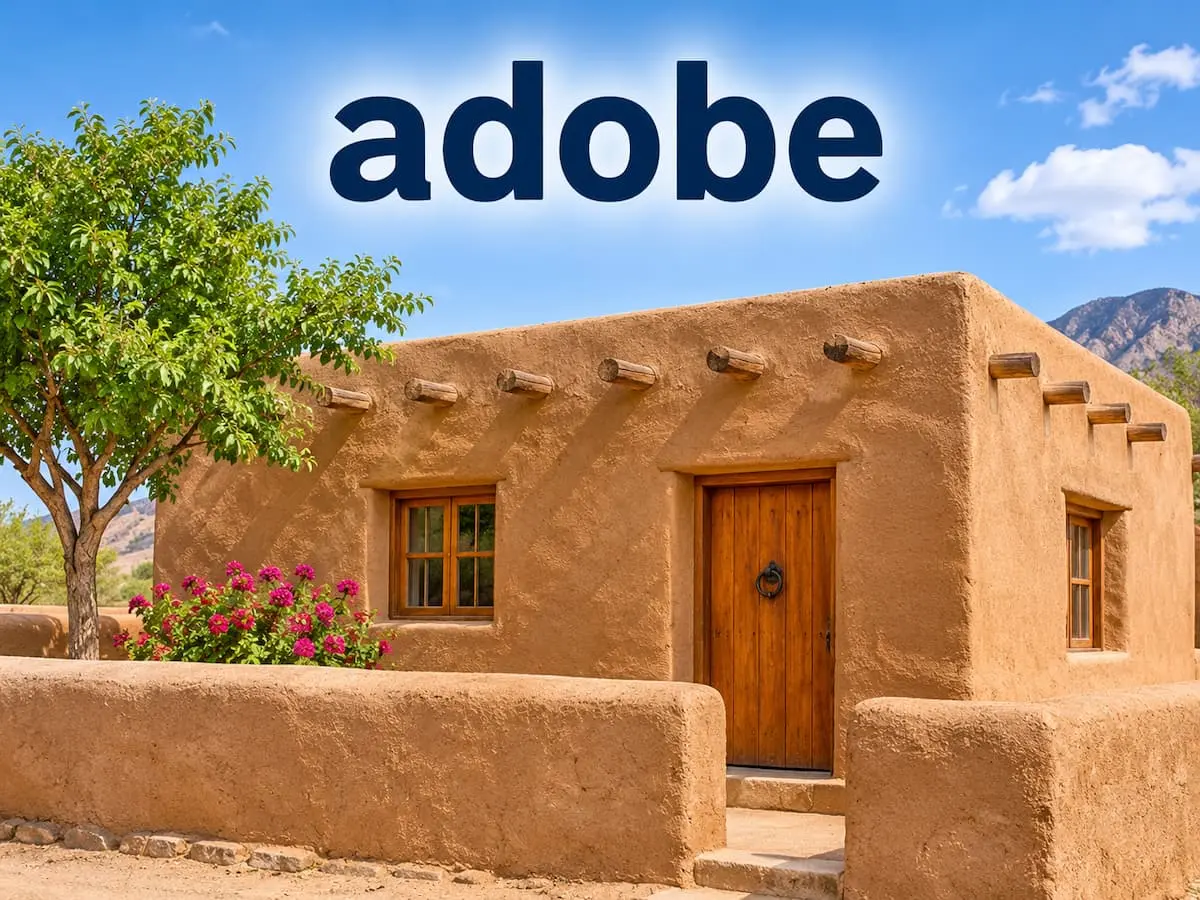
Adobe is a natural building material made primarily from clay-rich earth, water, and sometimes straw. It is shaped into bricks and dried naturally in the sun rather than fired in a kiln.
/əˈdəʊ.bi/ US /-ˈdoʊ-/ (Noun)
Definition of Adobe
Adobe (noun) refers to a type of unfired brick made from a mixture of earth, usually containing clay, water, and sometimes straw or other natural fibers. The mixture is shaped into rectangular blocks and left to dry in the sun until it becomes hard enough for construction.

Adobe has been used for centuries to build houses, walls, and other structures, particularly in regions with hot, dry climates. Buildings made from this material are also called adobe buildings or adobe houses.

One important characteristic of adobe is its ability to help regulate indoor temperatures. Its thick walls can absorb heat during the day and release it gradually, helping keep indoor spaces relatively cool in hot weather.
Synonyms of Adobe
There is no exact synonym or direct antonym for adobe because it refers to a particular natural building material.
However, the following expressions are closely related:
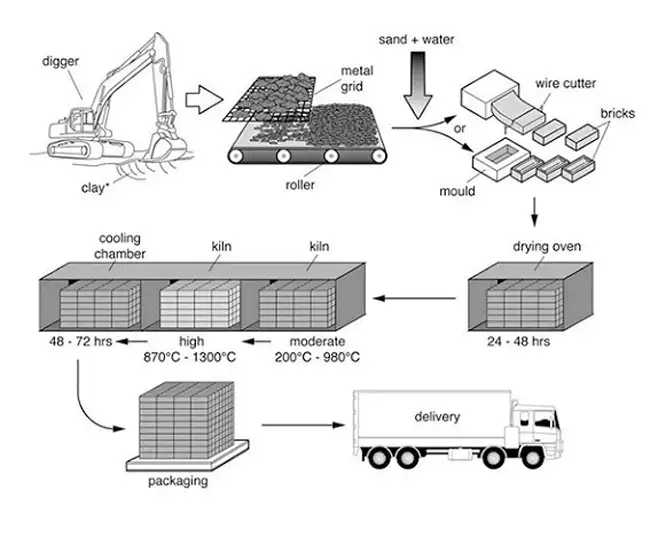
- Mud brick: A brick made from earth and water, sometimes with added natural fibers. It is a close equivalent, although not every mud brick is necessarily made or dried in the same way as traditional adobe.
- Sun-dried brick: A descriptive expression for a brick hardened through exposure to sunlight rather than being fired in a kiln.
- Earth brick: A general term for a building block made primarily from natural soil.
Video of Adobe

Adobe in Context
In many dry regions of the world, traditional houses have been constructed using adobe for generations. Builders mix clay-rich soil with water and sometimes straw to prepare a thick mixture. They then place it into wooden molds, remove the molds, and leave the blocks outside to dry naturally in the sun.

An adobe house often has thick walls that provide natural insulation. During particularly hot days, these walls help reduce the amount of heat entering the building. This traditional construction technique is especially useful in areas where suitable building materials are readily available but modern construction resources are expensive or difficult to obtain.
Today, adobe construction remains an important part of traditional architecture in several parts of the world. Some architects and environmental designers also appreciate it as a relatively low-energy building method because producing adobe bricks generally requires less energy than manufacturing conventional fired bricks. However, adobe structures need appropriate protection against heavy rainfall and prolonged moisture because water can gradually weaken the material.
Origin of Adobe
The English word adobe entered the language through Spanish during the eighteenth century. Its deeper linguistic roots can be traced through Arabic aṭ-ṭūb, meaning brick, to the Coptic word tōbe, which also referred to a brick, and ultimately to ancient Egyptian. The word therefore has a fascinating history connecting English with several languages and ancient building traditions.