
Table of Contents
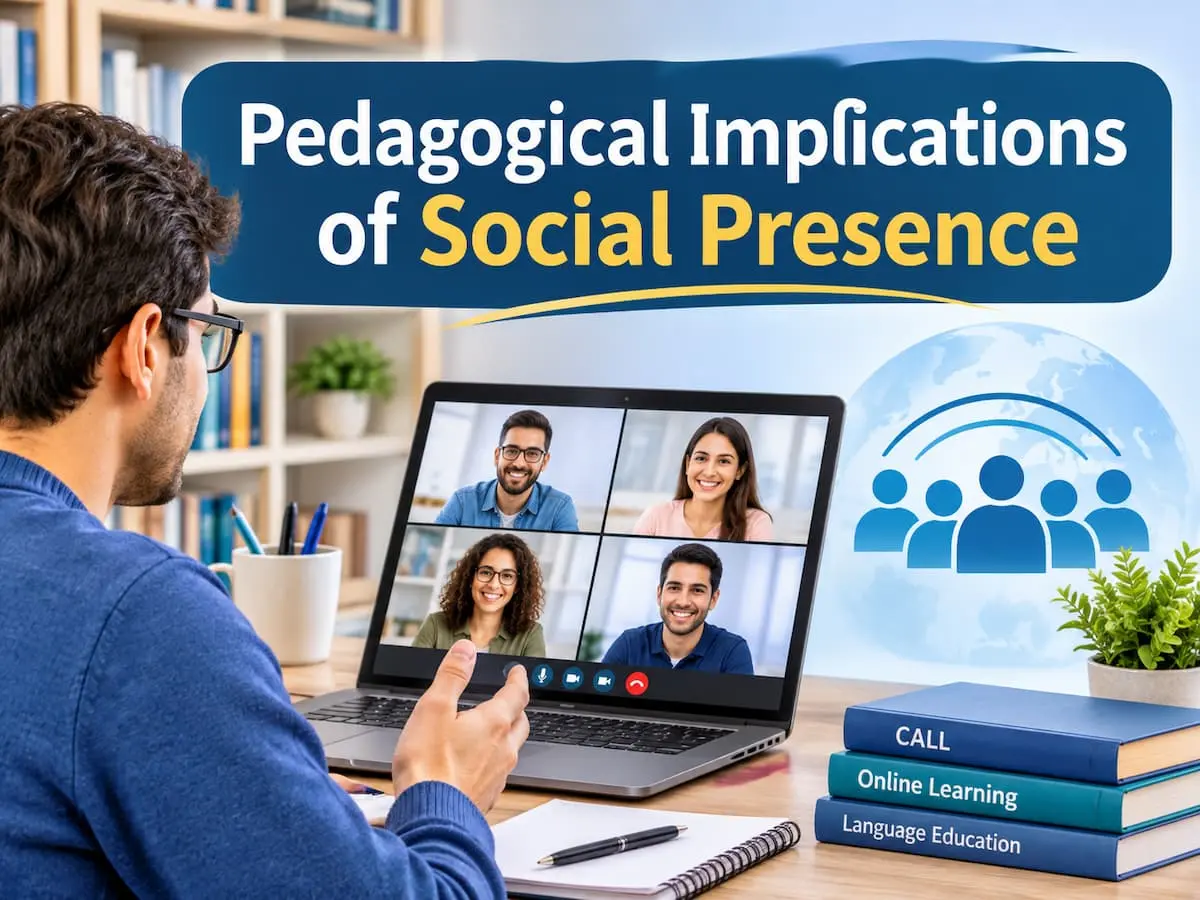
This post explores the pedagogical implications of Chapter 5 of my PhD thesis on social presence, highlighting practical recommendations for computer-assisted language learning (CALL), learner-centered education, student-student interactivity, peer assessment, learner autonomy, and online community building. It examines how effective pedagogy, meaningful social interaction, and appropriate technology integration can enhance second language acquisition and create engaging, supportive, and sustainable online language learning communities.
Pedagogical Implications
The findings of this dissertation could be of practical assistance to the burgeoning market for educational institutions in the field of second/foreign language teaching electronically and on the web, a relatively recent approach to practicing languages with a wide horizon to expect. These institutions might encompass virtual institutes, colleges, universities, etc. that intend to stand out and achieve conspicuous success in the growing fierce competition worldwide.
In addition, the results of the study, especially the ones with reference to the social context, external appearance and user interface of a language learning blog, might provide CALL specialists, practitioners and computer programmers with valuable insights into some socially crucial reconsiderations regarding engineering and optimizing the virtual atmosphere of an ideal language learning community with a particular emphasis on the facilitation of well-organized socialization.
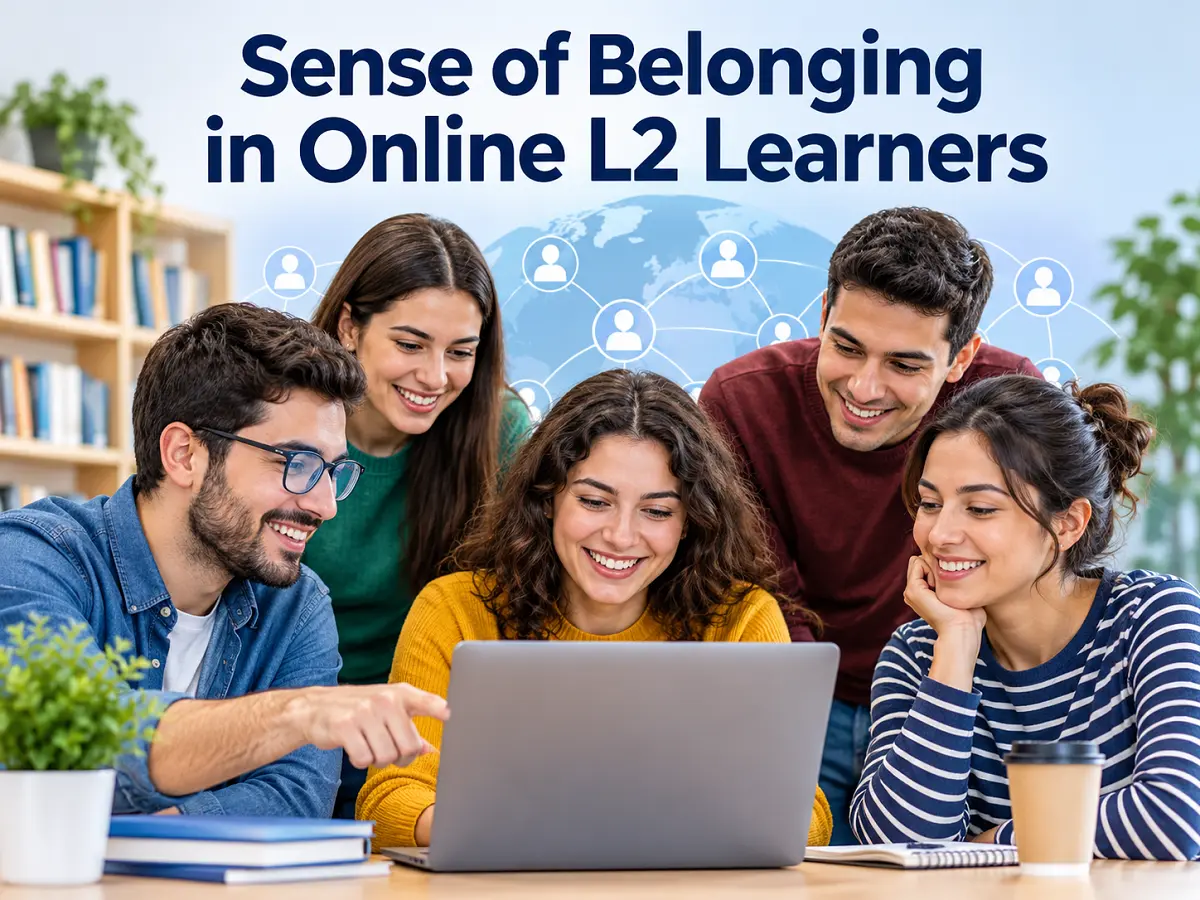
As this study addressed social issues and phenomena occurring between the students and the teacher in an interactive mode, it is hoped that the points that were discussed in this dissertation could also aid the online language learners in the twenty-first century who are expected to develop some level of autonomy, individualization, and awareness by providing them with a new set of guidelines on self-regulation as a self-study source. On the other hand, as individualization and interactivity are never in conflict with each other, the same individualized language learners could be inspired by the practical suggestions presented by the dissertation with the purpose of maximizing their educational experience in perfect collaboration with their peers.
The field of CALL must cope with multi-disciplinary principles (Tokuda, 2002). CALL applies research from the fields of SLA, sociology, linguistics, psychology, cognitive science, cultural studies and natural language processing to second language pedagogy, and these disciplines must be integrated with technology-related fields, including computer science, artificial intelligence (AI), media and communication studies.
The current investigation of creating an effective online learning community on the premise of social presence and student-student interactivity was and has been a reflection of the originality of this study. Although its application to CMC has already started (Gruba, 2004; Harrington & Levy, 2001; Stockwell, 2009; Warschauer, 2001), the possible implications of social presence on L2 learners’ success have remained unfamiliar to many teachers who are CALL practitioners as well. As a consequence, it is hoped that the findings of this inquiry could attract online language teachers’ attention to the significance of social presence in online social contexts to practice second/foreign languages.
These findings of the study are consistent with previous research on the significance of social presence in online learning (Cobb; 2009; Gunawardena, 1995; Palloff & Pratt, 2007; Picciano, 2002; Swan, 2002). To be more specific, the results of the study are suggestive of this point that online language courses that are both well-structured and easy to use and that take advantage of increased access to instructors and a profusion of asynchronous student-student interactivity are the most successful of all.

Individualization in education is not in contrast with promoting the sense of interactivity and social presence. In other words, individualized interactivity and interactive individualization are figuratively the two sides of the same token that is required to start the machine of integrative CALL. To account for both autonomy and interactivity in CALL systems, self-assessment, peer-assessment and flipped learning can be implemented in CALL systems. In this regard, online language teachers ought not to forestall peer-assessment, especially through asynchronous activities, by practicing immediacy in a disproportionate mode.
In integrative CALL systems, CALL practitioners and online language teachers are supposed to encourage student-student interactivity through consciously diminishing their ascendancy in the learning blogs because one of the clear distinctions between traditional learning and online learning through blogging is that the latter – unlike the former – is not restricted to the activities and tasks that are carried out in the classroom. Consequently, this mindfully controlled teacher’s presence would stimulate the e-learners to maximize this propitious and momentous opportunity to practice student-student asynchronous CMC.
Online language learners have this potential to participate in different parts of the curriculum, including selecting the topics for discussions via online polling applications, contributing to the development of contents and materials through leaving posts, comments, etc., carrying out peer-assessment by using ranking/rating applications, and expressing their valuable feedback by completing and submitting identifiable or unidentifiable (anonymous) surveys or questionnaires online. However, this considerable potential might not be recognized and acknowledged by some e-learners, particularly the novices.

Accordingly, the successful employment of flipped learning, in which language learners are invited to build up their awareness and autonomy, is never out of reach, providing online language teachers practice patience and persistence in implementing learner-centered approaches to education. This learner-centeredness could be realized through shifting some responsibilities on to the learners, requesting their ideas and viewpoints repeatedly, respecting and pondering over their feedback, encouraging them to carry out peer-assessment, and so forth.
In CALL systems, e-learners whose proficiency level is categorized according to intermediate and/or above, can be invited to teach some parts of the class. For instance, they could practice teaching reading courses while the other students read some selected texts and are tested on pronunciation, word knowledge, scanning, skimming, making inferences, and even grammar by the selected teacher among the students. This intentional reverse position that continues until every individual student would practice teaching in one way or another – under the teacher’s supervision – could augment the level of activeness, interactivity and autonomy in the e-learners.
Furthermore, when the pseudo-teachers’ renditions are categorized and archived on the blog in the form of audio or video podcasts together with corresponding texts, interactive activities, etc. (as it actually occurred in this study), then we can claim that we have drawn near the realization of a sense of belonging or community among the learners of the language learning blog because the pseudo-teachers would frequently refer to their own and peers’ recorded performances, and this positive competition could tremendously improve the quality of second language acquisition in CALL systems based on blogging.
The incredibly rapid growth of CALL institutions across the globe has supplied language learners with ample opportunities to leave an unsatisfying learning community and easily substitute it for another before you could blink. That is why the significance of learner-centeredness and humanistic education must be appreciated. To preclude the possibility of this unfortunate occurrence, the following could be attempted:
- Developing a sense of community and belonging to the learning blog through realizing the needs and goals of the learners that are shared among them in an amicable and academic atmosphere
- Practicing fairness and impartiality (no racial or cultural discrimination), especially in multicultural and multiethnic conversation classes
- Ensuring the dynamic and vibrant qualities of the community by virtue of an appropriate amalgamation of synchronous and asynchronous communication in which both intimacy and immediacy are practiced for the creation of a sense of academic satisfaction
- Creating a challenging, engaging, and inspiring atmosphere to quench the e-learners’ thirst for practicing second/foreign languages which is mixed with excitement, adventure and self-discovery
- Taking this point into consideration that social presence is not the ultimate objective of a language learning blog. On the contrary, it is an integral instrument at the e-learners and teachers’ disposal to facilitate and smooth the path for second language acquisition
It should not be implied from the findings of the study that any virtual language class must indisputably be held in a social and interactive fashion. There exist many language learners and teachers who prefer to adopt more individual approaches to learning and teaching languages for a variety of reasons, such as incompatible learning styles, primary objectives that are not socially oriented, fragmented or disintegrated approaches to language learning/teaching, virtual private classes and so forth.
Another misconception that might arise, which is not supported by the findings of the study, is that peer-assessment is the most propitious type of assessment under any circumstances. The results of the study suggest that intentionally initial peer-assessment that is subsequently supplemented with teacher-assessment chiefly in the form of online asynchronous activities on language learning blogs can breed a noticeable degree of conscious student-student interactivity, which is a major step toward the creation of social presence.
This study offers suggestive evidence for the superiority of pedagogy over technology to create a language learning community that is favorable for the fulfillment of social presence in an integrative genre of CALL. That is to say, it is a common fallacy that technology plus any language teacher, irrespective of professional expertise, would equal a successful CALL program. In addition, the sheer employment of specific applications that are unique to blogging, namely comment forms, discussion boards, public or private messaging, voting, rating, archiving, etc., are not sufficient to promote interactivity. Instead, an appropriate social context must be constantly monitored, updated and coordinated by a resourceful CALL practitioner. This study demonstrated the superiority of pedagogy over technology by providing an accurate curriculum for all of our principal activities, namely round tables, argue for/against, and collaborative writing, with minimum technological requirements.
Despite the superiority of pedagogy over technology in conjunction with CALL, it is recommended that a CALL specialist in the twenty-first century develop requisite expertise in utilizing information technology (IT) for educational purposes. In this regard, the researcher draws a comparison between a face-to-face and a virtual language teacher in which the former is analogous to an intracity bus driver, and the latter is compared to an intercity bus driver transporting so many passengers (language learners). The intracity bus driver can receive almost immediate aid providing some technical or mechanical problems arise. However, the intercity bus driver is supposed to have possessed necessary skills and technical knowledge in order to look after his/her passengers in the most deserted areas in case of emergency.
As briefly stated earlier, any language learning blog that is replete with a great deal of student-student interactivity should constantly be monitored by the teacher or CALL specialist owing to the fact that the ultimate objective of any effective online language learning community, i.e. the objectification of a sense of academic satisfaction in the learners, is likely to be sacrificed at the cost of any imminent and perturbing over-socialization. In this regard, the teacher is expected to act as a diagnostician who should diagnose any burgeoning opportunistic threats (impertinent online interactivities) that are symptomatic of a malfunctioning system and expunge them as soon as possible.
Nevertheless, vis-à-vis the connection between technology and pedagogy, it is concluded that a successful CALL system, which can render professional assistance to its language learners in the long run, must be an offshoot of a creative and reliable collaboration between pedagogues and technicians (expert language teachers and professional computer programmers and/or website developers) because we are living in an era of specialism rather than versatility. This promising partnership that could bring benefits to CALL pedagogues and technicians, and as a consequence, the language learners, plays an integral part in the long-term success of any institution based on CALL.
Another recommendation that is kindly proposed is to take full advantage of one great opportunity that is not really possible in face-to-face foreign language classes, that is, inviting the native speakers of the target language to engage in some course activities to arouse the interest of the students and guarantee the much-needed dynamic vitality of the learning blog. Holding regular voice or video conferences and workshops on technical and professional subjects run by native speakers as a manifestation of content-based instruction (CBI) and a collaboration between virtual language institutes and the specialized connoisseurs of some relevant subject matter as the native speakers of the target language can give so much academic credit to a language learning blog.
Thanks to the availability of multimedia, it is recommended that in integrative CALL programs, integration of skills (as opposed to skill disintegration) be practiced in a natural process, especially for teaching intermediate and/or advanced students. Moreover, the application of skill integration could be amalgamated with a variety of engaging tasks and activities because distance learning seems to have more adaptability when it comes to the implementation of various exercises and activities. In so doing, CALL practitioners could correspond with each other and hold periodic conferences using the same medium of communication they employ for teaching, but this time, to learn from each other and broaden their horizons to more creative and applicable methods and activities.
Another point that is worth recommendation is the prominence of conducting evaluation tests to categorize the language learners according to their proficiency levels even for conversation classes. Too much heterogeneity in proficiency levels in conversation classes will lead to a marked monopoly held and enjoyed by more proficient learners. Fortunately, there are numerous viable online applications and plugins to administer quizzes as placement tests, for instance www.moodle.org and LearnPress, the official WordPress learning management system (LMS) plugin. With the help of these modules and plugins, the learners can perfectly take the placement tests on the blog and in a fully automated mode. Afterwards, the blog or website administrator can have access to the test results as a reliable benchmark for classifying the leaners on the basis of their proficiency levels.
As a comparatively novel approach to education, CALL has not yet won the popularity it really deserves. As a consequence, it is advisable to supplement distance learning with sporadic blended learning classes, especially in more local learning blogs whose language learners are not widely scattered all across the world. The primary objective of these blended learning classes is to assure the new e-learners who are still uncertain about the efficacy of online learning of its unique usefulness and significance. In these intermittent gatherings, some convincing leaflets or brochures could be distributed among the new e-learners. Furthermore, more experienced e-learners can familiarize the less experienced ones through giving presentations and resolving any possible questions.
This Ph.D. dissertation conducted qualitatively and on the premise of grounded theory did help the researcher to develop a deeper understanding of the phenomenon being studied. As an intense study focusing on a social phenomenon, the researcher was completely immersed in almost all of the phases of the investigation. As a consequence, it is proposed that the recent genres of CALL (i.e., communicative and integrative) should adopt more qualitative research methods as far as possible because of their uniquely interactive atmospheres.
References
- Cobb, S. C. (2009). Social presence and online learning: A current view from a research perspective. Journal of Interactive Online Learning, 8(3), 241-254.
- Gruba, P. (2004). Computer assisted language learning (CALL). In A. Davies & C. Elder (Eds.), The handbook of applied linguistics (pp. 623-648). Malden, MA: Blackwell Publishing, Ltd. doi:10.1002/9780470757000.ch25
- Gunawardena, C. (1995). Social presence theory and implications for interaction and collaborative learning in computer conferences. International Journal of Educational Telecommunications, 1(2-3), 147-166.
- Harrington, M., & Levy, M. (2001). CALL begins with a “C”: Interaction in computer-mediated language learning. System, 29, 15-26. doi:10.1016/s0346-251x(00)00043-9
- Palloff, R. M., & Pratt, K. (2007). Building online learning communities: Effective strategies for the virtual classroom. San Francisco, CA: John Wiley & Sons, Inc.
- Picciano, A. G. (2002). Beyond student perceptions: Issues of interaction, presence, and performance in an online course. JALN, 6(1), 21-40.
- Stockwell, G. (2009). Teacher education in CALL: Teaching teachers to educate themselves. Innovation in language learning and teaching, 3(1), 99-112. doi:10.1080/17501220802655524
- Swan, K. (2002). Building learning communities in online courses: The importance of interaction. Education, Communication & Information, 2(1), 23-50. doi:10.1080/1463631022000005016
- Tokuda, N. (2002). New developments in intelligent CALL systems in a rapidly internationalized information age. Computer Assisted Language Learning, 15(4), 319-327. doi:10.1076/call.15.4.319.8268
- Warschauer, M. (2001). On-line communication. In R. Carter & D. Nunan (Eds.), The Cambridge guide to teaching English to speakers of other languages (pp. 207-212). Cambridge: Cambridge University Press. doi:10.1017/cbo9780511667206.031