


Table of Contents
This post presents the conclusion section of Chapter 5 of my PhD thesis project, examining the realization of social presence in integrative Computer-Assisted Language Learning (CALL). It highlights how meaningful online interaction, peer assessment, collaborative learning, and a friendly virtual environment foster learners’ sense of belonging and connectedness. The findings also emphasize student autonomy, teacher adaptability, content-based instruction, and asynchronous communication as essential factors in building successful online language learning communities.
Conclusion
This study was aimed at seeking practical solutions to the realization of social presence in the social context of integrative CALL programs, which is a novel research area in conjunction with CALL. Social presence refers to the degree of the real perception of the communicators interacting with each other by virtue of technology and electronic communication media (Palloff & Pratt, 2007) as a predictor of overall student academic satisfaction (Gunawardena, 1995) through generating a feeling of effective communication and connectedness among the learners (Palloff & Pratt, 2005).
Video of Social Presence (Conclusion)

To probe into the six research questions and their corresponding research hypotheses, the researcher used 42 active members of his online English students among hundreds of others as the participants of the study who attended two long virtual courses on Skype and Discord in a lengthy period of time over one year. The two principal sampling procedures were criterion sampling (i.e., based on the predetermined criteria of being educated, at least intermediate in English and young) and snowball or chain reaction sampling (i.e., encouraging the approved students to invite their acquaintances to our courses who share the characteristics of our criterion sampling).
The researcher employed a qualitative approach to collecting and analyzing the data that were primarily obtained through conducting 41 semi-structured interviews under the title of call for feedback at the end of most of the classes. To account for the transferability, credibility and dependability of the study, the researcher triangulated the data by virtue of making close observations processed immediately after each class and a supplementary open-ended questionnaire. This qualitative study was conducted on the basis of grounded theory because of the descriptive and theory-generative nature of the study occurring in a fairly social and interactive ambience (Corbin & Strauss, 1990/2008; Creswell, 2007; Glaser & Strauss, 1967) in which the researcher acted like a detective adopting an inductive approach to accumulating, organizing and analyzing units of information (categories) to make sense of the data.
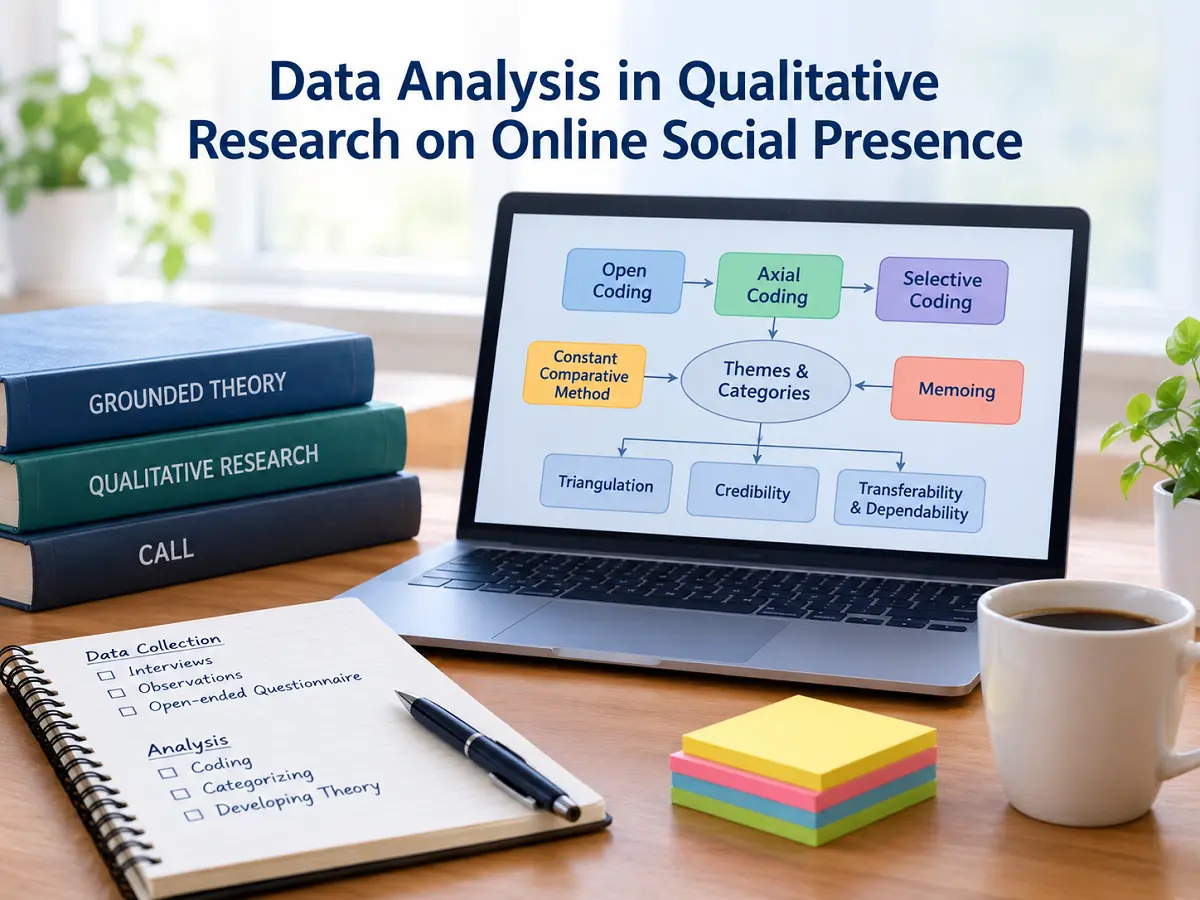
It is believed that quantitative approaches to data collection and data analysis are being surprisingly overused even in multifaceted, dynamic and interdisciplinary fields, such as CALL. In this response, Tokuda (2002) suggests that unlike many commercial courseware systems that allow for only simpler multiple-choice questions or fill-in blanks formats, a number of more intelligent and comprehensive research systems for language learning should develop so that L2 learners could provide free input of information and data.
The findings of the study are considered to be in line with the ones obtained by Blin (2004) in which it is indicated that we should provide e-learners with ample opportunities so that they could become lifelong learners by practicing individualization yet in partnership with their peers. We need, through teacher selectivity, monitoring, and appropriate adaptability or modifications, to provide adequate chances and sufficiently prepare our students to work independently and collaboratively. Students, as research has shown, learn best through exploration. We, as language teachers, must consider how to expand their space and opportunities for learning. When students actively engage in discovering information for themselves, they will be able to solve problems and learn on their own.
The results of the study cast light on the significance of social presence as a result of conscious interactivity primarily in the form of student-student online communication in a friendly and inviting social context as a ticket to the success of any integrative CALL program in the third millennium. The findings of this inquiry over one year demonstrated that encouraging the students to practice peer-assessment asynchronously by means of the unique features of a robust learning blog, namely comment forms, discussion boards, public and private messaging, rating and voting systems, etc. all equipped with the log or history of previous events can lead to the establishment of a language learning community that can perfectly make room for collaborative and constructive learning.
As succinctly stated in the previous paragraph, the social context of any virtual language learning community must be conducive to the generation of social presence and online communication. This inquiry spotlighted the requisite characteristics of a successful social context that endorses collaborative learning as being friendly and inviting from two particular perspectives: (1) external appearance or user interface hosted on a reliable server, and (2) stimulating contents and activities to entice the learners to engage in virtual asynchronous communication.
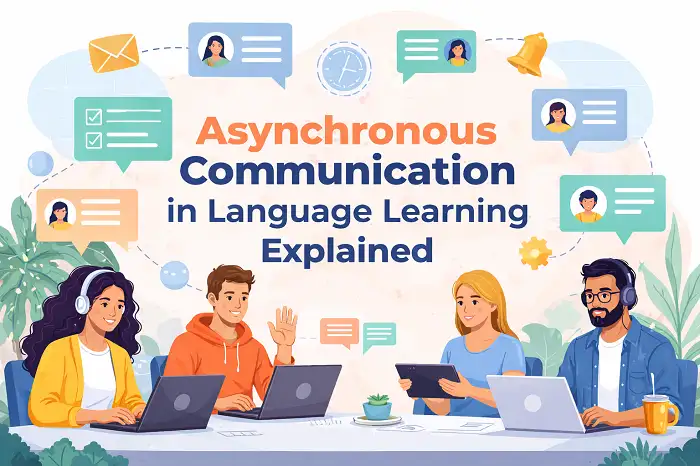
The findings of this dissertation were indicative of the following two prominent factors to develop a sense of belonging in the language learners: (1) realizing their academic needs and goals that are shared among them to account for more collaborative and interactive learning, and (2) establishing an excellent rapport among the learners to facilitate and lubricate student-student interactivity. These two ambitions could be achieved through recording and archiving the learners’ social activities and contributions on the blog. Besides, inviting the learners to take on individual and social responsibilities to determine the course of academic events that shape the curricular horizon of the learning blog that belongs more to the learners than the teacher.
The results also revealed that the appropriate employment of content-based instruction (CBI) on exciting, multifaceted and informative subjects in which the learners are invited to assume active roles in developing the content of the course in partnership with each other asynchronously (e.g., utilizing comment forms and discussion boards to exchange questions and answers that will be discussed in subsequent synchronous classes) or synchronously (e.g., giving presentations in the target language as a point of departure for conversations instead of playing audio/video files to the learners) can culminate in a tremendous boost to well-organized and efficient online interactivity.

Our prolonged practice of negotiation of meaning demonstrated that the learners preferred an impartial, nonjudgmental and accommodating teacher who does not tenaciously interject or intervene in the natural flow of conversations. On the contrary, these participants, who negated the teacher’s dominant presence in negotiation of meaning, openly advocated the teacher’s indubitable presence both synchronously and asynchronously in negotiation of form and error correction. However, as delayed gratification is a sign of maturity in any person, so is conscious delayed immediacy to perform asynchronous teacher-assessment suggestive of more peer-assessment as a crucial step toward the actualization of social presence.
References
- Blin, F. (2004). CALL and the development of learner autonomy: Towards an activity-theoretical perspective. ReCALL, 16(2), 377-395. doi:10.1017/S0958344004000928
- Corbin, J., & Strauss, A. (1990). Grounded theory research: Procedures, canons, and evaluative criteria. Qualitative Sociology, 13(1), 3-21. doi:10.1007/bf00988593
- Corbin, J., & Strauss, A. (2008). Basics of qualitative research: Techniques and procedures for developing grounded theory (3rd ed.). California, CA: Sage.
- Creswell, J. W. (2007). Qualitative inquiry and research design: Choosing among five approaches (2nd ed.). Thousand Oaks, CA: Sage Publications.
- Glaser, B. G., & Strauss, A. L. (1967). The discovery of grounded theory: Strategies for qualitative research. New York, NY: Aldine.
- Gunawardena, C. (1995). Social presence theory and implications for interaction and collaborative learning in computer conferences. International Journal of Educational Telecommunications, 1(2-3), 147-166.
- Palloff, R. M., & Pratt, K. (2005). Collaborating online: Learning together in community. San Francisco, CA: Jossey-Bass.
- Palloff, R. M., & Pratt, K. (2007). Building online learning communities: Effective strategies for the virtual classroom. San Francisco, CA: John Wiley & Sons, Inc.
- Tokuda, N. (2002). New developments in intelligent CALL systems in a rapidly internationalized information age. Computer Assisted Language Learning, 15(4), 319-327. doi:10.1076/call.15.4.319.8268